

This Nonprofit Leadership Bootcamp series is for nonprofit professionals who know that leadership isn’t about hierarchy—it’s about responsibility, trust, and showing up with integrity. Whether you’re stepping into your first executive role, managing a growing team, or simply rethinking what it means to lead, this series is designed to help you do it in a way that’s honest, relational, and sustainable.
Each session blends current sector data, applied exercises, and frameworks rooted in community-centric practice—including insights from Rachel D’Souza’s Social Change Ecosystem and participatory tools like network mapping and trust choice reflection. Throughout, we’ll spotlight examples from nonprofit peers who are modeling different ways to lead, and you’ll be given worksheets to help you apply each session to your real-life context.
This is a call to reimagine what nonprofit leadership looks like—more human, more present, and more connected. The work ahead is urgent, but it doesn’t belong to a few. Let’s get started.
If you’ve ever felt like you’re sprinting just to stay in place, you’re not alone. For many nonprofit leaders, the growing conversation around artificial intelligence feels less like a tool and more like a tidal wave.
But here’s the truth: AI isn’t inevitable, and it’s not neutral. We have a choice.
Burnout isn’t just about working long hours—it’s about working in systems that stretch us thin and fail to support our humanity.
According to the Center for Effective Philanthropy’s 2024 State of Nonprofits report, 95% of nonprofit leaders express concern about burnout, with one-third describing staff burnout as a “very much” concern.
Even more alarming, half of the surveyed leaders reported rising personal burnout since the previous year, and three-quarters acknowledged that staff burnout is affecting their organization’s ability to fulfill its mission.
So what do we do?
We pause. We reflect. And we start designing systems worth trusting.
What Are We Optimizing For?
The real question isn’t “how do we use AI?”—it’s “what kind of organization are we becoming?” Without thoughtful leadership, AI tools risk reinforcing structural inequities, increasing workloads, and weakening trust.
According to the AI Equity for Nonprofits Report, over 60% of respondents said AI already influences decisions in their organizations—yet the majority also reported lacking clear internal policies, ethical guidelines, or cross-functional input.
This disconnect matters.
As the report notes, equity demands that “those most impacted by these technologies must be meaningfully involved in shaping them.” That means centering frontline staff, community partners, and those you serve in every digital decision.
AI is not neutral—it reflects the priorities and blind spots of those who build and deploy it. Leadership must resist the hype and instead create space for listening, adaptation, and values-aligned implementation.
Leading with Intentionality
AI can absolutely be part of a nonprofit’s strategic toolkit. But it must be done on purpose. That’s where strong leadership comes in.
Here’s what responsible leadership looks like:
- Modeling Reflection: Leaders should regularly ask, “What problem are we trying to solve? Who benefits from this solution? Who might be harmed?”
- Setting Ethical Guardrails: If your values include equity and community voice, then your technology use should reflect that. Consider frameworks like Fundraising.AI’s to guide decision-making.
- Creating Space for Dissent: If your team is afraid to question AI adoption, it’s not innovation—it’s coercion. Build systems where feedback is welcomed and acted upon.
And perhaps most importantly:
- Staying Close to Your Mission: AI should help you deliver on your cause, not distract from it. If a tool saves time but erodes trust, it’s not worth it.
Equity Isn’t Optional
Approaching AI through an equity lens is not just a best practice—it’s a moral imperative. As Big Duck notes, equity-centered design challenges us to rethink:
- Who we center in the design of our systems
- What assumptions are baked into our data
- Whether our tools empower or exploit
We encourage leadership teams to review this equity-focused AI resource center from NTEN as a starting point for meaningful dialogue.
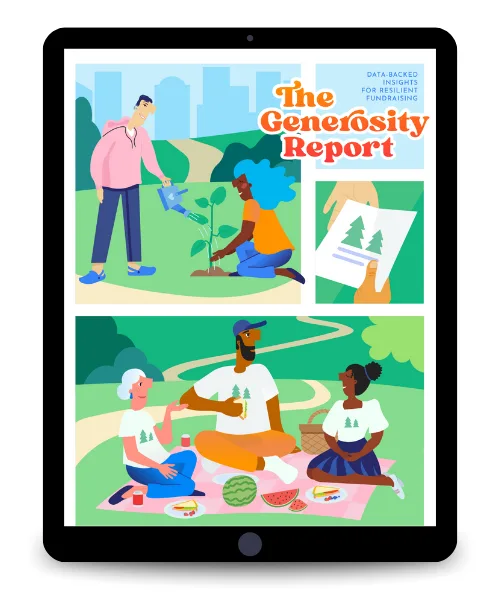
Fuel Your Mission: Engage Everyday Donors
Learn actionable strategies to effectively connect with and cultivate the generosity of your everyday supporters—download The Generosity Report now!
From Measurement to Meaning
If your definition of “data” starts and ends with donations, it’s time to expand your lens. The most forward-thinking nonprofits are beginning to track warmth, sentiment, and participation—not just transactions.
- Is your community growing in trust?
- Are your supporters becoming co-creators?
- Do your digital journeys honor the humanity of the people you serve?
Data-driven decisions need depth—not just data points. The real measure is whether our numbers reflect relationships built, trust earned, and communities uplifted.
Ready to Explore Further?
If you’re wondering where to start, we’ve built a resource just for you. Check out Neon One’s Nonprofit AI Readiness Assessment. It includes practical worksheets and guiding questions to help your team reflect, plan, and act.
Remember, the future isn’t something we wait for. It’s something we shape together.
Next up in the Bootcamp series: Governance & Adaptability. We’ll explore how to co-design a strategy with your board to navigate uncertainty without drifting from your mission.ld technology in the service of people.