
— KEY TAKEAWAYS
A strategic nonprofit event budget starts with purpose rather than price: you define a measurable goal, turn it into a dollar target, rank every line item by how much it contributes, and use last year’s actual numbers to keep this year’s estimates honest.
- Set your KPIs while the event is still an idea and everything is negotiable, because a target like acquiring 30 new monthly donors is a budgeting input and “raising awareness” is not.
- Separate the goal-critical costs the event cannot hit its target without from the nice-to-have costs, and fund the goal-critical ones first when you run up against a spending cap.
- Last year’s budget-to-actual report, vendor quotes next to invoices, and debrief notes give you a realistic revenue estimate, a realistic cost estimate, and a better-sized contingency line. Raise the buffer if last year’s ran dry.
- After the event, compare what it delivered to the KPIs you set at the start, since that comparison is the first entry in next year’s budget file.
The venue is booked. The caterer’s deposit is paid. And somewhere around the third planning meeting, someone finally asks what the event is supposed to accomplish.
A strategic nonprofit event budget works in the opposite order. You start with the purpose and let it decide the spending, because a donor stewardship event built to deepen relationships with existing supporters needs different things than a gala built to land new major donors.
Getting this right does more than stretch your funds. It gives you a straight answer when a board member asks why a line item costs what it costs, and it gives next year’s planning team somewhere to start.
Here’s how to define what success looks like, turn that definition into a dollar figure, rank your costs against it, and use last year’s numbers to keep this year’s budget honest.

Planning a fundraising event is hard!
That’s why we created this fundraising event planner that walks you through the entire process, with expert insights and free resources to help you smash your goals.
1. Define What Success Looks Like for Your Event
Before you touch a dollar figure, get specific about what the event can accomplish and how you’ll know whether it did.
“Raising awareness” is a worthy aim and a poor budgeting input. A measurable target, like acquiring 30 new monthly donors by the end of the night, gives you something concrete to build against. Set key performance indicators (KPIs) up front, while the event is still an idea and everything is still negotiable.
Metrics that can help you make sense of your event’s performance include:
- Leading indicators. These figures can help you get an idea of how your event might deliver on your goals before it happens. Tracking RSVPs or the pace of ticket sales tells your nonprofit whether or not momentum is building and where you might need to adjust outreach or the event’s scale.
- Lagging indicators. These tell you how it went. Total dollars raised and the number of donors acquired show you how the event stacked up against the goal you set.
- Qualitative feedback. Numbers can’t tell you everything. Attendees and board members can tell you what the quantitative indicators miss.
Set these indicators at the start of your budgeting process, and bring a few colleagues in. A target that one person sets alone tends to be either wishful or timid, and the people who will staff the registration table usually know which.
2. Let Your Priorities Rank Your Costs
As you work through the line items, rank them by how much each one contributes to the goal you set in step one. Not every part of the event serves that goal equally, and separating the essentials from the extras protects what matters most when you run up against a spending cap.
Prioritize your expenses by dividing them into categories, such as:
- Goal-critical costs. These are the things the event can’t hit its target without. If a keynote speaker’s fee or a live auction platform subscription forms the centerpiece of the night, fund it first and build the rest of the budget around it.
- Nice-to-have costs. These raise the quality of the experience without moving the goal much. Catering tiers, decor, printing, and branded merchandise usually live here. The top-tier menu would elevate the evening, but the mid-tier option is unlikely to change how many new monthly donors sign up.
Sorting your costs this way helps your staff and board align on the budget with less back-and-forth. It also gives you a clear answer for corporate sponsors and local businesses when they ask where their support and in-kind donations would do the most good.

The “Let’s Get Together” Guide to Nonprofit Gala & Event Invites (+ Templates)
3. Ground Your Nonprofit Event Budget in Historical Data
Unless this is a first-time event, you aren’t starting from scratch. Last year’s budget-to-actual report, which lines up what you planned to spend against what you actually spent, is the most useful place to start. Your documented assumptions and post-event debrief notes come next, even if this year’s goal is different from last year’s.
These items can provide you with useful insights for this year’s event budget, such as:
- A realistic revenue estimate. Ticket, merchandise, raffle, and food and drink sales generally track with paid attendance, while sponsorships and silent auction proceeds don’t. Look at where last year’s revenue landed above or below plan, and be honest about whether an unusually strong attendance year is something you can count on again.
- A realistic cost estimate. Put last year’s vendor quotes next to last year’s invoices. The gap between them shows you which assumptions to adjust and where the fees nobody anticipated tend to hide.
- A more accurate contingency line. The distance between what you planned to spend and what you spent tells you a lot about how large this year’s buffer should be. If last year’s contingency ran dry, raise it.
YPTC’s nonprofit budgeting guide recommends analyzing surpluses and deficits until you understand what happened and why, then deciding what the next budget should change. Make that review a standing part of your event process, and each budget will land closer than the last.
4. Plan for Contingencies
A realistic event budget assumes things won’t all go according to plan. The contingency line is the easiest one to skip, especially for an event your team has run for years. Don’t. Attendance isn’t certain until the doors open, last-minute supply runs happen, and vendor cancellations, technology failures, and weather are common enough to plan for even though you can’t predict which one you’ll get. Set aside a portion of the total budget to absorb unexpected costs or softer-than-expected revenue.
There’s no universal percentage for that buffer. Look at the risks specific to your event, weigh how likely each one is, and size the contingency to match.
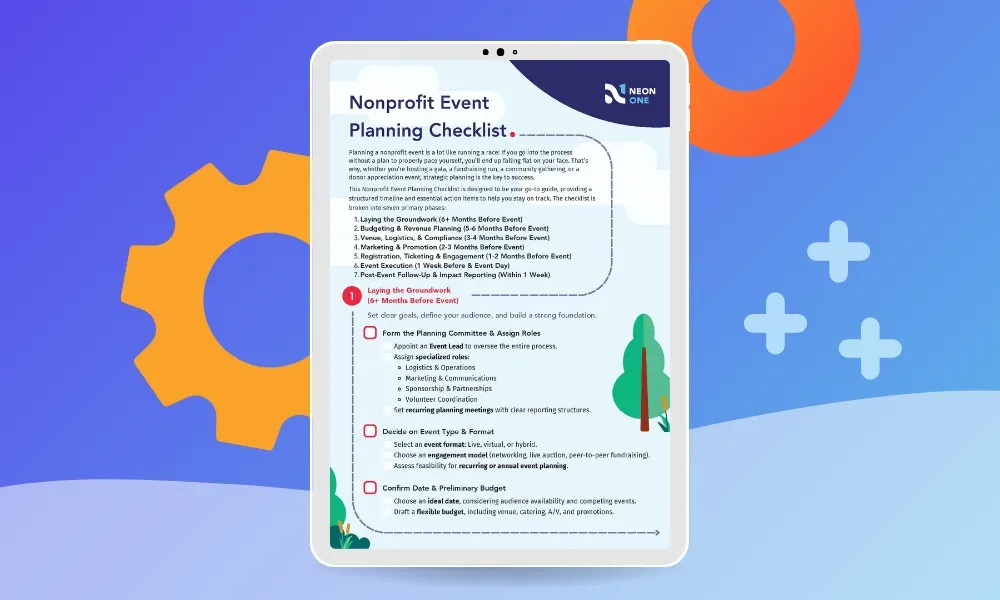
The Nonprofit Event Planning Checklist
After the Event
A budget that starts from a goal, ranks costs against it, learns from last year’s actuals, and leaves room for surprises is a budget you can defend to your board and hand to whoever plans this event next. The last step comes after the lights go down: return to the KPIs you set in step one and compare them to what the event actually delivered. That comparison is the first entry in next year’s budget file.

Go Beyond Donations: The Power of Events
Learn how to create impactful event experiences that drive deeper engagement and support beyond the event day – download The Generosity Report now!

Author Bio
Jerilyn Dressler, YPTC
Jerilyn Keit Dressler, CPA, has over 25 years of experience in the accounting industry. She began her career with EY, where she spent 8 years (lastly as a senior manager) auditing public companies in the media, technology, homebuilding, and advertising industries. She joined Your Part-Time Controller, LLC in 2008, serving nonprofit clients in Philadelphia as their Controller/CFO until 2020, when she moved into a business development role. She is now the Chief Growth Officer, responsible for identifying new business opportunities, optimizing existing client relationships, and enhancing the firm’s market presence nationally. Jerilyn is also the board Treasurer of the internationally acclaimed dance company, Philadanco. She is a CPA and a CFE (inactive) and is a member of the AICPA and the ACFE. Jerilyn is also on the finance committee for the Association for Accounting Marketing.