

— KEY TAKEAWAYS
Treating your nonprofit staff with the exact same intentional stewardship you use for your top donors is one of the most cost-effective levers for improving overall organizational stability.
- Just as donor retention measures how well you keep supporters actively giving, successful staff retention requires a shift from transactional management to continuous relationship building.
- This article explores the crucial, overlapping tactics between successful fundraising and human resources through the CARES framework: Commitment, Appreciation, Respect, Engagement, and Safety.
- The data proves relationship-building works: while non-recurring donor retention fell to 32.41% in 2025, nonprofits successfully retained their recurring donors at a staggering 78-80% rate year over year. Neon One, The Recurring Donor Report
- By prioritizing deep, mission-driven connections and regular impact updates over superficial perks, organizations can successfully build incredibly resilient communities of both dedicated staff members and lifelong donors.
As nonprofit leaders, we spend a lot of time thinking about retention. We worry about retaining great employees, loyal volunteers, engaged board members, and generous donors.
We often treat these as separate challenges, but what if they all have the same solution?
What Donor Research Reveals About Nonprofit Staff Retention
During a recent conversation on the Nonprofit CEO SPARK podcast with Abby Jarvis, Head of Research with Neon One, we discussed the company’s latest research: The Recurring Donor Report.
While the conversation focused on fundraising, I kept hearing something much bigger. The research wasn’t only about donors. It was about human beings.
The study found that recurring donors are primarily motivated by two things. 71.2% of donors surveyed said they felt personally connected to the mission, while 60.3% said they genuinely wanted to make a difference in their community.
Those motivations should sound familiar to you, because they are the same reasons many employees choose to work for nonprofits in the first place.
That is when it hit me.
The same conditions that inspire donors to stay are often the same conditions that inspire fundraisers to stay. They are also the same conditions that keep volunteers engaged, board members committed, and community partners invested in your success.
This is exactly why I created the CARES framework to help nonprofit CEOs and executive directors foster healthy, inclusive cultures where all staff can thrive.
CARES is a simple acronym for Commitment, Appreciation, Respect, Engagement, and Safety.
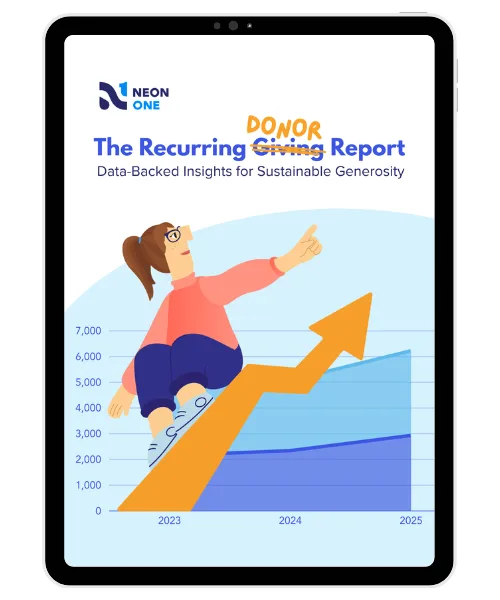
Get the 2026 Recurring Donor Report
Data-backed findings from over 4,000 nonprofits and 2,000 nonprofit donors show why recurring givers are the future of nonprofit fundraising.
Commitment Begins With Purpose
Donors want to know their gifts are changing lives.
Fundraisers work at organizations when they believe in a mission bigger than themselves. They want to know their work matters.
One of the strongest themes from Neon One’s research was that recurring donors continue giving because they feel deeply connected to the organization’s mission. They are not simply responding to another fundraising campaign. They are investing in their purpose.
As fundraisers, our job is to continually connect people (employees & donors) to that purpose. We cannot assume they automatically see how their daily work or monthly gift contributes to the bigger picture.
Appreciation Builds Loyalty
Every person wants to know they matter.
We often think appreciation is about saying thank you, but it goes much deeper than that. Appreciation means helping people understand the difference they are making because of their contribution.
Whether someone gives 40 hours a week or $40 a month, they want to know they made an impact. When people feel valued, they are much more likely to stay involved with your organization.
Respect Creates Partnership
One insight Abby shared really stood out to me. Fundraisers can become consumed by revenue goals, campaign metrics, and reporting requirements. Donors, however, are thinking about something entirely different. They are thinking about changing lives.
The same thing happens inside organizations. Leaders become consumed by budgets, deadlines, and operational challenges while employees are searching for meaning in their work.
Respect means remembering that people are not transactions. They are partners in your mission. When we treat people with transparency, curiosity, and genuine care, we strengthen the relationships that make our organizations successful.

Guest Pitches: We want to publish your story!
Looking to share your insights and broaden your reach? Write an article and let us share it with our audience of over 100,000 nonprofit leaders.
Engagement Grows Through Connection
One of the most surprising findings from the research was that many recurring donors (58.6%) were never directly asked to become recurring donors. They chose to give because they consistently saw the organization making a difference in their community.
That tells us something important.
People engage when they see meaningful work happening and believe they can be part of it. They do not simply respond to fundraising appeals. They respond to stories, relationships, and visible impact.
The same principle applies to your employees. People become more engaged when they regularly see how their efforts contribute to the mission and when leaders intentionally connect them to that impact.
Safety Creates Trust
Psychological safety is one of the strongest predictors of healthy workplace culture. In donor relationships, that same principle shows up as trust.
Do people trust your organization to steward their gifts wisely? Do they believe you will communicate honestly and follow through on your promises? Do they feel confident that their investment is creating real change?
Trust is what turns a one-time donor into a recurring donor. Trust is also what turns a new employee into a long-term leader.
Your action guide to build relationships that drive growth.
In this playbook, we’ll dive into insights that can help and simple steps you can take to start putting relationships first in your day-to-day work.
Healthy Cultures Retain People
The biggest lesson I took away from this conversation is that retention is not just an HR issue or a fundraising issue. It is a leadership issue.
Whether someone gives their time, talent, or treasure, they are asking the same question: “Is this a place where I belong?“
Organizations that intentionally build commitment, appreciation, respect, engagement, and safety create cultures where people want to stay.
That is true for employees. It is true for donors. It is true for volunteers, board members, and every person who chooses to invest in your mission.
Healthy cultures do more than improve morale. They create lasting relationships that sustain your organization for years to come.
Here’s something to reflect on: As you think about your employees, donors, volunteers, and board members, which of the five CARES pillars is your greatest strength today, and which one deserves more intentional focus over the next 90 days?

Author Bio
Marcia Beckner, Culture CARES® Global
Marcia Beckner is the founder and CEO of Culture CARES® Global, executive mentor, culture strategist, and host of the Nonprofit CEO SPARK podcast. Her team helps nonprofit CEOs and Executive Directors reduce burnout, strengthen teams, and build healthy, high-performing cultures where people love to work and stay. Ready to lead with more confidence and less burnout? Download Marcia’s free guide, 4 Strategies for Nonprofit CEOs to Reduce Burnout, Unify Teams, & Build a Culture That Lasts, and explore more leadership resources at CultureCARES.com.