

Your donor pipeline is the people in your system who are learning about you and are potentially interested in supporting your nonprofit by becoming financial donors. Your pipeline probably includes lots of different kinds of supporters who will make gifts of varying sizes.
Some of those supporters will probably have the potential to become major donors, and that’s what we’re going to focus on today. As you identify those potential major donors, cultivate relationships with them, and ask them to support your work in a significant way, you’ll want to keep in mind the different stages of a major donor pipeline. Those stages begin with awareness and culminate in active support. How you guide them through this pipeline will determine whether make a single gift or become long-term, committed partners of your organization.
5 Stages for Building a Donor Pipeline
While your donor pipeline will change based on your organization’s mission, networks, major gifts program, goals, and strategies, you’re going to follow the same basic steps. You’ll identify potential major donors, qualify them, cultivate relationships with them, solicit your first gift, and steward their relationship with you and your work.
Here’s a look at what each of those stages will entail.
Stage 1: Identify
In the identification stage, you’re working to reach lots of potential donors. Developing a systematic approach to donor acquisition allows you to find new supporters who care about your cause and have the potential to become long-term partners.
The top reason people will make significant gifts to you is that they care about your cause. This is especially true of major gifts! People with a history of giving to causes like yours will be most likely to build the kinds of relationships with you that will eventually result in major gifts. So, as you reach new supporters, you can use prospect research to identify which of your new supporters may have the capacity to become a major donor in the future.
This is going to be easiest if you’re using a nonprofit CRM. By parsing through the information you’ve collected about people’s personal and business connections, you can find new links to those connected to your network. You can also look at people who have a long giving history with your organization and who have supported your work in multiple ways, like volunteering, creating pledges, or making recurring gifts.
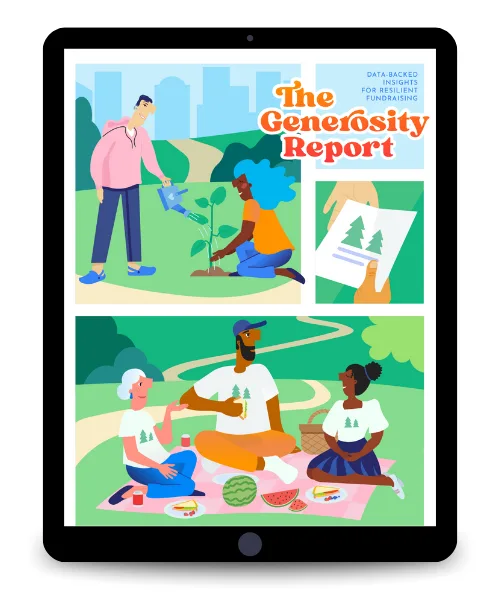
Both longevity and supporting a cause in different ways are indicators of a greater willingness to increase financial generosity! You can learn more about those patterns in The Generosity Report: Data-Backed Insights for Resilient Fundraising.
Do You Know Your Donors?
They’re more generous than you might think … and we have proof. Download The Generosity Report today!
The identification stage is not the time to reach out for an appeal! You’ll want to qualify your donors first.
Stage 2: Qualify
Once you’ve identified a list of potential majors donors, you need to qualify them as your most likely candidates for major gifts appeals.
You can start by segmenting the donor data in your system. Someone who made a $25 gift two years ago wouldn’t be as strong a candidate for a major gifts program as someone who has given $100 a month for the last year.
You can segment these donors into two separate groups so you can cultivate relationships with them accordingly.
With comprehensive donor management tools, you can divide your donor base into highly granular categories based on interests, wealth, and past interaction history. This will set the stage for the next, umm, stage: cultivation.
Stage 3: Cultivate
The goal of donor cultivation is to build rapport with the people you’ve identified as potential supporters. In this phase, you’ll focus on establishing a personal relationship with your prospective supporters, learn what they’re passionate about, identify what their philanthropic goals are, and lay the groundwork for an eventual ask.
Building this relationship will require regular communication. This communication needs to be personal! Your potential major donors should, of course, receive the standard communications you send other donors, like impact updates and newsletters. But they should also get phone calls, personal meetings, and other forms of outreach that give you the opportunity to build a deep, personal relationship with them.
Stage 4: Solicit
Once you’ve established a relationship with your potential major donor and understand their philanthropic goals, you can start to put together an ask that will be appealing to them.
Say, for example, you know your donor has a long history in your area—their family has been local for generations and have a reputation for being valuable partners for nonprofits in your area. Your potential donor is particularly interested in conservation and is passionate about the natural history in your area.
Because you and your staff have kept careful notes about your past meetings and conversations with your donor, all of this information is recorded in your CRM. As you prepare to sit down and make your appeal, you’ll review your notes and plan your ask. You’ve decided to ask your potential major donor to give $200,000 that will help secure the purchase and preservation of a parcel of land in your area that you’ll turn into a park. This speaks both to their interest in conservation and to their desire to continue their familial legacy of contributing to their community in a meaningful way.
Stage 5: Stewardship
Whether your donor says “yes” or not, your relationship doesn’t end with the appeal. After the ask, you’re going to move into the stewardship phase.
Stewardship is the long-term maintenance of your relationship with your donors. A big part of this is regularly expressing two things: the impact of their donation, and your appreciation for their gift.
There are a number of different tactics you’ll use here. Thank-you letters that are very personal, heartfelt, and special are necessary. Based on your donor’s goals and motivations, you may want to give them public recognition. You or your staff will also want to hold regular meetings with them to keep them apprised of progress toward your shared goals. You can steward this relationship in tons of different ways, and the mix of tactics you use will depend entirely on your donor, their preferences, and their motivations.
Regardless of how you choose to steward your relationships, tracking your interactions with these donors will important. Your notes will help you better understand your donors, and making those notes available to the rest of your team will help ensure that your donor gets the best possible experience every time they interact with you. Say, for example, that your major gifts officer reaches out to them with a personal phone call and invites them to an upcoming event. Your donor excitedly confirms that they’ll attend and mentions that their birthday is that week. When you look at the notes in that donor’s account before the event, you can make sure to remember to wish them a happy birthday. That’s a small (small!) detail, but it can make a huge impression on someone who’s a valuable partner in your work.
Monitoring Your Pipeline and Identifying Opportunities To Improve
Understanding a major donor’s pipeline activities can help you understand their interactions with your nonprofit, plan strategies you can use with other supporters, and even identify opportunities to improve your supporters’ experiences. For example, you may see a current major donor made a small gift, attended a few of your nonprofit’s events, became a recurring donor, and supported you for several years before making a transformational gift.
All the information in those steps will tell you a lot about the donor. The fact that they’re long-term supporters who engage with you on multiple fronts is a big deal! This tells you that their major gift was the result of years of interactions with your work and a deep familiarity of how you serve your community. This is also an indicator that your cause is deeply important to them as a person.
This can help you identify and plan interactions with future major donors. When you conduct future prospect research, you can focus on long-term supporters who have made a significant financial impact with regular donations.
A detailed CRM is going to build transparency into that donor pipeline. You will be able to identify the types of supporters who are most likely to become a major donor, gain insight into what inspires them, and build better strategies to connect with them.
How Neon One Can Help You Build Your Pipeline
When you’re building a donor pipeline, it will be critical to use a nonprofit CRM or other tool that makes it possible for you to manage all of your donor data in one place. That way, you can track interactions, manage relationships, and improve your outreach to different groups of supporters and potential supporters. A growing nonprofit will need something scalable so it can keep up as its donor database grows!
Neon One can help. You can use our CRM platform to segment your donors, personalize your communications, and build lasting relationships that will grow your reach. Want to get a feel for how it works? Check out this self-guided tour and get a peek at its features and what it can do for you!