Our society is working through a massive shift. Not just in how technology works or how money flows, but in how people relate to each other. And if you work in the nonprofit world, you’re probably feeling it every day.
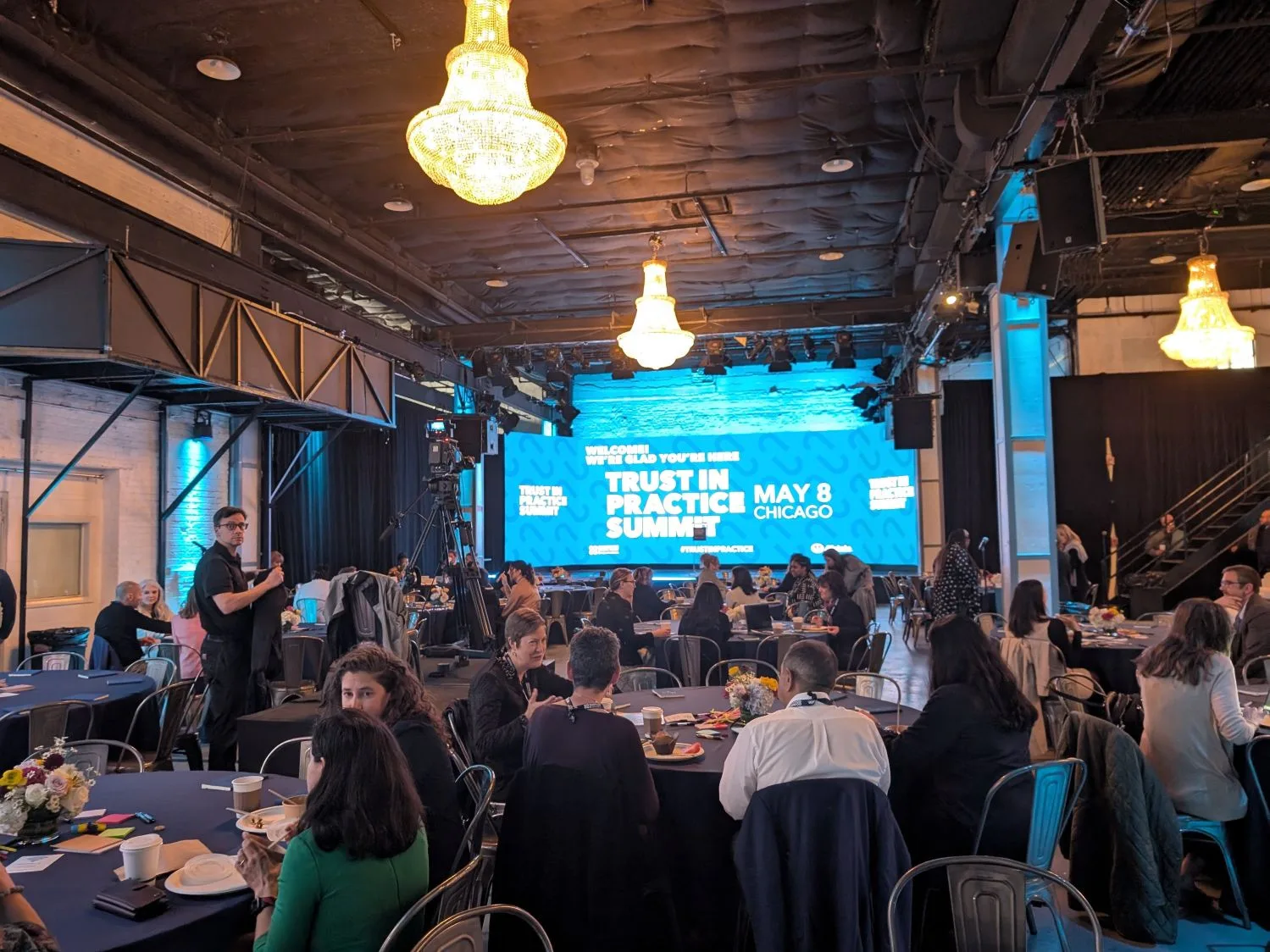
That’s why I went to Chicago for the Trust in Practice Summit, hosted by the Aspen Institute’s Alliance for Social Trust with support from the Allstate Foundation. I wanted something real, not a lecture, not a bunch of panels, but a sense of what’s possible when people who care about the future get in the same room.
What I came away with can be summarized in two short sentences:
You can’t surge trust. But you can nurture it.
In a world that rewards speed and spectacle, trust moves at the pace of relationships. It’s not a lever you pull in a crisis; it’s the result of people. And of relationships. It’s the result of systems that let people focus on what matters instead of fighting complexity.
It’s in small, meaningful actions that build over time. In showing up for each other, even when it’s not easy. In listening first and acting with care. That’s how trust gets built—and how it sticks.
And that trust, real trust, is how organizations grow without losing the heart of their mission. Because when we show up for each other, stay curious, and create together, we begin to live the kind of values our communities deserve—values grounded in service, shared effort, and belonging.
Trust The Numbers That Matter
Pew Research dropped new data at the event:
- Only 34% of Americans say most people can be trusted.
- Trust is lower among younger people and people with lower incomes.
- It’s especially low for Black and Hispanic communities.
The presentation featured an overview of this research by Neha Sahgal and Laura Silver, members of the Pew Research Center. Their framing helped us understand trust not just as an abstract idea, but as the social infrastructure behind everything we do in the nonprofit sector.
And then there’s this: GivingTuesday’s GivingPulse survey shows that peer-to-peer trust—not institutional branding—is what actually drives giving and volunteering. If people trust each other, they show up.
That’s why I shared this piece of data from the Fundraising Effectiveness Project: 96.9% of donors give under $5,000. These are everyday people giving what they can. Just like most fundraisers aren’t elite professionals with endless resources, most donors aren’t ultra-high net worth (UHNW) individuals—they’re neighbors. Parents. Teachers. Baristas. Nurses.
So why do so many of our systems treat generosity like a high-net-worth transaction? We need to understand that generosity is reciprocal. It is influenced by every moment we create, positive or negative. It isn’t just a gift. It’s a reflection.
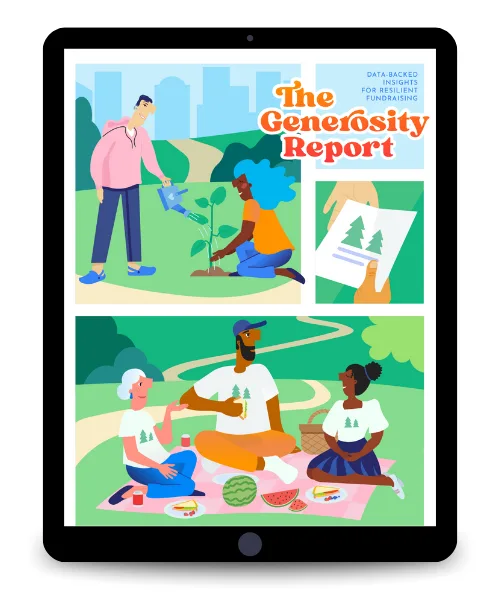
Do You Know Your Donors?
They’re more generous than you might think … and we have proof. Download The Generosity Report today!
What I Saw in Chicago
The Trust in Practice Summit wasn’t a typical conference. It was light on lectures and heavy on interaction and shared alignment. It was also one of the only high-caliber conferences I attended where I felt an honest, intentional focus on bringing all voices to the table, not just well-resourced nonprofits and funders.
I was there wearing multiple hats—representing both Neon One and the Fundraising Effectiveness Project—but I can’t really take those hats off and become someone else. I’m a person trying to make sense of a complex sector, and my job is to help surface patterns and possibilities.
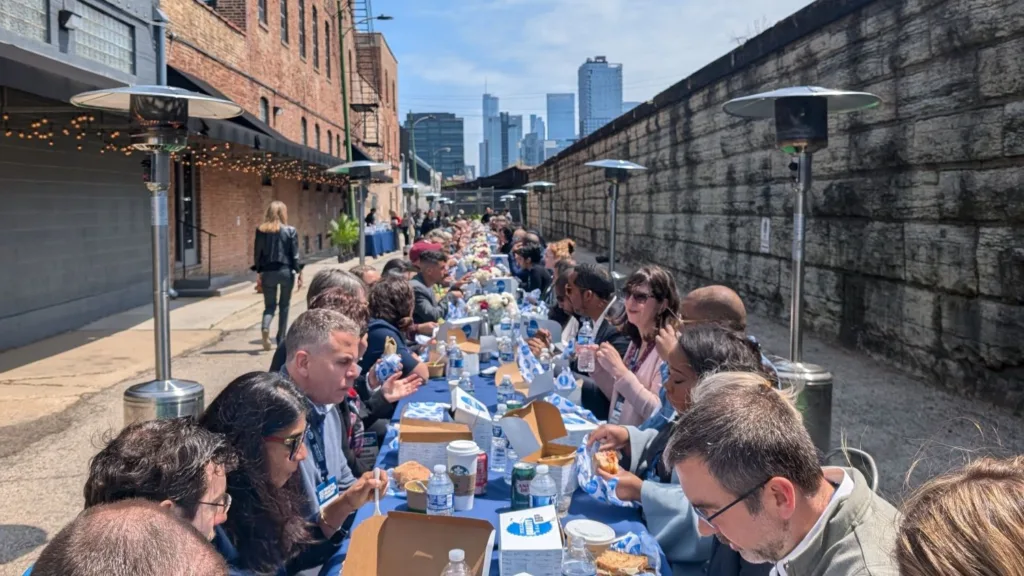
That’s why I listened closely when nonprofit leaders from Neon One clients Pilot Light, Habitat for Humanity Chicago, and Chicago Jobs Council shared how they’re building trust every day through meals, homes, and fair work.
When organizations like The West Virginia Community Development Hub, Springboard to Opportunities, and Demos spoke about community change during our sessions or networking breaks, it was apparent how what they said was rooted in practice, not platitudes.
And the more I listened, the more I kept coming back—time and time again—to a notion that, I think, will define the future of our sector: The Generosity Community.
What Is a Generosity Community?
It’s not a persona in your CRM. It’s not a shiny new engagement strategy. It’s something most nonprofits already have without naming it—and it might be the key to our future.
A Generosity Community is a group of people who show up for each other with what they have. Time. Money. Skills. Advocacy. Friendship. They don’t just appear in year-end reports or monthly KPIs—they live in the spaces between. They’re the fabric of trust that holds missions together.
At the heart of every nonprofit is a web of relationships—some vibrant, some quiet, some fraying at the edges. These relationships are built on moments: of giving, of being seen, of being overlooked, of being invited in. Generosity doesn’t live in isolation. It lives in context. It’s shaped by every interaction, big or small.
Every conversation. Every email. Every form. Each one either deepens trust or erodes it.
This is why our tools and systems matter. Technology can accelerate harm by scaling disengagement and reinforcing bad habits that never should have existed—or it can do something better. It can help us align with the needs of our communities. It can catalyze generosity, not just count it. It can free people to create, listen, and connect instead of managing spreadsheets and clicks.
But, in order for it to do so, it’s up to us to design tools for generosity that are reciprocal and regenerative, not extracted or assumed. Every moment—digital or human—has the power to either deepen or diminish trust. That’s not theory. That’s math.
These communities already exist. You don’t need to invent them. You just need to recognize them, honor them, and keep building with them.

3 Things You Can Do Right Now
A Generosity Community isn’t built in a moment—it’s built over time, through repeated decisions that either open doors or close them. What matters most now is how we act moving forward:
Here are three things you can start doing tomorrow–or, heck, start doing them today—to build generosity communities around your mission.
1. Share the Real Numbers
Show your board and team what the data says. The everyday donor is who sustains you. The everyday fundraiser is who grows the mission. Plan accordingly.
2. Map What Already Exists
Who introduces you to others? Who always shows up? Who quietly fills the gaps? Draw that map—literally—and you’ll see your community.
3. Start Tracking the Intangibles
Not just the gift amount. Not just the volunteer hours. Track the sentiment. Track the warmth. Track the “we showed up for them, and they showed up for us” moments. That’s your culture.
A Final Thought
My dad wrote sci-fi. He imagined futures filled with strange beauty—including one about cats on Mars. He dreamed of worlds beyond the average person’s imagination. Futures filled with strange beauty and bold possibilities. He didn’t teach me what the future should be—he taught me how to dream it.
But it was the nonprofits I met in Chicago who made those dreams real. They showed me what it looks like when people build trust every day, not in theory, but in practice. Not as a strategy, but as a way forward. They didn’t wait for permission to imagine something better. They lived it. They reminded me that the future isn’t a fantasy—it’s something we make, together, right here.
So no, we can’t surge trust. But we can nurture it.
We can create the future, together.

Want more great articles like this one?
If you’d like help generating ideas, honing your strategies, and keeping up on the latest trends, you’ll love our monthly nonprofit newsletter.