

Donor management software is one of the most important purchases a nonprofit organization can make. Not only is it a significant investment, but research suggests it also has a big impact on fundraising results.
Here’s the tricky part: Most nonprofit professionals aren’t experts in buying software. It’s my job to help them. And one step I always recommend is conducting stakeholder interviews.
Here, I’ll explain why that’s important and how to interview your nonprofit’s stakeholders as part of your software selection process.
Avoid These 2 Common Software-Buying Mistakes
As a consultant, I’ve led dozens of organizations through donor management software selection. Some of them hired me after trying to buy new software on their own and botching it.
For those orgs, their process usually failed for one of two reasons:
- They were rushing to look at products before really understanding their needs and goals.
- They underestimated the need to win people’s support for the decision.
The result? In some cases, the process fell apart before they completed a purchase. In other cases, they did purchase new software, but what had looked good on paper totally failed in practice.
Either way, after a lot of effort, they found themselves back at square one.
If you want to avoid those missteps, do stakeholder interviews early in the process. Through these interviews, you can:
- Gather requirements for your new donor management system.
- Surface hidden misalignment.
- Reveal cultural barriers to change.
- Clarify how seriously your colleagues take the problem.
- Build trust before recommendations are made.
Which Stakeholders Should You Interview?
When talking with your org’s stakeholders, be sure to include both leadership and non-leadership staff. Consider interviewing external stakeholders, too.
Seek perspectives from a variety of people who will feel the impact of a donor management software transition. For example:
- The development director or whoever holds primary responsibility for fundraising can help you understand revenue streams, fundraising strategies, and goals that the new software must support.
- People doing data entry, including administrative staff or volunteers, can provide insights into where efficiency or accuracy gains will be advantageous.
- The executive director and other leaders can reveal reporting needs and constraints on the budget or timeline for the investment. Talking to them early also helps you win their support.
- The finance leader has an important perspective on the org’s needs for donation tracking and reconciliation with the accounting system. They might also need to sign off on your purchase decision.
- Internal or outsourced IT folks can enlighten you on how a new tool needs to fit into the organization’s existing tech stack and advise on security and data privacy.
- Donors can tell you how digital interactions shape their experience of the organization and what’s creating friction for them with your existing software.
Here’s one more idea: Reach out to people at similar organizations who have recently gone through a comparable transition. They can tell you about lessons learned and mistakes to avoid.
What’s the Right Number of Stakeholder Interviews?
Five or six interviews are usually enough to get a balanced understanding of your nonprofit’s strategic and operational issues.
Interviews serve a dual purpose during a consulting engagement: they are both a discovery tool and a change management tool.
With that in mind, sometimes I conduct extra interviews as a way to establish relationships, ensure everyone feels included in the process, identify the enthusiasts and detractors early, and pave the way for acceptance of future recommendations.
10 Questions to Ask, and What to Listen For
Here’s a bank of 10 important questions to get you started.
| Question | What to listen for |
|---|---|
| Can you tell me about your responsibilities and your current goals? | Goals and attitudes. This question is an easy one to warm up with. It also helps you determine which processes to focus on in subsequent questions. |
| What do you do here that no one else would be able to tell me about? | Shadow systems. This question also helps you focus on the interviewee’s unique knowledge and prompts them to provide quality answers. |
| How would you describe your comfort level and attitude toward technology? | Goals and attitudes. This question is an easy one to warm up with. It also helps you determine which processes to focus on in subsequent questions. |
| Is there an area where you tend to disagree with colleagues about how technology should be used? | Is the team well-aligned on desired levels of automation and data-informed decisions? Note opinions and preferences. |
| My understanding is that you use XYZ system and follow steps one, two, and three in this process. Is that accurate? How could you help me refine my understanding of this? | Collect facts on the use cases the CRM needs to support. |
| What is working well about these tools or processes? | Surface preferences and sacred cows. Collect more details on requirements. |
| In what ways do you typically deviate from the documented process or toolset? | Discover technology limitations. Try to differentiate those from poor processes, lack of skill, lack of motivation, etc. |
| What is frustrating or doesn’t make sense? | Collect facts on the pain points the new CRM needs to address. |
| How important is solving this problem compared to your other priorities? | Get a sense of the impact of a new CRM and how committed people are. |
| What is your dream scenario? | Collect additional facts on requirements. Determine the appropriate level of investment and scale of change. |
What’s the best order to ask them in?
Start with context and role clarity. Before diving into systems and frustrations, connect with the person and find out what insights they might be able to uniquely offer. See if you can detect the lens through which they see technology and their role. Focus your time together by immediately engaging them and asking them relevant questions.
Next, confirm the facts. Gather specifics about tools and processes, and document them.
Once you have those two things in hand, you can start critiquing the current situation and considering possibilities.
Don’t be content with likes and dislikes, gripes and wish lists. This is your chance to discover whether people are prepared only for an incremental change or ready to commit to learning and adjusting processes to take advantage of a drastically different tool, for the sake of drastically better results.
How Do You Close a Stakeholder Interview?
When I do interviews as part of a donor management software selection process, I end with two simple but powerful questions.
- “Is there another question I should have asked you but didn’t?” This prompts them to pause and think about what else they could tell me—perhaps something unexpected. It gives the interviewee permission to surface what they think really matters.
- “What questions do you have for me?” Asking this provides an opportunity to clarify steps in the process, the scope of my work, and my background and credibility. You’re probably not a consultant—but you still want to ensure colleagues understand your role and trust you to lead the software selection process.
What Should You Do With What You Learn?
Once you’ve completed interviews, you have some writing to do.
- Summarize interview themes, perhaps with a few quotes that are characteristic of what you learned or where there was disagreement.
- Document the requirements for a new system. I suggest formatting this as user stories instead of a simple feature list, because they provide better context.
AI tools like ChatGPT or Gemini can be helpful (if not entirely reliable) aids in building these summaries.
Then, share what you’ve discovered.
- Circulate your summary and requirements among stakeholders, giving them an opportunity to validate and refine your understanding.
- When you are ready to engage with software providers, share these documents with them. It will enrich their understanding of your needs, helping them to customize a demonstration or price estimate.
Finally, when you are evaluating products, use what you gleaned from these interviews to ensure you’re choosing a tool that is a great fit for your needs and is one that your colleagues will embrace.
About the Author
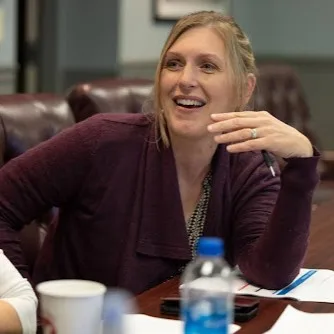
Karen Graham is an expert at helping nonprofit leaders to strategize, plan for, and select the right technology for their organizations. She can help you get technology working the way it should and feel confident in your decisions. Her consulting work includes strategic technology roadmaps, software selection, and fractional CIO services. Karen was the Executive Director of the national nonprofit Idealware, and has held leadership roles in capacity building, arts, and human service organizations as well as a software startup. She holds an MBA in Nonprofit Management from the University of St. Thomas. She is a trusted Neon One partner, and you can learn more about her at karengrahamconsulting.com or on LinkedIn. If you’d like 30 minutes of free tech advice, no strings attached, schedule a consultation.