
— KEY TAKEAWAYS
A fundraising CRM is a centralized platform where your organization tracks every donor, gift, event registration, email click, and volunteer shift, replacing disconnected spreadsheets and tools.
- When looking at how nonprofits use CRM data for fundraising, prioritizing donor retention is your most cost-effective strategy. Retaining an existing donor costs just $0.20 per $1 raised, compared to the $1.50 it generally costs to acquire a new supporter.
- You can use your CRM data to segment donors by giving frequency or event attendance, allowing you to personalize your messaging at scale without burning out your team.
- Tracking multichannel data gives you a complete picture of how supporters prefer to engage, so you can build your next appeal around proven past performance.
- Automated workflows handle vital relationship maintenance—like sending timely thank-yous and giving anniversaries—helping small teams operate up to 50% more efficiently.
When you’re a small nonprofit, you’re running the whole show with a lean team (okay, maybe it’s like one-and-a-half people, tops), a packed calendar (actually, it’s three calendars stacked on top of each other), and roughly five jobs at once (ha! five would be a luxury).
Fundraising is the first, second, and third priority, but if you’re running everything from a disconnected set of single-use tools—a spreadsheet database here, a donation page there, plus an email service, QuickBooks, and a free events system—you’re working at a disadvantage.
For someone like you, who’s carrying the entire weight of your org on your shoulders, upgrading from multiple tools to a unified fundraising CRM, like Neon CRM, can be a true game-changer. It’s your secret weapon that turns data into donations and donations into long-lasting relationships—while saving you a ton of time.
In this article, we’ll cover five steps you can follow to start using the data in a fundraising CRM to raise more. Let’s go!
What Is a Fundraising CRM—and Why Does it Make Such a Difference?
A fundraising CRM (that stands for constituent relationship management, in case anyone asks, though no one will) is the hub where your organization tracks every donor and every gift. And with as system like Neon CRM, you can also track every event registration, email click, volunteer shift, membership renewal, and more.
Having an all-in-one platform is great, all right, but is the convenience of one login really the top benefit of a CRM?
Not even close.
Here’s the thing: Most small nonprofits are already collecting more data than they realize. The challenge isn’t a lack of information; it’s organizing all that information so that you can see what’s actually happening and build a fundraising strategy that will actually, you know, work.
When your data is spread between all these different systems, there’s no way to cross-reference and analyze it other than by hand. And that takes a long, long, long time. You could have a dedicated supporter showing up to events who’s ready to upgrade to a recurring donation, but, in this setup, they’re practically invisible.
That’s why using a CRM is such a critical fundraising tool! By bringing all of those functions—fundraising, email, payments, events—into a single system, with every data point residing in a unified donor profile for easier, better reporting. And better reporting means better strategy.
The five steps below give you a practical place to start.
1. Track the Right Metrics—Starting with Donor Retention
So what’s the difference between a nonprofit that struggles to grow and one that builds real, lasting momentum? A lot of the time, the answer is donor retention.
According to Neon One’s Recurring Donor Report, nonprofits retain roughly 31–35% of one-time donors annually and 78–79% of recurring donors. Donors who give every year for five years account for 45% of total revenue, despite making up only 11.7% of the donor pool.
Retained donors are, in short, way more cost-effective than new donors. To acquire a donor, nonprofits generally spend about $1.50 for every $1 raised. But to retain a donor, they only spend $.20 per $1.00. That’s a huge difference!
In Neon CRM, you can build a donor retention rate report that shows you exactly who gave last year but hasn’t given yet this year. Run it monthly and treat it like a to-do list. Those are the relationships worth investing in, and the easiest donors to appeal to, because you know they already believe in your work.
For some other fundraising KPIs that are important to track, check out the guide below:

2. Segment Your Donors So Every Message Feels Personal
So you just send the same email to everyone in your database and call it a day, right? Head home, have a drink, spend 30 minutes trying to figure out what to watch on Netflix, and then fall asleep on the couch 5 minutes in?
While that sounds lovely (sort of), the answer is no.
Sending the same message to every person in your database will result in donors tuning you out, for good. The key to fundraising success isn’t sending the same magically worded appeal to people. It’s reaching the right people with the right message at the right time.
Your fundraising CRM holds exactly what you need to build smart donor segments, or groups of supporters who share similar traits and interests. When you’re addressing donors who volunteer, for example, a message that is personalized to their experiences and talks about that volunteer before making an appeal helps these donors feel seen.
And donors who feel seen are donors who are more likely to give again.
In Neon CRM, you can filter your constituent database by giving level, frequency, campaign history, event attendance, volunteer activity, and more. You can build a segment once, save it, and use it again and again. Anyone who meets the criteria will be automatically added.
Here are some of the key segments you should build:
- First-time donors who gave in the last 90 days (perfect candidates for a personal thank-you or a simple onboarding sequence)
- Donors who gave last year but haven’t given yet this year (you can pull them as a LYBUNT segment for a “we miss you!” message)
- Recurring donors who’ve been giving for three or more years (your most loyal supporters deserve to be treated that way)
- High-engagement donors who’ve attended events and donated (often open to deeper involvement—ask them)
You could personalize your outreach by literally writing individual emails to every single person on your database. But that isn’t feasible as your network of supporters grows. But with segments you can personalize messages at scale, without burning out your team (aka, you and that other half person).
And when your segments are pulling from automatically updated CRM data, that’s even more time saved while still making your donors feel appreciated.

3. Use Multichannel Data to Understand How Your Donors Actually Engage
Let’s say that you prefer to communicate with your donors through email. That doesn’t mean that your donors prefer engaging with you over email. And, for some of them, if you switched to texts instead, they’d engage—and give—even more!
When you’re able to access data from multiple communications channels in one platform, figuring out preferred communication methods gets a lot easier.
Think about it this way. You’ve got a donor who’s been on your list for three years. She opens every email you send. She’s attended your last two galas. She’s never once clicked a donation link in an email, but she’s given $500 every year like clockwork.
In a disconnected tech stack, those two facts—the email engagement and the giving pattern—live in separate systems. You’d never connect them. So you keep emailing her donation links, she keeps ignoring them, and you have no idea why she’s not converting.
In a unified CRM, those data points live side by side in a single donor profile. You can easily see that she gives at events—and only at events. Now you know where to put your energy with her.
When you’re tracking multichannel data, you’re tracing the full arc of how a person engages with your organization across email, events, volunteer shifts, and giving. And then you’re using that picture to make smarter decisions about how and when to reach out.
In Neon CRM, you can track email, text messages, direct mail, peer-to-peer gifts, and event attendance without ever switching logins, with all that data flowing right into each donor’s profile. No matter how your donors want to hear from you, you can do it in your CRM.
4. Build Your Next Appeal Around What the Data Tells You
A lot of nonprofits approach campaigns the same way every year: They pick a theme, write the email, send the appeal, and wait. That can work fine, sometimes. But if it doesn’t, you’re left with too little time to pivot, and not enough info about your campaign to even know what you should pivot to.
A better approach is to start with the data on what’s worked before, and when—and use all of that to shape your campaign, your appeals, and overall strategy.
In Neon CRM, a campaign comparison report can tell you which of your previous appeals drove the most revenue, brought in the most new donors, or generated the highest average gift. That gives you a blueprint that you can use to shape your next campaign.
If your year-end appeal consistently outperforms your spring campaign, that’s telling you something about when your donors are ready to give. If your major donor segment always upgrades after a personal phone call but barely responds to email, that’s telling you something about how they want to be asked.
A couple of reports worth pulling before your next campaign:
- Campaign comparison: Which appeals drove the most revenue? The most new donors? The highest average gift? Use that data to shape your next ask.
- Donor giving history: Who upgraded their gift in the last 12 months? Who’s been giving at the same level for five years and might be ready for a bigger ask? Both groups are telling you something about what to put in front of them next.
The goal here isn’t to turn fundraising into a pure math equation. It’s to stop taking random shots in the dark. Your donors are leaving signals in your CRM every time they give, open an email, or show up to an event. Using that data to inform your appeals is just good stewardship.
5. Set Up Workflows That Automatically Keep Relationships Warm
Most of the relationship-building work that keeps donors coming back isn’t complicated. It’s just consistent. It’s a thank-you that arrives promptly, a check-in when someone’s been quiet for a while, or a note recognizing a milestone.
It’s the small, personal, timely touches that say, “We see you, and we appreciate you.”
But when you’re a hardy team of 1.5, that “consistent” is really hard to pull off manually. There’s always going to be something right in front of you that feels more urgent, which is when those small follow-up actions fall through the cracks.
Enter: CRM workflows. In Neon CRM, you can build automated workflows—that is, a series of actions set off by certain triggers—that handle all these small but vital acts of relationship maintenance, leaving your team to focus on the big stuff.
The kind of actions we’re talking about include:
- Send a personalized thank-you to every first-time donor within 24 hours of their gift.
- Trigger a re-engagement sequence when a donor’s last gift date crosses the 12-month mark.
- Send a note recognizing a recurring donor’s giving anniversary.
None of this replaces the genuinely personal stuff—the handwritten card, the phone call to a long-time major donor, the face-to-face conversation at your next event. In fact, it’s quite the opposite. These workflows support your team’s ability to add that personal touch.
For some helpful, real-world examples of how this can work, check out the article below from Kelly McLaughlin of From Scratch Fundraising. She wrote about how she uses Neon CRM’s automated workflows with her clients to increase in-person interactions with their donors.
Check it out!

3 CRM Workflows That Donors & Fundraisers Love
What This Looks Like in Practice: NAMI Greater Mississippi Valley
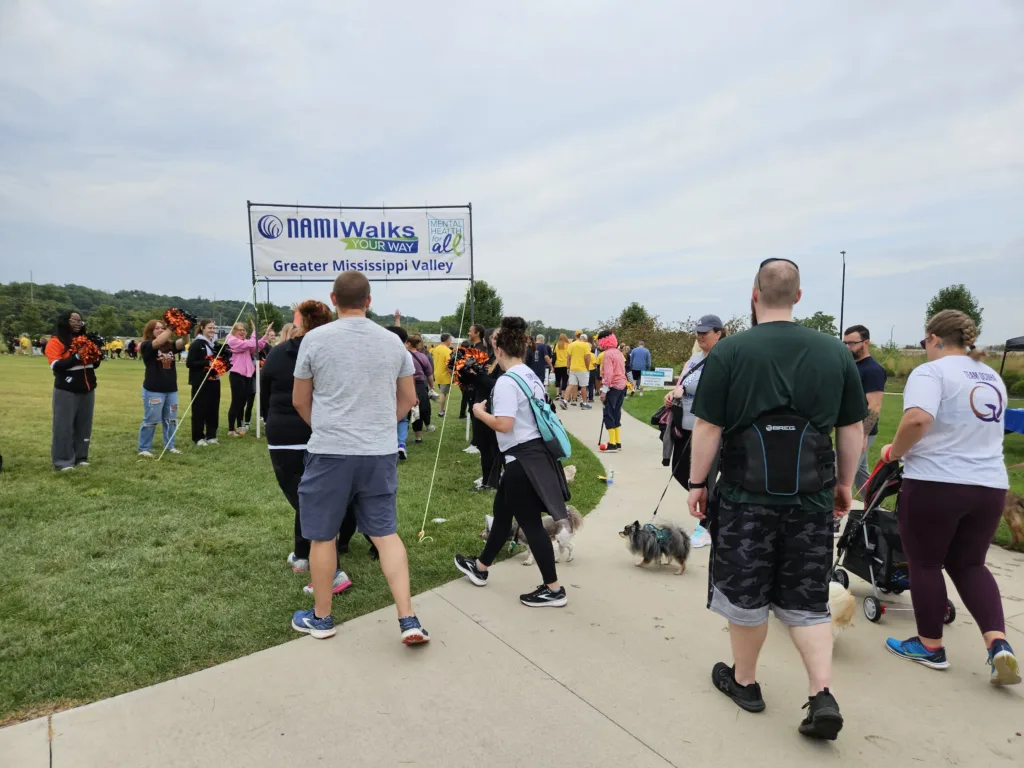
NAMI Greater Mississippi Valley is a four-person team serving eight counties across Iowa and Illinois—mental health education, support groups, advocacy, and community programming, all at once. If anyone knows what it means to wear every hat in the building simultaneously, it’s them.
Before Neon CRM, keeping track of all of it meant constantly context-switching between systems that didn’t talk to each other. With Neon CRM, everything—volunteers, events, donor communications, fundraising—lives in a single unified view. Automated workflows handle the follow-up. The reporting just runs.
The result: NAMI GMV now operates 50% more efficiently than before. For a team of four running programs across two states, that’s the difference between burning out and building momentum. And when your data is clean, connected, and easy to act on, every donor interaction—every ask, every thank-you, every follow-up—is better for it.
You Have the Data. You Need a CRM.
Every gift, every event registration, every opened email, every lapsed year—it’s all data, and it’s all sitting in your tools right now, waiting to be put to use. By moving to a fundraising CRM, you can actually hear what your donors are already telling you.
The nonprofits that build real, sustainable support aren’t necessarily the ones with the biggest teams or the biggest budgets. They’re the ones that know their donors—what motivates them, how they like to give, what makes them feel valued—and they use that knowledge to show up for people in ways that actually matter.
That’s exactly what Neon CRM is built to do. Take a simple, self-guided tour of our CRM to see how we help small nonprofits like yours raise more.

Author Bio
Alex Huntsberger, Content Marketing Manager
Alex Huntsberger is Content Marketing Manager at Neon One, where he brings his expertise in nonprofit fundraising, events, and memberships to the Neon One blog. Alex has spent over a decade as a content writer, search marketer, and communications pro. He’s also an experienced theater critic and arts writer, having covered plays and musicals across Chicagoland since 2010 for the Chicago Sun-Times, Time Out Chicago, and Newcity Stage. Like every other liberal arts grad in the Chicago area, Alex once worked for Groupon. He currently lives in Mundelein, IL, with his wife and their two children.