

— KEY TAKEAWAYS
Cultivation vs. Stewardship:
- Cultivation is the process of building relationships with prospective donors before a gift is made to determine affinity and capacity.
- Stewardship is the ongoing process of thanking, reporting impact to, and engaging donors after a gift is made to ensure long-term retention.
How can I improve donor stewardship in my nonprofit?
Shift from transactional outreach to holistic retention. According to The Generosity Report, 5-year repeat donors account for 45.0% of total revenue despite making up only 11.7% of the donor pool. Prioritize multi-channel engagement—such as inviting donors to volunteer or attend events—because non-financial involvement significantly boosts long-term annual gift growth.
What are the best strategies for identifying the target audience for nonprofit campaigns?
Research shows that initial gift size doesn’t correlate with long-term donor loyalty. Instead of segmenting solely by initial gift size, group supporters by behavioral affinity and the different ways they support you (e.g., recurring donors, pledgemakers, volunteers, and event registrants).
Why Multiorganization Donors Matter
Nearly 30% of donors give to multiple nonprofits, with 82.04% of multi-org supporters focusing on just two cause categories. Multi-org donors give higher total cumulative gifts ($969 vs. $665 over 5 years) and increase their giving faster (48% growth vs. 20%) when stewarded around cause affinity.
How well do you know your donors? Well enough to know that they aren’t all interested in hearing the same appeals, reading the same updates, or attending the same events. That’s why nonprofits use donor segmentation to target different messages for different audiences.
In fact, donor segmentation is a pretty powerful tool in the nonprofit toolbox. By enabling nonprofits to tailor their communication and engagement efforts, ensuring that each donor feels valued and connected to the cause, segmentation can significantly boost fundraising and donor retention.
In this comprehensive guide, we’ll dive into the essentials of donor segmentation, from how to get started to what segments to create, how to put them into action, and what metrics to track once you do. Let’s get started!
Do You Know Your Donors?
They’re more generous than you might think … and we have proof. Download The Generosity Report today!
What is Donor Segmentation?
Donor segmentation is the strategic process of dividing your donor base into distinct groups—or segments—based on shared characteristics like age, income, location, past donation history, or interests.
The purpose of donor segmentation is to help nonprofits tailor their communication and engagement strategies to meet the specific needs and preferences of each group, leading to more personalized and effective donor interactions.
A well-executed donor segmentation strategy will enable you to send donors messages and opportunities that truly resonate with them. That will improve your engagement, optimize your fundraising efforts, and boost your overall donor retention.
While many smaller nonprofits might think the process is too complicated for them to enact, modern tools like Neon One greatly simplify the process—and even small datasets can still provide valuable insights!
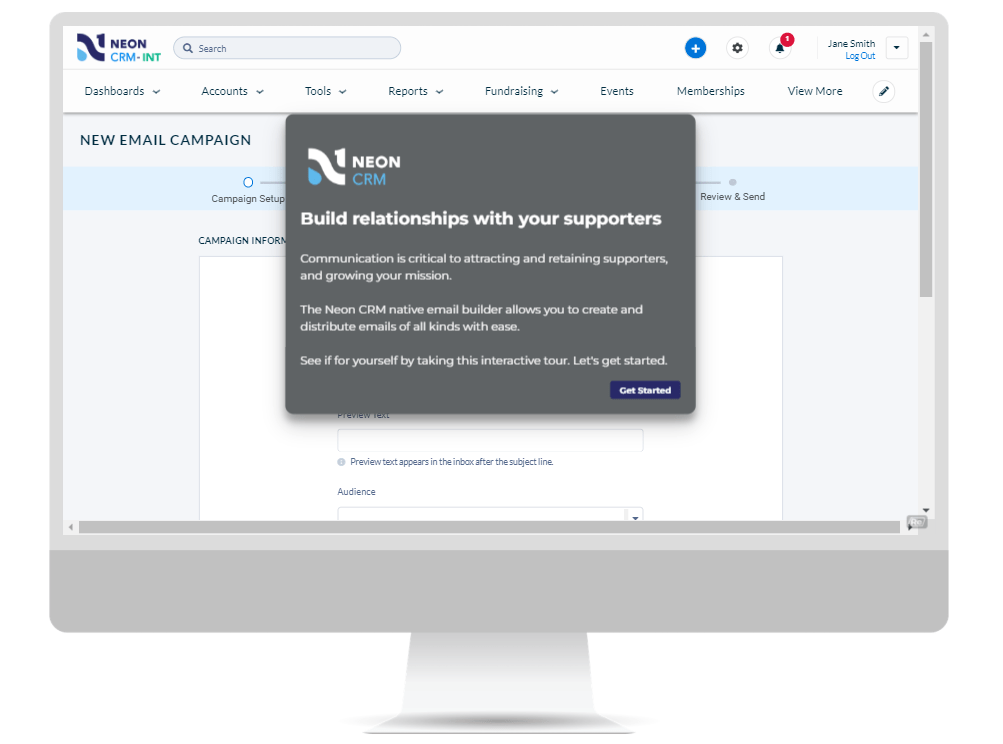
Send Emails That Don’t Get Ignored
Building a stable base of loyal, passionate supporters starts with great communication! With Neon CRM’s integrated email builder, creating compelling, impactful messages is as simple as drag, drop, and send.
Donor Segmentation in 5 Simple Steps
When implementing a donor segmentation strategy, you’ll want to follow this simple five-step plan:
Step 1: Data Collection
First, you’ll need to collect relevant data about your donors. This can include demographic information, donation history, engagement activities, and psychographic details (more on those later). You should use multiple channels to collect data, such as donation forms, surveys, event registrations, and online interactions.
Step 2: Data Analysis
Once you have collected this data, you’ll analyze it to identify patterns and trends. Look for common characteristics and behaviors that can be used to group donors into meaningful segments.
Step 3: Segment Definition
Define your donor segments based on any identified patterns. Each segment should represent a group of donors with similar characteristics or behaviors. For example, you might create segments for new donors, lapsed donors, young donors, and recurring donors.
Step 4: Strategy Development
Develop tailored communication and engagement strategies for each donor segment. Consider the unique needs, preferences, and motivations of each group and craft messages that resonate with them. Personalization is only possible with effective donor segmentation!
Step 5: Implementation & Monitoring
Implement your segmentation strategies using automated workflows and tools. Continuously monitor the performance of your communications and engagement with each segment and make adjustments as needed. Regularly review your data and segmentation criteria to ensure they remain relevant and effective.
Whether you are a small nonprofit just starting with segmentation or a large organization looking to refine your strategies, the basic process we’ve laid out above will always hold true for you.
While the relative number and complexity of your donor segments will vary from one organization to another, using and analyzing these segments will pretty much always offer valuable insights and reveal opportunities for growth.
Common Types of Donor Segments
Effective donor segmentation hinges on identifying the right criteria that you have in your donor management platform to use in slicing up your list and building your segments. The more specific those segments are, the better you can tailor your engagement strategies to meet the needs and preferences of each group.
Here’s a look at the most common types of donor segments:
Demographic Segmentation
Demographic segmentation involves categorizing donors based on characteristics such as age, gender, income, education, and occupation.
- Age: Donors can be segmented by age to better understand their communication preferences and interests. This segmentation helps nonprofits tailor their approaches to engage younger, middle-aged, and older donors more effectively.
- Gender: Segmenting donors by gender can help organizations recognize the different ways men and women in their community might engage with charitable activities, helping to craft messages that resonate with each group.
- Income: Income-based segmentation helps identify the financial capacity and giving potential of donors, enabling organizations to create targeted appeals that match the giving abilities of high, middle, and low-income supporters.
- Education & Occupation: Understanding donors’ educational backgrounds and professional fields can provide insights into their interests and preferences, allowing for more relevant and meaningful engagement strategies.
Geographic Segmentation
Geographic segmentation divides donors based on their physical location, such as country, region, city, or neighborhood.
- Country & Region: Geographic segmentation involves categorizing donors based on their location. This is useful for tailoring campaigns to address regional interests, cultural differences, and community-specific issues. (For many smaller local nonprofits, this likely won’t be a factor.)
- Urban vs. Rural: Segmenting donors by their living environment (urban or rural) can help in understanding their lifestyle, interests, and communication preferences, ensuring that outreach efforts are appropriately tailored.
Behavioral Segmentation
Behavioral segmentation focuses on donor behavior, including donation history, frequency, average gift size, event attendance, and volunteer activity.
- Donation History: Donors can be segmented based on their donation history, such as new, lapsed, and long-term donors. This helps in creating strategies that cater to the different levels of engagement and loyalty.
- Donation Frequency & Amount: Segmenting donors by how often and how much they donate provides insights into their giving patterns, allowing your nonprofit to tailor its approach to encouraging consistent support.
- Event Attendance & Volunteer Activity: Understanding which donors attend events and participate in volunteer activities can help your nonprofit segment its audience based on engagement levels, enhancing targeted outreach.
- LYBUNTS & SYBUNTS: These are two of the most common segments, and they’re specifically for past givers. LYBUNT stands for “Last Year, But Unfortunately Not This Year” and SYBUNT stands for “Some Year, But Unfortunately Not This Year.”
To learn more about LYBUNTS and SYBUNTS, check out this article!

Psychographic Segmentation
Psychographic segmentation groups donors based on their core values and beliefs. This approach helps in crafting messages that align with donors’ personal motivations and causes they are passionate about.
- Values & Beliefs: This type of segmentation helps nonprofits understand the underlying motivations behind donors’ support for specific causes. For example, donors whose commitment to your mission is based on their religious faith might have different motivations than those who are committed due to personal life experiences.
- Interests & Hobbies: Segmenting donors by their interests and hobbies provides a deeper understanding of what drives their engagement, enabling you to connect with donors on a more personal level.
- Lifestyle & Life Stage: Lifestyle and life stage segmentation involves understanding donors’ current life situations and how they prefer to engage with causes. This helps in tailoring communication to fit their lifestyles and life stages, such as young professionals or families.
Try Combining Segmentation Criteria
For the most effective donor segmentation, look at your existing data to see if you can combine multiple criteria to create highly specific and targeted segments.
For example:
High-Income, Environmentally Conscious Donors: For this group, you can focus on major giving opportunities for environmental projects and provide detailed impact reports.
Middle-Aged, Urban, Recurring Donors: In your communications to these donors, highlight city-based initiatives and the benefits of their sustained support in creating long-term change.
Hey! Speaking of data on recurring donors … Did you know that Neon One released a massive report that does a deep dive on recurring donors, what motivates them to support their favorite causes, and how you can use that information to reach them?
This report is chock-full of awesome insights and helpful strategies for nonprofits of all sizes. Download it today!
12 Effective Donor Segmentation Strategies
Once you have collected and analyzed your donor data, the next step is to start tailoring your communication and engagement efforts to resonate with each donor segment.
But when it comes to choosing a specific donor segmentation strategy, it can be hard to know where to start!
That’s why we’ve laid out 12 simple ideas for targeting and personalizing your stewardship strategy to help you get started.
1. Segment-Specific Campaigns
Design fundraising campaigns specifically for different donor segments. For example, you could create a campaign targeting major donors with a focus on large-scale projects, while developing a separate campaign for potential recurring donors, emphasizing the importance of sustained support.
2. Use Donors’ Names
Address donors by their names in all communications. This simple gesture can make a significant difference in how personalized and appreciated a donor feels, especially when combined with a segmentation strategy.
3. Leverage Past Contributions
Reference donors’ past contributions in your messages. Acknowledge their previous support and highlight the impact they have made to reinforce their connection to your cause.
4. Welcome & Onboarding
First impressions matter. Welcome new donors with personalized onboarding emails that introduce them to your organization, share success stories, and outline how their contributions will make a difference. Provide clear information on how they can stay engaged and involved.
5. Educational Content
Share educational content that helps new and existing donors understand your cause and the impact of their support. This could include things like blog posts, videos, and infographics.
6. Re-Engagement Campaigns
Develop re-engagement campaigns to reconnect with lapsed donors. Use personalized messages to remind them of their past contributions and the impact they made. Highlight recent achievements and upcoming projects to reignite their interest.
7. Special Incentives
Offer special incentives, such as matching gift opportunities or exclusive updates, to encourage lapsed donors to re-engage with your organization. Personalize these offers based on their previous engagement history and interests.
8. Personalized Thank-You Notes
Donors should receive personalized thank-you notes that express genuine appreciation for their contributions. Include specific details about how their donations have been used and the impact they have made. Try creating different thank-you notes and follow-ups for different types (recurring vs. one-time, first-time gifts, etc.) and sizes of gifts.
9. Exclusive Updates and Reports
Provide specific donor segments with exclusive updates and detailed reports on the projects they have supported. This could include behind-the-scenes information, interviews with beneficiaries, and progress reports.
10. Recognition and Rewards
Recognize and reward longtime donors for their loyalty. This could include special recognition in your annual report, invitations to exclusive events, and personalized gifts.
11. Tailored Messaging
Craft messages that resonate with each donor segment by addressing their specific interests, values, and motivations. Use the data you have collected to inform your messaging and ensure it is relevant and meaningful.
12. Content Variety
Offer a variety of content types to cater to different preferences. This could include newsletters, blog posts, videos, infographics, and social media updates. Tailor the content to each segment’s preferences and interests.
Want some more insight into building a donor segmentation strategy? We’ve got you covered!

Tips for Collecting, Managing, and Analyzing Donor Data
If you want your donor segmentation efforts to be effective, then you need a data set that is as accurate as it is comprehensive. Otherwise, you might as well be putting your strategy ideas on sticky notes, taping them to the wall, and throwing darts at them for all the good your segments will do you.
With that in mind, here are some best practices to help guide you as acquire, maintain, and analyze donor data:
Use Multiple Channels
Capture a complete picture of your donors by collecting data from various sources like donation forms, surveys, questionnaires, event registrations, user behavior on your website, and notes made on more personal interactions like phone calls, emails, and in-person conversations.
Ask the Right Questions
Make sure you’re prioritizing the most relevant information to collect. Beyond basic (but still crucial) demographic info and donation history, look for ways to collect data on your donors’ engagement history (event registrations, volunteer activities), communication preferences (email, text, physical mail), as well as their interests and motivations.
Ensure Data Accuracy
Your donor data is only useful so long as it’s correct. Maintain accurate data by training your staff on consistent data entry practices, setting validation rules, and periodically reviewing and cleaning up your donor database.
Use Donor Personas to Inform Your Strategies
Develop donor personas that map onto your different donor segments, letting you target specific motivations and preferences while also writing with a person in mind instead of simply an accumulation of data points.
Want to read more about creating donor personas? Who wouldn’t! This blog post has got you covered:

8 Key Metrics to Track for Donor Segmentation Success
Once your donor segmentation efforts are up and running, you’ll need to measure its success. That way, you’ll be able to see what’s working, what isn’t, and what adjustments or refinements need to be made.
In order to do that, you’ll need to figure out what metrics you want to track. Here are some most popular ones to consider:
- Email Open and Click-Through Rates: Measure the open and click-through rates of your segmented email campaigns. High engagement rates indicate that your messages are resonating with the targeted segments.
- Event Participation: Track the attendance and participation rates for events promoted to different donor segments. Higher participation rates suggest effective segmentation and targeted outreach.
- Volunteer Involvement: Monitor the number of volunteers from each donor segment and their level of involvement in various activities. This helps assess the engagement and commitment of different donor groups.
- Total Donations: Measure the total donations received from each donor segment over a specific period. Analyze the growth in donations to determine the effectiveness of your segmentation efforts.
- Average Donation Amount: Track the average donation amount for each segment. An increase in average donation size indicates that your targeted communication is encouraging more generous contributions.
- Donation Frequency: Monitor the frequency of donations from each segment. Increased donation frequency suggests that your segmentation strategies are successfully encouraging repeat giving.
- Donor Retention: Calculate the retention rate for each donor segment by comparing the number of donors retained over a period to the total number of donors in that segment. High retention rates indicate strong donor loyalty and effective engagement strategies.
- Lapsed Donor Re-Engagement: Track the number of lapsed donors who have re-engaged with your organization after targeted outreach efforts. Successful re-engagement campaigns can significantly improve overall retention rates.
Looking to build out new fundraising metrics? Download our Fundraising KPIs Worksheet. It has everything you need to get you up and running.
Building Donor Segments in Neon One
Donor segmentation is a powerful tool, one that many nonprofits haven’t used to their full advantage. By tailoring your communication and engagement strategies, you can build stronger relationships, increase donor loyalty, and improve your fundraising results.
The ability to easily create and edit donor segments is just one of the many ways that Neon One gives our clients the power to supercharge their fundraising and stewardship strategies. If you’d like to learn more about everything the system can do—and it’s a lot—then check out this simple self-guided tour!