

— KEY TAKEAWAYS
Sending a donor survey is one of the most effective ways to understand your supporters’ motivations and build a sustainable, long-term fundraising strategy.
- Define a clear, primary objective for your survey before you write a single question so you gather the exact insights your team needs.
- Keep your survey short and respectful of your donors’ time by limiting it to five to seven highly relevant questions.
- Use a strategic mix of multiple-choice questions for easy data aggregation and one or two open-ended questions for deeper qualitative insights.
- Upload your survey results directly into your nonprofit CRM so you can segment your lists and tailor future communications to match your donors’ specific interests.
Building strong donor relationships starts with understanding what your supporters care about. But here’s the good news: you don’t have to sit around and wonder what motivates your donors to give—you can ask them!
If you aren’t surveying your donors, you should start now. Asking the right donor survey questions helps nonprofits understand supporter motivations, improve retention, and strengthen relationships.
By asking smart questions and using donors’ answers to inform your communications, you’re proving that you care about what they think and identifying ways to get them even more deeply involved in your work.
And you can use those answers to help tailor their experience with your organization to their interests—that’s why regular surveys are a cornerstone of any effective nonprofit email strategy.
But what questions should you ask? Let’s look at how you can ask the right donor survey questions.
Get the 2026 Recurring Donor Report
Data-backed findings from over 4,000 nonprofits and 2,000 nonprofit donors show why recurring givers are the future of nonprofit fundraising.
Creating a Donor Survey
Whether you’re creating an annual donor survey or a post-campaign feedback form, you should start with your end goal in mind. Take some time to think through what you want to accomplish through this survey. What do you want to know about your supporters? How will you use your findings? Should you send a single survey to your entire donor base, or should you create different versions for different segments of donors?
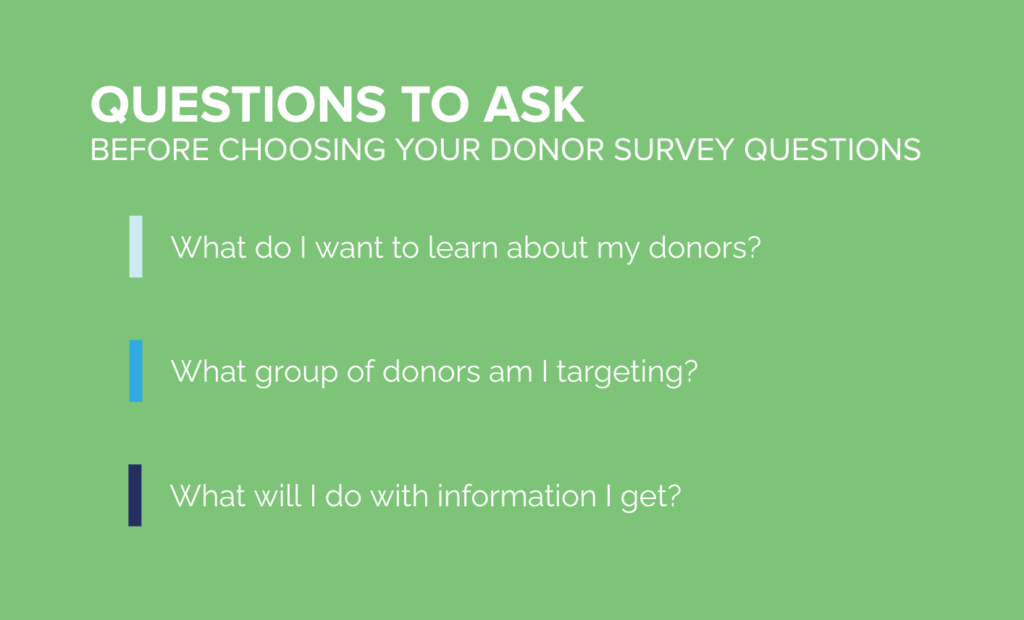
Answering these questions will help you decide on the type of survey you want to create. There are a few different types of donor surveys, including donor motivation surveys, donor satisfaction surveys, and donor stewardship surveys.
If you want to understand why people choose to donate to your cause, you’ll want to create a donor motivation survey. If you’re looking to understand how donors perceive the way their gift is making a difference, a satisfaction survey will be the best choice. Donor stewardship surveys, on the other hand, would be the best fit if you’re looking for opportunities to engage your donor base and help identify other ways you can work together to further your cause.
Figure out which type supports your goal and stick to it. This will make it easier for you to write a great survey and use the resulting information.
Looking for Better, Safer Ways to Use AI?
The AI Xchange, by Neon One, is a resource hub that helps you use AI efficiently and safely—so you save time without risking donor trust.
7 Must-Ask Donor Survey Questions for Nonprofits
When you understand your donors’ motivations and preferences, it will be easier for you to capture their attention when and where you need it. These questions will help.
1. Why Is This Cause Important to You?
Sure, you could assume that people donate to support your mission or out of admiration for your organization. That may be the case occasionally, but that’s probably not the primary reason people give. According to a study by DonorGraphics and One & All, the main reason people support a cause is that they want “to support a cause that has affected me or a loved one.”
Not sure what that means in relation to your own mission? This question will help. Whether the answer is obvious or not, you can get some great feedback from your constituents—maybe even a quote for future marketing materials. When you ask this question, try to give donors the option to enter their own response instead of choosing from a list of possible choices. You can do this by creating this question using a “long answer” option instead of a multiple-choice option in your survey platform.
Understanding what is going on in your donor’s heads is vital to knowing how to capture their attention when you need them to take action.
Neon One Tip: Dividing your audience into segments for donor surveys can help you better target your questions and info-gathering. To help users get started with donor segmentation, Neon One’s Neon CRM comes with built-in donor segments for at-risk and lapsed donors in the “Saved Reports” section.
2. Which Campaigns or Programs Interest You Most?
This donor engagement survey question is especially effective for organizations that offer a wide range of services or programs. While loosely tied to question #1, this question invites donors to be more specific about the work you do and why it appeals to them. If your programming is very targeted, it can still help you understand the “why” behind your donors’ interest in your nonprofit.
Once you know which programs or campaigns are most interesting to your supporters, you can use that information in a few ways. Say your nature conservancy is preparing to do a cleanup of your local river. You could look through your donor base, identify donors who have historically given to past cleanup projects, and ask them to donate to support this program. You could even ask them to become volunteers!
It could also help you in future appeals, too. If many of your donors are excited about river cleanup but don’t seem to be aware of your kids’ programming, highlighting how much your students love playing around the newly cleaned river could be a good way to teach supporters about that program.
Get the Nonprofit Email Report
We evaluated 37,472 email campaigns sent by Neon One clients and identified key email benchmarks, along with data-backed insights your team can actually use.
3. How Much of an Impact Do You Feel Your Gift Has?
Lapsed or at-risk donors often feel that they aren’t making a difference with their gifts anymore. When donors feel their support isn’t making an impact in their community, they’re more likely to stop donating. By asking this question, you can get a sense of how your donors feel about their impact in the days or weeks after they’ve donated.
People’s responses to this question can help you identify ways to strengthen their relationship with your organization and the community you serve. If your supporters feel they don’t make an impact—or if they indicate that they don’t know what their impact is—you can use that information to guide your communications strategy.
Say your donors tell you they don’t understand how their gifts make a difference: You could focus on sending more frequent updates, sharing more personal stories, or even updating your donation forms and receipts to include more impact statements.
If you want even more insight into how your donors feel after they give, you could try asking additional questions like:
- Do you feel your donation is appreciated by our organization?
- How do we show that your gift is meaningful to us?
- Do you feel you have a good understanding of how your gift makes a difference in our community?
- What kind of information or updates would you like to receive after making a gift?
Measuring impact is central to donor retention. When donors understand how their gifts create change, they’re significantly more likely to give again. Survey responses help you identify which supporters need more impact communication and which stewardship strategies resonate most.

How to Build a Winning Donor Stewardship Plan (+ Free Template)
4. What Other Causes Do You Support?
With over 1.5 million nonprofits in the United States alone, it’s likely that your donors aren’t exclusive to your organization alone. That’s not a bad thing!
Asking about their involvement with other organizations can help you develop a more thorough understanding of your supporters. It gives you the opportunity to take a look inside their lives and experience them as real people. Say you’re an animal shelter and notice that many donors also give to a local organization that provides veterinary care for abandoned animals. You know they’re invested in providing medical care for animals; you may choose to include notes about your clinic’s vet programs and the services available to your shelter animals.
Being aware of the different organizations your donors support can help identify opportunities for partnerships, too. Teaming up with other organizations is a great way to show your donors that you care about the missions they love, too. If you’re a food bank and notice many of your supporters also give to a local organization that provides meals to students during school vacations, for example, you could team up with that organization to host a community fundraiser. Your donors will be excited about supporting two related causes they care about, and you can make an even bigger impact in your community.
5. How Do You Prefer to Donate?
Knowing how your donors prefer to give will help you raise more money for your cause. You’ll be able to prioritize different fundraising channels more effectively and make it easier for donors to give using their preferred method.
This can also help you avoid missteps that could seriously impact your fundraising. If your board is considering eliminating your direct mail fundraising, for example, but you discover 45% of your mid-level donors prefer to give that way, you’ll have a data-backed reason not to discontinue those campaigns. If you learn that a large majority of your donor base appreciates direct mail but prefers to give online, you could comfortably continue direct mail appeals but skip the self-addressed stamped envelopes used to remit checks. Instead, you could include instructions for giving online or include a scannable QR code that points mail recipients to your online donation form.
By asking your audience what they prefer, you show a dedication to their needs and wants—and you can find out if you’re highlighting their preferred methods, too. This is also an ideal opportunity to see if donors are interested in giving in other ways, like volunteering or running a peer-to-peer fundraiser.
Neon Tip: Integrate your event registrations and volunteer shifts to get a clearer picture of what programs a donor is already supporting. Neon CRM users can employ the system’s Timeline feature to gain a more holistic view of a supporter’s relationship with their nonprofit.
6. How Would You Rate Your Donation Experience?
When you send a post-donation survey asking about their experience, you can get valuable insight into how you can improve their interactions with you. You can learn so much when you ask this question! You might discover that some people find your donation form confusing, want different options (like recurring giving or the ability to cover processing fees), or have a hard time accessing your donation page on their phones.
Ask your supporters about what happens after they give, too. Would they like to see a different message on your confirmation page? Did they receive their receipts on time? Did someone at your organization thank them for their gift? If you can anticipate your constituents’ desires, you can make sure the giving process is quick and easy, then create a wonderful post-donation experience that will make them more likely to give again in the future.
7. Do You Have Any Questions or Concerns About Our Organization?
Building trust between your donors and your organization is an important part of donor retention. Asking for constructive feedback can be a great way to strengthen your relationship with your supporters, but only if you actually act on their suggestions.
Only ask this question if you’re ready and able to address their concerns. Donors may be curious about how much of your money goes to overhead instead of programming, want to know about how you serve your community, or have feedback about your leadership or board. Asking this question can be uncomfortable, but it’s an invaluable way to address issues that may harm your nonprofit in the long run.
While most of your donor survey questions should be multiple choice on a Likert scale, don’t be afraid to have open-ended questions, too! When your donors see a text response box, they see an opportunity to tell you how they really feel—in their own words. It’s a unique chance for them to be open with you about their experiences.
Customer Spotlight: Together For Youth
Neon One Customer Together for Youth demonstrates exactly how a simple, survey-style question can transform a campaign. For their “Summer to Remember” initiative, they added a prompt to their donation form asking, “Do you have a childhood memory you’d like to share?”
The results were powerful. Donors shared personal traditions and well-wishes, humanizing the act of giving. Not only that, but all this focused data helped Director of Development Eric Guzman spot trends, such as front-line employees and foster parents also choosing to give financially.
Check out their full story below.
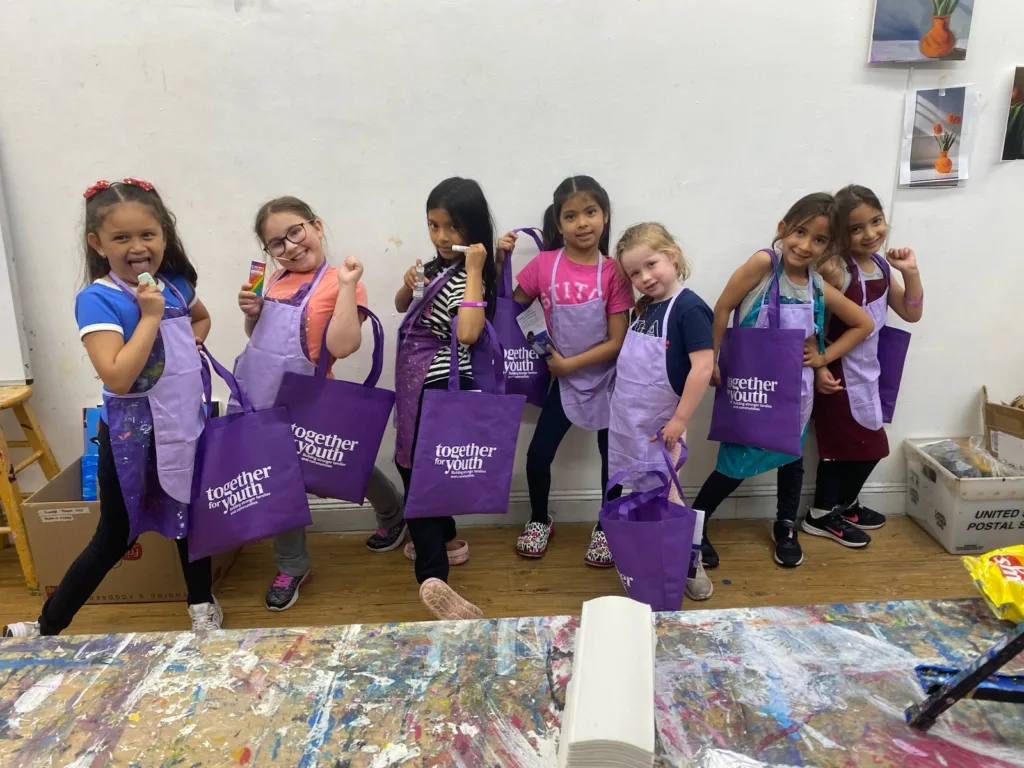
How Together for Youth Uses Neon One to Track Progress and Build Community
Once Your Survey is Completed, What’s Next?
Strong nonprofit operations require systems for collecting, analyzing, and acting on donor data—and surveys are a cornerstone of that infrastructure.
But crafting and distributing your donor survey is only the first step toward understanding your donor base. Acting upon your supporters’ feedback is the most important part of this process. Use these survey questions for nonprofit donors to gather actionable insights and practical next steps for your nonprofit.
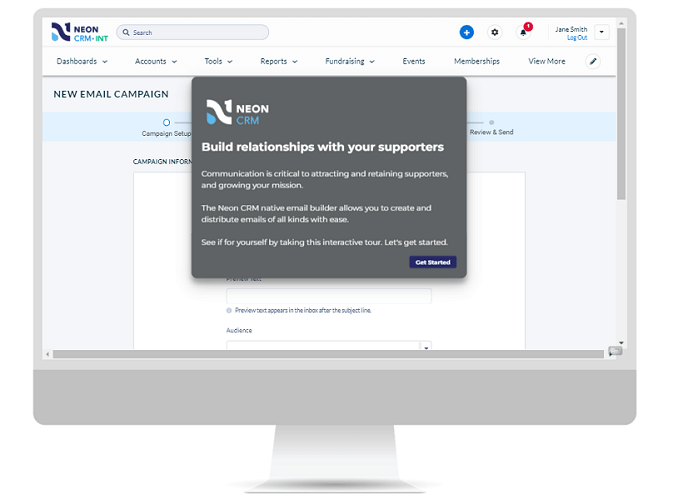
Neon One’s CRM has features to help you at every step of the survey process. If you’d like to learn more about our CRM and see it in action, take a self-guided tour!
Most nonprofits benefit from sending a comprehensive donor survey once or twice per year—typically after major giving seasons like year-end or GivingTuesday. However, shorter feedback surveys can be sent more frequently. Consider sending a brief satisfaction survey within 48 hours after someone makes a gift, or create campaign-specific surveys following major events or peer-to-peer fundraisers. The key is balancing valuable insights with survey fatigue. If you’re asking for feedback quarterly, keep those surveys short (3-5 questions maximum) and focused on specific topics.
Keep your surveys under 10 questions whenever possible. Research shows that surveys taking longer than 5 minutes to complete see dramatically lower response rates. If you’re asking seven questions like the ones outlined above, you’re in good shape—but consider whether all seven apply to every donor segment. New donors might not need questions about lapsed giving, while long-time supporters would appreciate being asked about their evolving interests. Quality beats quantity: it’s better to get thoughtful responses to five targeted questions than rushed answers to fifteen.
Segmentation is your friend here. A first-time donor who gave $25 last month has different motivations and experiences than a monthly sustainer who’s been with you for five years. Create different survey versions for different groups: new donors, recurring donors, major donors, lapsed supporters, and volunteers who also give. You can ask some universal questions (like u0022Why is this cause important to you?u0022) across all segments, but tailor others to their specific relationship with your organization. This targeted approach yields more relevant data and shows donors you understand where they are in their journey with you.
If you’re seeing response rates between 15-25%, you’re doing well. Major donors and highly engaged supporters typically respond at higher rates (30-40%), while newer or less-engaged donors may only respond at 10-15%. You can improve these numbers by personalizing your survey invitation, explaining exactly how you’ll use their feedback, and keeping the survey brief. Sending a reminder email after 5-7 days can boost responses by another 10-15%. Don’t be discouraged by lower numbers—even a 15% response rate from a donor base of 1,000 gives you 150 valuable data points to work with.
Email is your most effective channel for donor surveys. Send a personalized message from a real person on your team (your Executive Director or Development Director works well) explaining why you’re asking for feedback and how you’ll use it. Include the survey link prominently in the email, but avoid embedding the entire survey in the message—it’s better to direct people to a dedicated survey page where you can control the experience. For major donors or long-time supporters, consider a personal phone call to conduct the survey instead. Phone surveys take more time but often yield richer, more detailed responses and strengthen the relationship in the process.
Yes, but tread carefully. Small incentives like being entered into a drawing for a gift card can boost response rates without feeling transactional. Some nonprofits offer to make a small donation (like $5) to their programs for each completed survey, which aligns the incentive with their mission. What you want to avoid is making the incentive more compelling than the opportunity to share feedback. The best motivation you can offer is demonstrating that you genuinely care about donor input and will act on what you learn. Following up after the survey to share what you discovered and what changes you’re making based on feedback is more powerful than any prize.
This is where many nonprofits drop the ball—don’t just collect responses and file them away. Start by analyzing the data for patterns. Are multiple donors saying they don’t understand your impact? That’s a sign to overhaul your thank-you communications. Do many supporters express interest in volunteering? Time to create more volunteer opportunities. Share key findings with your team and board, then create an action plan addressing the top three issues or opportunities that emerged. Most importantly, close the loop with your donors. Send a follow-up message thanking everyone who participated and sharing 2-3 concrete changes you’re making based on their feedback. This demonstrates that their voices truly matter and makes them more likely to respond to future surveys.