

The nonprofit fundraising world can feel bleak and lonely at times. You’re working with a small team (or solo), trying to find money to support your mission, and finding the motivation to keep going can be hard! You need a little spark and motivation.
If you haven’t already, you might consider peer-to-peer fundraising. Not only did revenue grow 3% last year for the top U.S. peer-to-peer fundraising programs, but peer-to-peer can also be an exciting way to shift nonprofit fundraising from a somewhat lonely, solo job into an opportunity to involve and inspire your broader community.
It’s a strategy that goes beyond the financial impact and leans into the excitement, energy, and camaraderie that comes from hundreds of people working together toward a common goal. Peer-to-peer a powerful way to celebrate your community while introducing your cause to an entirely new network of potential supporters.
And honestly, it can be a lot of fun—when it’s done right (more on that to follow).
The Potential Power of Peer-to-Peer
We’ll start with the basics. As we started to explain above, peer-to-peer (P2P) fundraising is when you empower your current supporters (volunteers, donors, board members, excited community members) to raise money on your behalf from their personal networks.
P2P fundraising turns your donors, volunteers, and board members into passionate, personal fundraisers who can connect their own friends, family, and networks to your mission. This allows you to rally your community in a few ways.
Reach New Donors
P2P taps into networks that you may not already have access to. You have your network of donors, but your donors have their own networks, too (and chances are that many people in their network haven’t heard about your work before).
Think of a P2P campaign donation like a warm, personal introduction. When a new donor makes their first gift to a friend’s P2P campaign, it’s an introductory “handshake” that you can build upon. They’ve learned at least a bit about your work and now, if stewarded correctly, you could turn them into ongoing supporters!
Increase Supporter Engagement
P2P fundraisers can also turn your more passive supporters into active advocates. It gives your supporters a fun, personal, and tangible way to show that they care about your work. Plus, you can spark some friendly competition or add in some gamification to make it even more engaging!
Build Personal Connections
People give to people. When your supporters make an ask of their personal network of friends, family, or colleagues, it carries more weight. Let’s be honest, it’s a lot more inspiring to give to your best friend since childhood than it is to some random development director who just showed up in your inbox or to a generic request from an organization.
When your supporters ask their network to donate, they’re showing how much they care about your work, which also builds trust for your organization and gets their network of friends and family thinking, “Hey, maybe I should care too!”
Challenges to Keep In Mind as You Tackle P2P
Now, just to be clear, P2P can be powerful, but that doesn’t mean it’s an “easy” solution to your fundraising needs. A good P2P campaign takes hard work and coordination to run correctly. You want to make sure you prepare for challenges, as you plan:
- Consistency & Clarity: You want to make sure that every fundraiser on your team is representing your nonprofit’s mission well and that they’re using the right language to communicate about the work that you do. You don’t want participants inviting their friends to support your work while simultaneously giving them inaccurate or outdated information about who you are, where their money is going, etc.
- Coordination Overload: There are a lot of moving parts in a P2P fundraiser, so make sure you plan to manage multiple individual campaigns, with lots of questions and needs coming your way. Having the right tech tools and staff in place to manage your campaign can make or break its success.
- Supporter Intimidation: Your supporters may be excited to get involved, but they need to know exactly what you want them to do. A lack of information may leave them feeling unsure or scared to get started, and that can be a barrier to their participation.
9 Peer-to-Peer Fundraising Best Practices
To minimize your challenges and maximize your P2P campaign’s impact, we’ve put together a list of some best practices. This list isn’t all-inclusive, and you’ll likely run into your own unique campaign challenges to address, but hopefully it’s a helpful place to get started as you embark on your next campaign:
1. Simplify the Ask & the Action
Don’t just ask people to “fundraise.” That’s vague and can feel overwhelming. Make sure to set clear goals and a clear framework for their participation so that they know exactly what they are being asked and how they can complete your ask.
Providing a clear ask and action—“Run a 5k and raise $1,000,” “Host a fundraiser on your birthday,” “Ask people to replace one physical gift this holiday season with a donation to our work”—leaves less room for confusion. And less room for confusion means more room for making an impact!
2. Provide a Toolkit
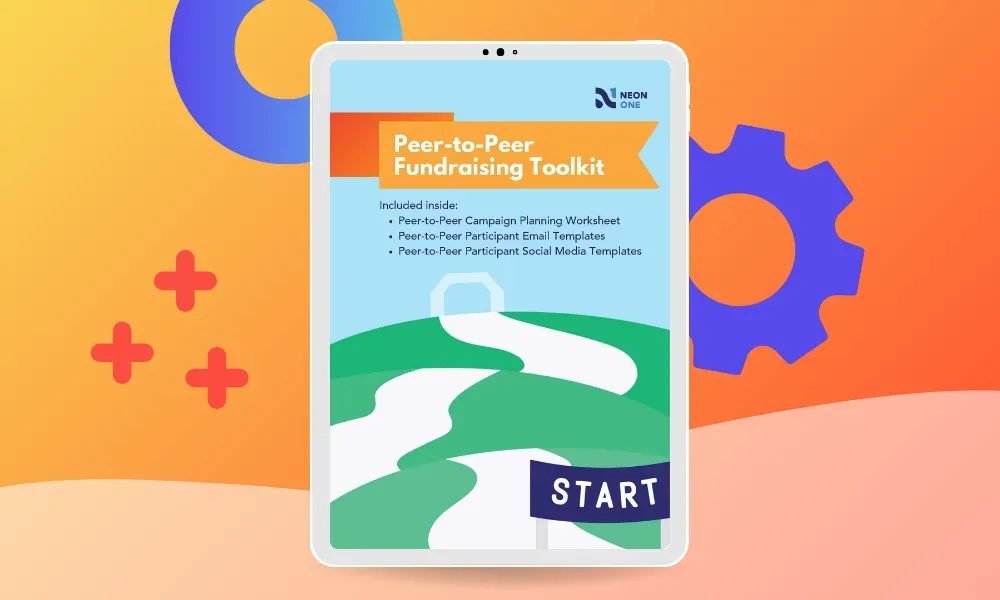
Your P2P participants shouldn’t have to start from scratch. You can give your supporters templates for:
- A short, simple statement about your organization’s mission and impact that they can copy and paste to use on their fundraising page or in their outreach.
- Sample social media posts (with images included) that they can share on their personal channels
- An email draft for their personal outreach
- A to-do list and sample calendar with some key dates and actions people can take to keep them on pace to hit their goals!
3. Set Achievable Goals
This applies to both individuals and the whole campaign. Even if your overall campaign goal is large, it’s much easier to set smaller, defined goals for your individual fundraisers. They can set goals that feel realistic for them to hit, as they know their friends and family best. Plus, they can always increase their goal as they go!

4. Make Sign-Up (and Setup) a Breeze
Your fundraising platform must be straightforward and easy to use. If it takes 20 steps for a supporter to create their personal page, they will give up. When things get complicated, people bail, and you want to avoid any and every barrier to participation that you can.
Running your campaign on a platform like Neon One is simple for administrators, engaging for fundraisers, and seamless for supporters—three key factors that, together, add up to sustainable fundraising success.
5. Focus on Motivation and Encouragement (Not Just Money):
It should be fun to participate in a P2P campaign. Send out regular, cheerful emails with tips, success stories, and recognition. You’ll also want to make sure that you celebrate milestones (first donation, 50% reached, 90% their goal, etc.) to keep your fundraisers feeling motivated and seen when they’re hitting their goals.
As Jordan Walker, Senior Development and Communications Manager at Chicago Run, put it, “Some of our runners even said [Neon One’s P2P platform] felt like a virtual cheering section that helped them through their training and mileage.”
6. Provide Recognition (and In Some Cases Rewards)
There are lots of ways to recognize your fundraisers’ efforts: A personal thank-you email, a shout-out on social media, or a mention in your e-newsletter are all great options.
You may even consider putting together a small prize for your top fundraisers or holding giveaways at different fundraising levels to help people stay engaged and excited. Get donations from 10 different people? Your fundraiser gets a sticker. Raise $1,000 and fundraisers get a hat with your logo on it. The options are (almost) endless.
The bottom line is making your fundraisers know that their effort matters just as much as the dollars raised.
7. Keep Your Mission at the Forefront
It’s easy to get caught up in the excitement and hustle of fundraising, so it’s important to keep reminding your advocates of the why. When possible, share impact stories, photos that your fundraisers can share with their network, or examples of how the money they’re using is making an impact.
“$50 means a week of meals for a family in need.”
“$100 means a month of safe foster care for rescue puppies.”
“$250 allows us to get school supplies for a family of students for the first semester of the school year.”
People love to hear about the impact that they’re making. So make sure they know!
8. Offer Quick Support
Designate a staff person (even if it’s just a sliver of their time) to be your “P2P Supporter Lead.” Think of them like a coach for your team of fundraisers and make sure that your staff member is available to answer questions quickly and kindly. Your fundraisers will have a much better experience if they feel well supported!
9. Keep Your Fundraisers Engaged Even After the Event
Our Generosity Report showed that P2P fundraisers are a generous bunch. In our research, P2P participants also volunteered, registered for events, purchased memberships, made pledges and made recurring gifts.
Our research also found that people were less likely to participate in peer-to-peer campaigns after their first year. This means that, while this type of activity is a great way to meet
and engage with new supporters, there’s plenty of opportunity for nonprofits to retain and engage those participants more effectively.
Don’t lose the momentum of their support when your fundraiser ends. You should make a plan to keep engaging your P2P audience and find new, creative ways to engage them in more than just P2P efforts.
Fuel Your Mission: Engage Everyday Donors
Learn actionable strategies to effectively connect with and cultivate the generosity of your everyday supporters—download The Generosity Report now!
Need Peer-to-Peer Fundraising Tools To Meet Your Goals?
We’ve said it once, and we’ll say it again. P2P can be a powerful fundraising tool, but doing it right (and following peer-to-peer fundraising best practices) will be the key to unlocking that potential.
Technology can be the bridge between a messy, overwhelming campaign and a streamlined, successful one. And that’s why we built peer-to-peer fundraising tools right into Neon CRM.
If you’re looking for a straightforward way to create, launch, and manage a P2P campaign, you’ll love this set of tools. Get a feel for how easily you can make it happen with this self-guided tour! You’ve got this!

Add the Power of P2P to Your CRM
Take this self-guided tour and see how you can engage fundraisers, boost donations, and manage data effortlessly with Neon CRM’s next-generation peer-to-peer tools.