
— KEY TAKEAWAYS
Nonprofits do not have to choose between keeping Salesforce for every single organizational function or leaving the platform entirely. Today’s modern cloud systems share information easily, giving you the flexibility to build a connected technology ecosystem.
- General-purpose software expanded with complex donation tools, forms, and custom integrations often frustrates development teams. Fundraisers need purpose-built platforms that are easier to manage, easier to train on, and specifically designed for relationship-driven donor engagement.
- You can modernize your approach by unifying donor management, online giving, email marketing, and payment processing within Neon One. This focused environment significantly simplifies day-to-day operations for your development staff.
- Implementing a connected technology strategy allows you to support your fundraising goals without dismantling years of operational investments. Salesforce can continue supporting case management and cross-departmental reporting, while Neon One provides a complete view of your supporters.
Salesforce has been the operational foundation for many nonprofits for nearly two decades. Over time, organizations built workflows, reporting structures, program management systems, and operational processes around it.
In many cases, Salesforce has gone from being simply a CRM to becoming part of the institutional infrastructure supporting the mission itself.
But in recent years, many nonprofits have started feeling tension around this model, particularly when it comes to fundraising.
Development Wants One Thing, Operations Wants Another
If you’re on a development team, you’ve probably felt growing complexity inside Salesforce ecosystems that expanded over time with donation tools, payment processors, email marketing platforms, forms, automation tools, and custom integrations. If given the chance, you’d switch to something else.
Meanwhile, program and operations teams at many of these same nonprofits may feel deeply invested in Salesforce because of the way it supports participant services, case management, reporting, and cross-departmental operational visibility.
What makes these conversations difficult is that both perspectives are usually valid.
The frustration that fundraising teams feel with their day-to-day experience in Salesforce is real, but so is the fact that many operations teams cannot realistically imagine replacing years of institutional workflows and operational knowledge by switching systems.
Too often, these conversations become framed as an all-or-nothing decision: either continue consolidating everything inside Salesforce or leave the platform altogether.
Don’t fall into that trap. Because there’s a good chance your nonprofit doesn’t need to choose one side over the other.

Guest Pitches: We want to publish your story!
Looking to share your insights and broaden your reach? Write an article and let us share it with our audience of over 100,000 nonprofit leaders.
When One Platform Isn’t the Right Fit Anymore
For years, nonprofits were encouraged to centralize all of their operations into a single platform because integrations between systems were difficult, expensive, and unreliable. That’s no longer the case.
Modern cloud systems are far better at sharing information and working together than they were even a few years ago. As integrations and middleware platforms have matured, you now have more flexibility to connect your nonprofit’s various tools into one ecosystem instead of forcing every organizational function into a single environment.
At the same time, fundraising itself has changed. Donor engagement has become more digital, more relationship-driven, and more dependent on coordinated—and sometimes automated—communication across campaigns, events, online giving, and stewardship.
As a fundraiser, you don’t want to deal with general-purpose software that’s been heavily customized to accommodate you. You want fundraising software that was designed as fundraising software.
That shift is one reason that many nonprofits are choosing purpose-built fundraising platforms like Neon One. They want fundraising systems that are easier to manage, easier to train on, and more closely aligned with how development teams actually work day to day.
The Case for a Connected Ecosystem
Rather than stitching together multiple disconnected tools, nonprofits are increasingly looking for platforms that unify donor management, online giving, payment processing, email marketing, reporting, and automation into a more cohesive experience.
And getting that platform means moving away from Salesforce—for fundraising, at least.
Because, while many nonprofits still think they have to choose between “all Salesforce” or “no Salesforce,” the reality is that they can use both! What they need isn’t one platforn comprehensive platform; what they need is a connected technology ecosystem that allows different systems to support different organizational needs.
In that model, Salesforce can continue supporting programs, operations, case management, and organizational reporting, while a nonprofit crm platform like Neon One provides a more focused and streamlined fundraising environment.
And it’s Neon One’s ability to provide a unified fundraising experience that makes it truly stand out.
Your action guide to build relationships that drive growth.
In this playbook, we’ll dive into insights that can help and simple steps you can take to start putting relationships first in your day-to-day work.
What We Saw When We Looked Closely at Neon One
We didn’t partner with Neon One simply because it was available or even because a client asked us to. We got there by reviewing several fundraising platforms and talking directly with organizations using each of them.
After that, the choice was clear. We became a Neon One partner.
What stood out to us was not just functionality. It was how closely the platform reflected the day-to-day realities of nonprofit fundraising teams. Neon One brings together donors, campaigns, forms, payments, email marketing, and automation (not to mention events and volunteers, too) into a unified fundraising-focused environment that can significantly simplify operations for development staff while giving them a better, more complete view of their supporters.
For nonprofits that have spent years managing disconnected fundraising tools around Salesforce, that simplicity can feel transformative.
At the same time, Neon One does not require nonprofits to abandon the operational investments they have already made elsewhere. Many organizations are discovering that they can modernize fundraising operations without dismantling years of operational infrastructure supporting mission delivery.
That distinction matters because the healthiest technology strategy is not always about replacement. Sometimes it is about allowing each system to focus on the functions it supports best.
A More Sustainable Path Forward
For some nonprofits, a connected ecosystem may offer a more sustainable long-term path than either forcing every organizational function into a single platform or attempting to replace years of operational infrastructure all at once.
That may mean using Neon One to support fundraising and donor engagement while continuing to use Salesforce for programs, operations, case management, and institutional workflows.
The goal is not to maintain a certain number of systems for its own sake. The goal is to create the best setup possible for nonprofit staff, one that allows fundraising and operational teams to work more effectively together while using tools designed around their actual needs.
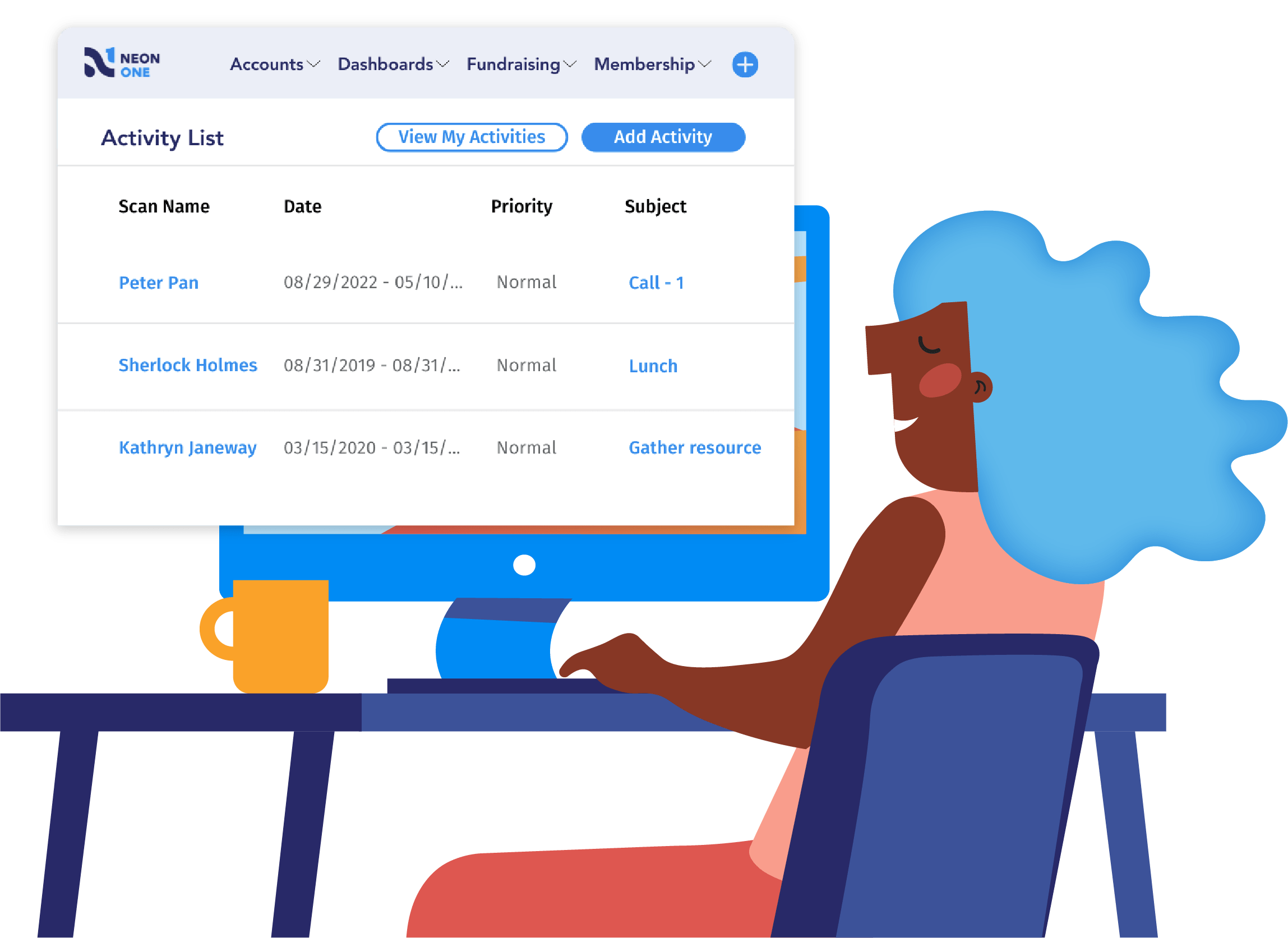
See Neon One’s CRM in Action
Take this self-guided tour and see how top nonprofits build community, raise more, and save time with a single platform that manages it all!

Author Bio
John Licata, Founder & Principal, Value Stream Consulting
John Licata is the Founder and Principal of Value Stream Consulting, a nonprofit technology and process consulting firm. Through its two divisions, Foundation Impact Solutions and Value Stream Nonprofit Solutions, VSC helps grantmakers and nonprofits build connected, sustainable technology environments. John has spent more than two decades helping organizations use technology to strengthen fundraising, operations, and mission delivery.
Value Stream Consulting partners with platforms including Salesforce, GivingData, and Neon One. The firm works across both nonprofit and grantmaking sectors, bringing a broader perspective to the systems, processes, and relationships that connect funders, nonprofits, and the communities they serve.