

No matter how long you’ve been in fundraising, asking people for donations can feel intimidating. Will that story you’re writing actually resonate with people? Is your call to action compelling? Are you asking too frequently? What motivates donors, really?
Sure, questions like these are important. But, if you start psyching yourself out ahead of an appeal, remind yourself of this basic truth:
Donors are motivated by human connection. When you reinforce donors’ personal connections to your mission, your community, and their impact, your appeal will be more successful.
We know this because of a recent survey we conducted. We asked more than 2,000 donors to share exactly what motivates them to give to a specific nonprofit and stay engaged with that nonprofit long-term.
Their answers show that people give out of a desire to make an impact in an area that’s important to them, and they continue to give when they feel like they’ve met that goal.
If you’re looking for ways to acquire and keep new donors, you don’t need to guess what they want. They’ve already told us! Let’s take a look.
Get the 2026 Recurring Donor Report
Data-backed findings from over 4,000 nonprofits and 2,000 nonprofit donors show why recurring givers are the future of nonprofit fundraising.
Mission and Impact Motivate Donors to Give
In the survey, we asked participants to think about a specific nonprofit they supported in the past year and why they decided to give. Each survey respondent could choose up to three motivators. Here’s what they had to say:
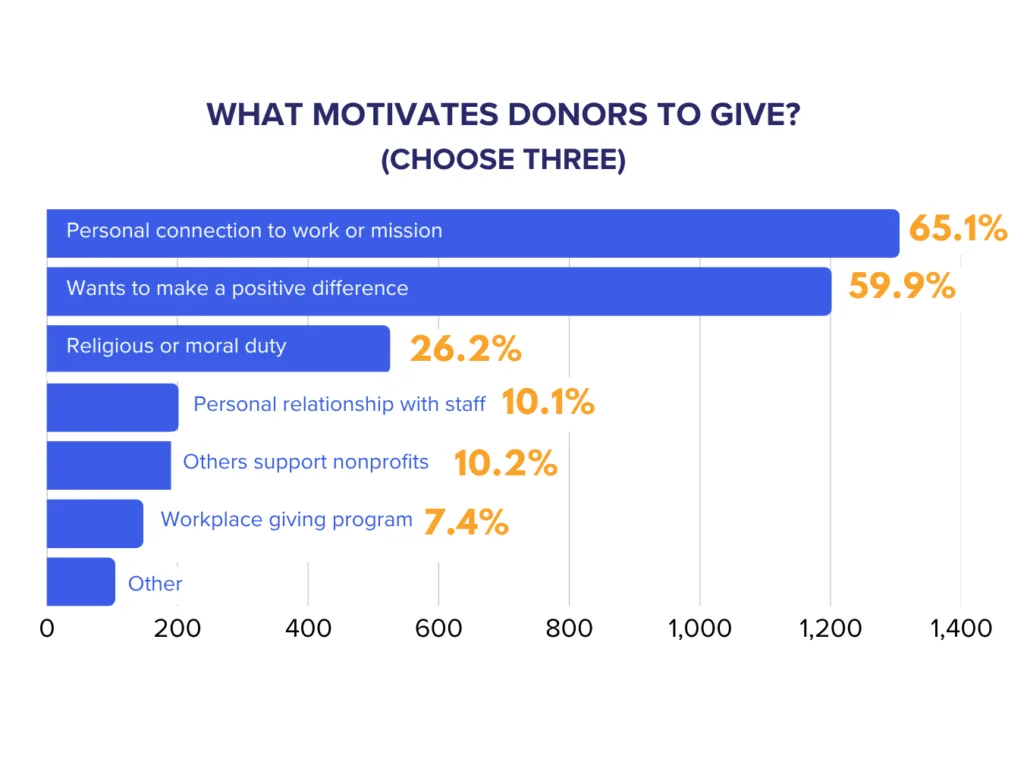
- 65.1% said they gave because they felt personally connected to the organization’s work and mission
- 59.9% gave because they wanted to make a positive difference in their community
- 26.2% gave to fulfill a religious or moral duty
- 10.1% gave because they had a personal relationship with the staff
- 10.2% gave because others in their life support charities
- 7.4% gave as part of a workplace giving program
Look at those top two numbers. More than half of the people who responded to our survey indicated that their generosity is driven by a connection to the mission they supported and a deep desire to do good.
Come back to this if (and when!) you’re anxious about an upcoming fundraising campaign or appeal.
Yes, you’ll want to review your campaign and make sure your donation form is optimized and gives donors the best experience. You should double-check that your fundraising letters include a straightforward call to action and a way to give. It’s important to be thoughtful about when you schedule your emails or social posts.
But, if you find yourself getting overwhelmed by it all, step back and look at the bigger strategic picture.
Do you use language that reinforces your audience’s emotional connections to your work? Do you show them how their gift will make an impact? Do the photos and other media you include in your campaign focus on connecting your donors to the people they’ll support with their gift?
Creating and fostering a sense of connection—that is what’s most important.
Your most powerful asset is the ability to connect people to your cause and make them understand how they’ll make a difference when they give. If you spend the majority of your time and effort on that, you’ll be more successful than you would be if you focused more on following every single best practice.

How (and Why) to Track Your Donor Acquisition Rate
Mission and Impact Inspire Donor Retention, Too
Donor acquisition is important. And so is keeping those donors engaged! But donor retention rates are low, especially for first-time donors. If you want to build a sustainable fundraising program, you’ll need to focus on keeping people engaged with you. So how? What motivates donors to stay engaged after their first gift?
Luckily, our donors’ survey responses can lend some insight!
We asked our panel of donors why they continue to give to the nonprofits they support. Each respondent could choose as many motivators as they wanted—here’s what they had to say:
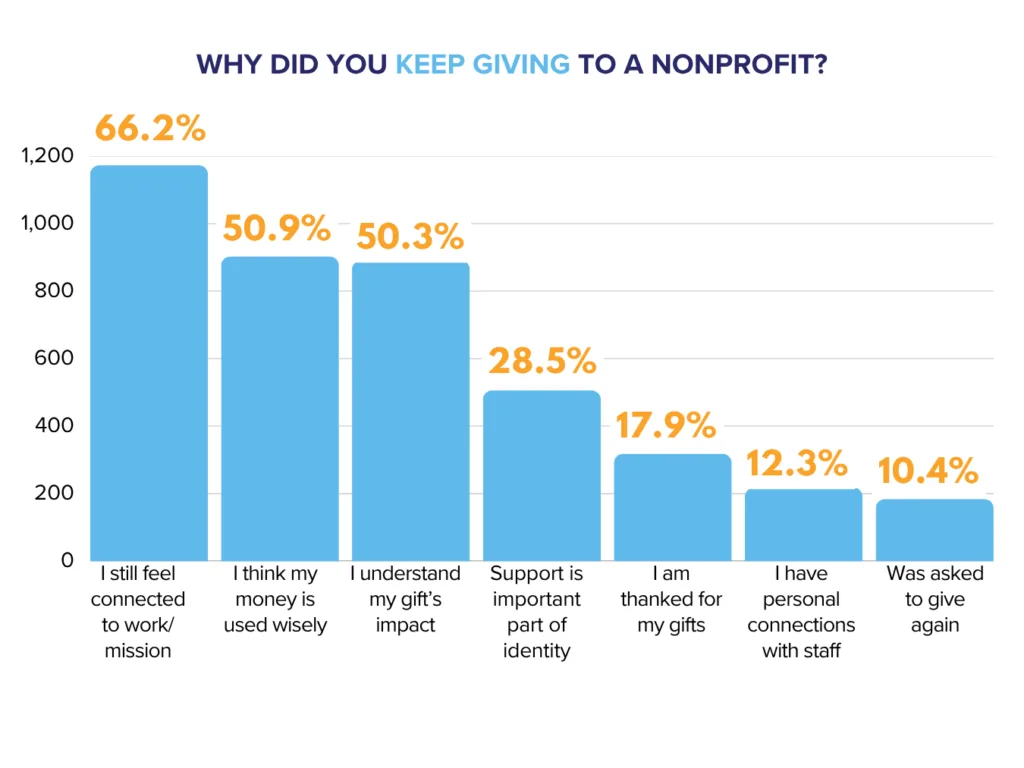
- 66.2% continued giving because they still feel connected to the work and mission
- 50.9% stayed because they think their money was used wisely
- 50.3% stayed because they understand how their past donations make a difference
- 28.5% continued because their support is an important part of their identity
- 17.9% stayed because they are thanked for their donations.
- 12.3% continued because of personal connections with staff
- 10.4% stayed because they were asked to give again
See how similar these motivators are to the motivators that made them donate in the first place?
People are motivated to give because they feel connected to the mission and because they want to make a difference in the world. They’ll continue that support when that connection is maintained and when they understand that their money was used wisely to make a real impact.
Someone’s sense of identity also plays a big role in their decision to continue their support. Nearly one-third of people continued to give because their support of a cause was a part of their identity!
Whether you’re sending a thank-you letter, an impact report, or a fundraising appeal to a group of existing donors, keep these motivators in mind while you write.
Intentionally appeal to each person’s sense of identity (this can be as simple as acknowledging their past support and thanking them for their generosity), share how their past donation made a difference, and reinforce their connection to your cause and to your work.

The Nonprofit’s Guide to Donor Retention: 12 Must-Try Strategies
What to Do With This Information
As a fundraiser, you have to exist in (at least) two worlds. One world is transactional: You need to track all your nonprofit KPIs, reconcile bank statements, run reports, and present your progress to the board. The other world is “squishier.” You need to connect with your community, make each communication you send feel warm and personal, and build the kind of personal relationships that inspire people to support your work.
When you’re living in that transactional headspace—and you do have to live there sometimes!—it can make it very easy for your donor communications to feel transactional, too. But this data reminds us that every donation is an emotional exchange.
If you want to acquire new donors and keep your current supporters engaged, focus your energy on helping your donors fulfill the motivations that inspired them to give in the first place. This can look like:
- Taking yourself (mostly) out of the equation: When you write appeals, focus less on connecting your audience to your organization and more on the cause and impact of the work that you’re doing. You’re the conduit they’re using to make that happen.
- Communicating donors’ impact: Be specific about how you’ll use the money they donate to make a real-life difference. What work will be possible because of their support? Who will benefit from that work? What will happen when someone gives?
- Don’t only send appeals: If you want to keep donors engaged, it’s important to communicate with them outside of sending appeals. You’re not bothering people when you say “thank you” or give them an update about what work they’ve helped make possible. Remember, people are passionate about your cause—they wouldn’t have donated if they weren’t! Keep your donors up to date about how their past gifts have made an impact. When you reinforce their connection to the cause, you’ll have a much easier time keeping them engaged.
People want to help, and they want to know that their help matters. When you fill those two needs, your fundraising programs will be more successful.

6 Donor Engagement Strategies That Break Through the Noise
What Motivates Donors to Give? A Personal Connection to Your Work
Our survey of more than 2,000 donors reveals that donors are motivated by a personal connection to a nonprofit’s cause and their desire to make an impact in their community.
Any time you start second-guessing your fundraising campaigns, appeals, follow-up communications, impact updates—anything—keep that in mind. Look at your work through that lens!
Dig Into Donor Behavior
Understanding what inspires donors to get (and stay!) involved with your work is an integral part of building a sustainable fundraising program. As they deepen their relationship with your nonprofit, their generosity will grow and expand over time—and we have proof!
Check out The Generosity Report to learn more about how you can build a thriving community of supporters that partner with you to make the world a better place.
Do You Know Your Donors?
They’re more generous than you might think … and we have proof. Download The Generosity Report today!