

New data shows that most people don’t have preferences around when they prefer to give during the year. That means you can probably ask for donations much more frequently than you already do.
If you’re like a lot of nonprofits, you probably send formal appeals on a set cadence. Some people send them quarterly, others send them seasonally. There’s almost always a lull in the summer followed by a big push at the end of the year.
But following that schedule may mean you’re leaving a lot of money on the table.
Research from GivingTuesday suggests that the nonprofit sector could unlock an estimated $23 billion a year in additional charitable giving each year simply by asking more frequently—especially during the summer months.
But will donors actually respond to appeals sent during “off” times in the year?
Here’s what the research says!
Most Donors Don’t Have a Preferred Giving Season
Do donors prefer to give to nonprofits during specific times of year?
For most of them, the answer is no.In a recent survey, we asked 2,006 donors about their motivations and preferences around charitable giving. 80.4% of respondents said they don’t prefer to give to nonprofits during a particular time of year.
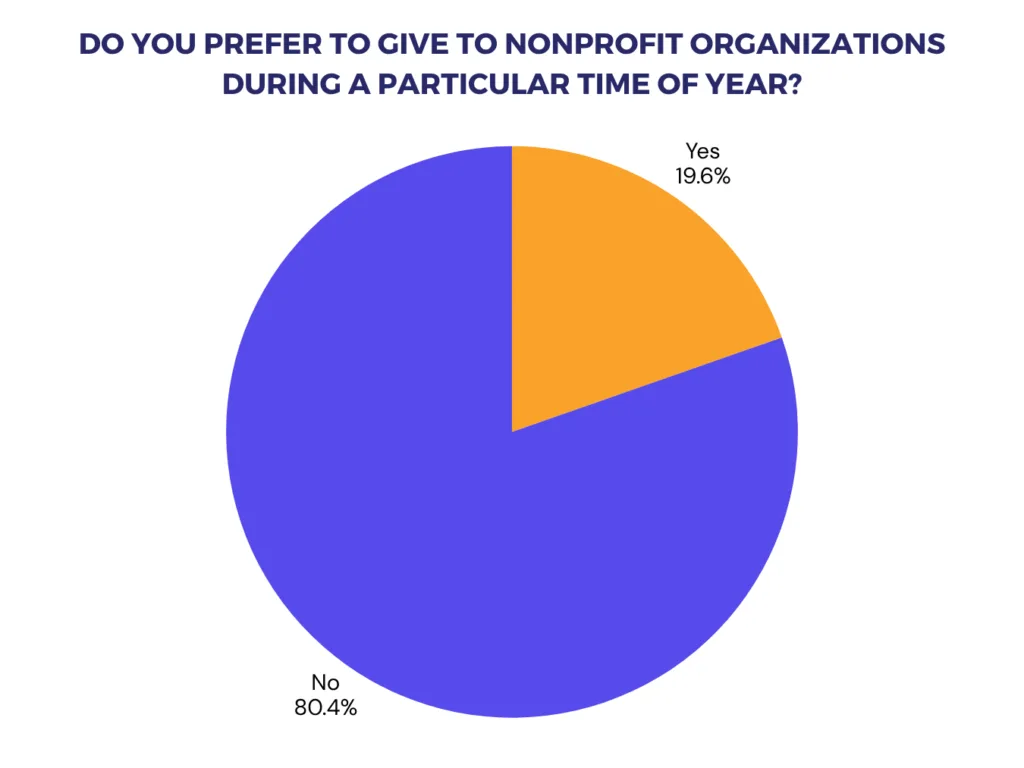
Yes, there are some donors who prefer to give on a specific schedule. And most of those people indicated that they prefer to give during the last few months of the year. Among those people who do have a seasonal preference, 63.2% said they prefer to give October through December. Religious or cultural holidays (31%) and personally significant dates (12.2%) also factored into some people’s decision to give.
So what does this actually mean for you?
By all means, keep asking during the end of the year and at strategic times throughout the year. Keep engaging your community on GivingTuesday. Keep up your end-of-year appeals. Make asks around key holidays or events that relate to your work. Keep sending your quarterly donation letters.
But most people don’t give during those big fundraising periods because they prefer to do so. That’s just when they’re asked to give.
Most of your donors will give when you send them a compelling invitation to do so. Their calendars don’t determine their willingness to give.
Fundraising Email Templates
When to Ask for Donations
So when asked the question: ”When should I ask for donations? The answer is “regularly, all year.”
That doesn’t necessarily mean you should plan a barrage of fundraising appeals! Instead, look for other, less formal ways to ask for support and make your work highly visible to your community—through your social channels, website, and at community events—so that people see the important work that you’re doing (and feel inspired to get involved!).
Keep Doing What’s Working
Year-end campaigns, spring appeals, cause days, holidays and and all the other “standard” fundraising moments can all stay. These are traditional moments when donors are already used to giving (and often plan to do so). Keep doing them! And consider adding an appeal in the summer, too.
Think of these as “tent peg” appeals—big moments that kind of “hold up” the rest of your year’s activities. Then, add less formal appeals to your schedule.
Fill the Calendar With Less Formal Asks
Asks don’t necessarily have to be formal fundraising emails. In our donor survey, we asked respondents what prompted their donations over the previous year. 58.3% of respondents said they noticed a nonprofit doing work that was important to them. Only 14.6% said they gave because of a letter or email asking them to give.
That doesn’t mean that you should stop sending fundraising letters. But it does mean that being intentional about showing up in your community, talking about your work, building connections, and inviting people to make an impact by donating are essential to building a strong fundraising program.
Asking more frequently could look like:
- Writing up a blog article about a recent program, talking about the donors that made it possible, and asking readers to make a donation
- Spotlighting your recurring donors on social media, inviting readers to join your recurring giving program, and linking to your donation form
- Including opportunities to donate in your newsletters
These are all opportunities to include appeals for support in the communications you’re already sending. If you’re feeling the classic “I don’t want to make too many asks” anxiety like many fundraisers, these smaller, more integrated asks can also feel less intimidating to make.

2,007 donors told us where AI belongs in fundraising, and where it does not
Tips for Asking More Frequently
Now that you know when to ask for donations, here are a couple of pointers for asking frequently without making your donors feel like ATMs.
Showing up in your donors’ inboxes and feeds more often is fantastic, but it’s important that you make sure you’re not only showing up to ask for something.
Before you ramp up your ask frequency, make sure you’ve got a solid donor stewardship plan in place. Someone who gets three appeals but no communications thanking them for their generosity and explaining their impact is eventually going to start tuning you out.
Thank First, Ask Second
If you want to ask your community for donations more frequently, you need to make sure you’re also thanking them for their past gifts with clear explanations or stories of exactly how their gift made an impact.

How to Write the Perfect Donation Thank-You Letter (+Free Template)
Prove Impact and Build Connection
When we asked our survey respondents what kept them involved with a nonprofit long term, their top answers were:
- Still feeling connected to the nonprofit’s work and mission (66.2%)
- Understanding how their past donations made a difference (50.3%)
- Thinking that their money was used wisely (50.9)
People give money because they care about the work that you’re doing. Fostering their feeling of connection to your work and proving that their support makes a tangible difference is going to be an essential pillar of making sure that your donors stick around.
The idea of ramping up your communications can be intimidating; it’s not uncommon to feel like you’re bothering someone by sending them updates or thank-you emails. If you start doubting yourself, just remember this: you’re sending positive, uplifting updates to people who have already proven that they’re passionate about what you do. They want to hear from you!
Ask Naturally on Multiple Channels
Your social media presence, your email newsletter, your blog, and your presence at community events can all include opportunities to ask for support. When you share a success story and invite people to be part of the next one, that’s an ask. When you write a social post telling your existing donors about the impact they made and sharing how others can get involved, that’s an ask.
This is especially important if you’re looking for ways to reach new donors in addition to engaging the supporters you already have. If you’re only asking for support by sending emails to your existing donor list, it’s going to be hard to reach new people. Being present on social media, in your community, and through other different channels makes it much easier for you to engage new supporters.
It’s also important because not everyone will give right away. 40.1% of our donors planned some of their donations (but not all of them) in advance. 23% planned all of their giving. The remaining 36.8% did not plan at all.
When you ask regularly on different channels, you’ll reach those impulsive givers who will make a gift right away. But you’ll also plant seeds in those people who prefer to plan out their giving. They may not make a donation the first time you pop up on their Instagram feed, but regular content will keep you top of mind when they are ready to make a gift
Consider Asking During the Summer
Okay, bear with me here.
Yes, giving rates bottom out in July. GivingTuesday’s research shows that donation revenue follows a predictable pattern; it reaches its lowest point in the summer, then climbs back up in Q4.
But why does that happen?
It’s not because donors prefer not to give in the summer. Most donors don’t have a preference. Summer is probably a slow time for fundraising because that’s when organizations go quiet.
The donors are still out there. They don’t stop caring about their favorite causes in the summer months—they just aren’t invited to give. This year, try running a fundraising campaign in the “off” season. Maybe even find a fun summer theme to inspire your campaign (cue a Dog Days of Summer campaign for your animal shelter).You may be surprised by how your community responds.
Donors Want to Support Good Work—Let Them
Trying to decide when to ask for donations can feel overwhelming. But it doesn’t have to be! 80% of donors don’t have a preferred giving season. They give when they’re invited, when they feel connected to your work, and when they understand the impact they can make when they donate. You can make all of those things happen.
This data point doesn’t mean you should start spamming your donor list with constant fundraising appeals. What it does mean is that there are more opportunities to ask for support than you may realize.
Thank your donors. Celebrate your community and share what their support made possible. Highlight your work and invite others to get in on the fun. And give your supporters—both new and existing donors alike—a simple way to make a difference by donating.