
Dream Big 2025 brought together nonprofit professionals from all walks of life to explore how peer-to-peer fundraising can be more meaningful, more human, and more effective. With sessions full of real-world insights, surprising moments (including a cameo from actor C. Thomas Howell), and a shared commitment to doing fundraising differently, this event wasn’t your average webinar.
If you couldn’t join us live or you’re catching up on what matters most, here are three major takeaways that can help you build campaigns that last beyond the spotlight.
1. Your Fundraisers Are Showing Up—Are You?
New research from Neon One and Nuclavis made one thing clear: Peer-to-peer fundraisers aren’t just one-and-done supporters. They care deeply, they often give again, and they want to be part of something bigger.
79% of fundraisers from the Nuclavis study made another gift after their P2P campaign. And yet, only 37% of those fundraisers were personally thanked for their efforts. Meanwhile, Neon One found that many P2P fundraisers engage across channels, like volunteering, establishing recurring gifts, and attending events.
The data shows that the real opportunity isn’t acquisition. It’s connection.
Peer-to-peer fundraisers—like those who skated, painted, and rallied alongside organizations such as 11 Day Power Play, C.R.E.A.T.E. Community Studio, and the National Kidney Foundation—aren’t just showing up for an event. They’re investing in a cause.
What they need in return is a clear role, a sense of belonging, and proof that their effort drives real impact.
What you can do
- Create a post-campaign follow-up plan just for fundraisers.
- Personalize your thank-you process—even a short message goes a long way.
- Look for patterns across engagement and treat these individuals as whole supporters, not just momentary donors.
Expand Your Impact: The Peer Effect
Understand how the power of peer-to-peer campaigning can deepen your donor relationships while significantly boosting your fundraising efforts – get the insights in our latest report!
2. The Campaign Experience Matters More Than the Theme
The theme for this year’s Dream Big was “Lights, Camera, Action!” And whether it was a horror story, a romantic comedy, or an action flick, our speakers reminded us that what your campaign feels like is just as important as what it’s called.
- Olga Woltman, founder of LemonSkies, warned about disjointed campaigns that look good on the outside but fall apart behind the scenes.
- Chris Hammond, founder of Corporate Giving Connection, broke down how to build sustainable systems that motivate your team and keep fundraisers coming back.
- Stephanie Haworth, our Director of User Experience at Neon One, introduced a behavioral framework (The Donorverse) that helps teams understand where people drop off—and how to bring them back in.
It’s easy to get caught up in creativity, but the best campaigns are supported by thoughtful tools, clear communication, and long-term thinking.
What you can do
- Review your current campaign experience from the supporter’s perspective.
- Focus on follow-through, not just first impressions.
- Identify key drop-off points and build support around them.
At the end of the day, peer-to-peer fundraising isn’t about cinematic flair—it’s about creating experiences that feel intentional, navigable, and worth coming back to.
Whether you’re telling a love story, a survival tale, or a hero’s journey, the most important part is making sure your supporters don’t get lost in the plot.
3. Excellence Comes in All Sizes
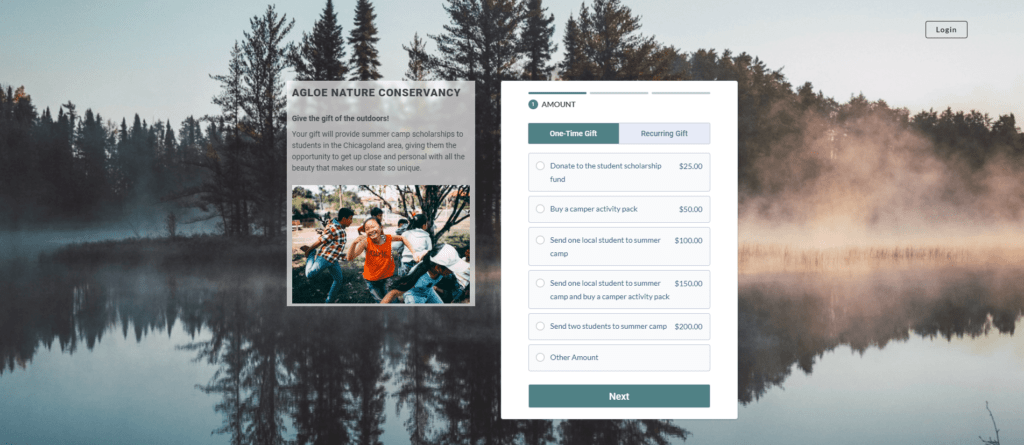
The Neon One Generosity Awards recognized nonprofits doing exceptional work with their donation pages, regardless of budget size. Here were this year’s winners:
- Small Nonprofit: Saint Paul Urban Tennis
- Mid-Sized Nonprofit: Lifeline Global Ministries
- Large Nonprofit: Council on Criminal Justice
Judging criteria for these awards included:
- Clarity: how easily the purpose and impact are understood
- Design: the overall visual quality and ease of use
- Storytelling: how effectively the page inspires action
- Trust Building: how clearly it communicates credibility and security
These weren’t flashy for the sake of it—they were effective because they made giving easy, meaningful, and mission-aligned. That’s the kind of excellence worth celebrating.
Congrats to our winners, and a big thank you to all of the organizations that submitted.
What you can do
- Review your own donation experience—especially on mobile.
- Ask someone unfamiliar with your organization to make a test gift.
- Make sure your follow-up matches the tone and intention of your ask.
The Generosity Awards were a reminder that great donor experiences aren’t reserved for big budgets. What stood out were forms built with care, clarity, and deep respect for the donor’s time and trust.
Balancing Creativity and Campaign Follow-Through
When you’re designing a peer-to-peer campaign, it’s easy to focus on what makes it eye-catching—your theme, your visuals, your kickoff. But the most effective campaigns balance creativity with structure.
A great first impression might get someone in the door, but follow-through is what keeps them engaged. You don’t need blockbuster budgets or perfect timing. You just need to give people a clear reason to care—and a clear way to act.
It’s something we saw again and again at Dream Big 2025. Whether it was a horror-themed event or a heartfelt community challenge, the campaigns that stood out were the ones that didn’t just look good—they supported fundraisers every step of the way.
If you’re planning a campaign and wondering where to start (or restart), we’d love to help. That’s why we’re sharing tools, research, and real-world examples—to help you build something that lasts.