

When we asked 2,006 donors about what motivates them to give, the most common answers were all related to a personal connection to the cause and a desire to make an impact in their community.
But the same survey revealed something else: 69% of people didn’t give because they were asked. Instead, they gave because they saw a nonprofit doing important work and decided to get involved.
That statistic tells a whole story! As you work on donor acquisition, staying visible—both online and in your community—is just as important as making direct appeals.
This is not to say that you shouldn’t explicitly ask for donations. Sending regular appeals that invite your community to fund your work is critical. But our survey respondents’ answers reveal that depending only on formal appeals will keep you from reaching new donors.
Here are data-backed donor acquisition tips based on their answers.
How Do Donors Look for Nonprofits to Support?
Most people who answered our survey didn’t actively seek out new nonprofits to support. But those that did looked in a few different places.
38.3% of donors didn’t look for a new organization to support over the past year. When they did go looking, here’s where they found one (note: people could choose more than one answer here, so these add up to more than 100%).
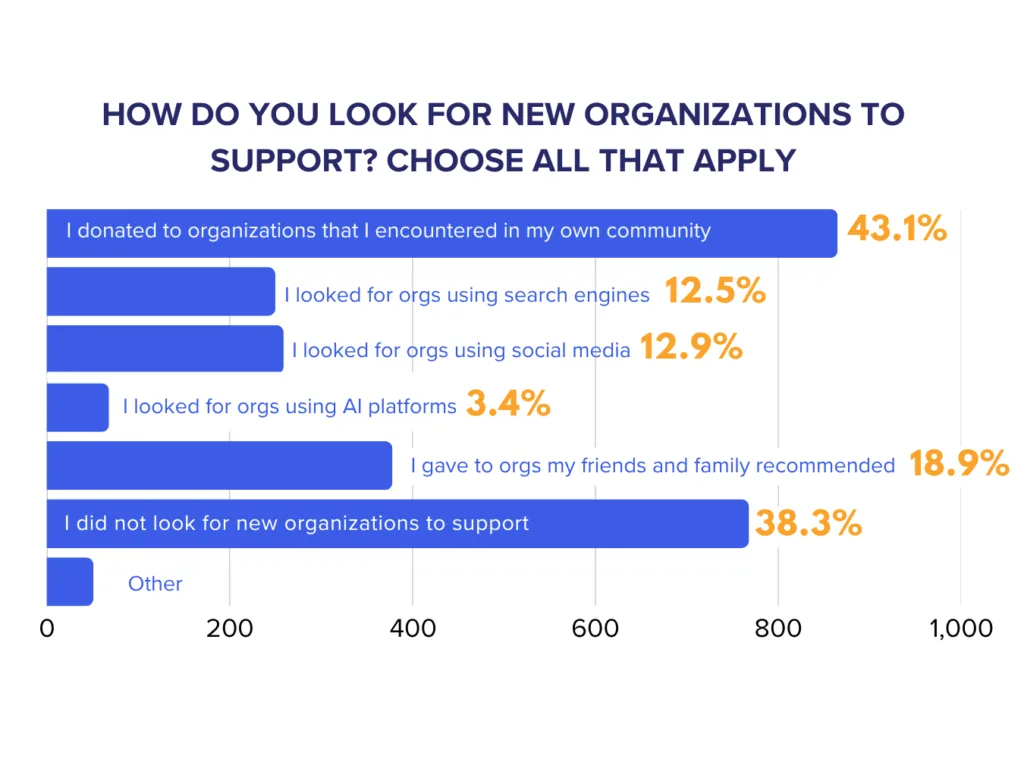
- 43.1% gave to organizations they encountered in their own community
- 18.9% gave to nonprofits their friends and family recommended
- 12.9% used social media
- 12.5% used Google or other search engines
- 3.4% used AI platforms like ChatGPT or Gemini
Donor Acquisition Tip #1: Be visible in your community
Community presence beats every digital channel combined. That doesn’t mean that people won’t also consider other channels—you’ll see in a minute, for example, that your social media presence is important. But the fact that more than 43% of people said they ended up choosing to support a nonprofit that they came across in their community is significant.
New donors may not be actively searching for you, but an encounter with your organization may inspire them to give anyway.
You can establish visibility in a few ways. Getting involved with community events, hosting open houses, partnering with your local chamber of commerce, and building relationships with other organizations in your area are all great places to start.

How (and Why) to Track Your Donor Acquisition Rate
What Prompts Someone to Actually Give?
Someone can be interested in your nonprofit without ever making a gift. Even the most motivated donor frequently needs something to move them from “I care about this mission” to “I’m going to donate to support this work.”
Here’s what our donors said prompted them to make a donation.
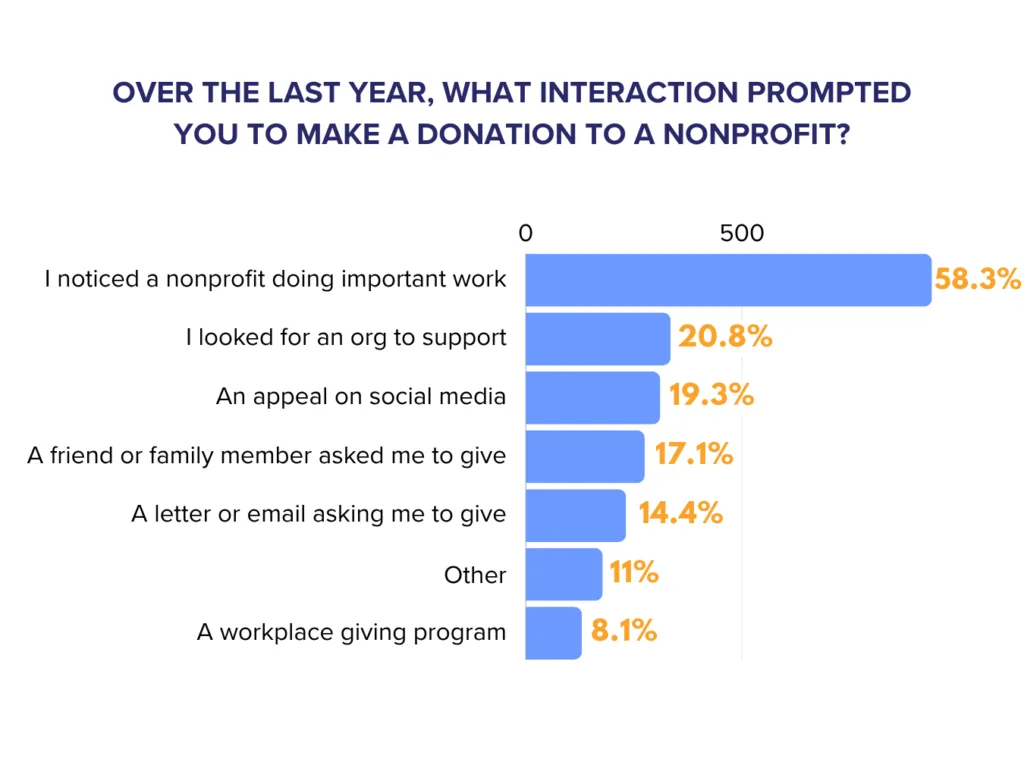
- 58.3% noticed a nonprofit doing work that’s important to them
- 20.8% sought out a nonprofit on their own
- 19.3% responded to an appeal on a social media platform
- 17.1% were asked by a friend or family member
- 14.4% received a fundraising letter or email asking for a gift
- 8.1% gave through a workplace giving program
Donor Acquisition Tip #2: Share your work and your impact
Answers to this question reinforce that being visible is an important part of finding new donors. Or, rather, it’s an important part of letting new donors find you.
58.3%—more than half of everyone we surveyed—gave because they noticed a nonprofit’s work. They saw someone making an impact in an area that’s important to them, and that was enough to spark a gift.
Direct appeals still work, and you should absolutely keep sending them. But this data point demonstrates how making your nonprofit and your impact visible is also an important tactic.
Give people the opportunity to notice you by sharing your work everywhere you think your community will see it. That includes your website, your social media channels, and your email updates. Build relationships with your current supporters, too, and empower them to share your impact with their own networks.
Beginner’s Guide to Donation Letters
How Much Research Do Donors Do Before Giving?
Donating to a nonprofit is usually a deeply personal choice. It’s frequently tied closely to someone’s identity or sense of self, and that means there’s often a lot of emotions around it.
But someone’s emotional investment doesn’t mean they won’t look into a nonprofit to make sure they really want to give. Here’s what our donors said when we asked them about whether or not they research an organization before making a gift.
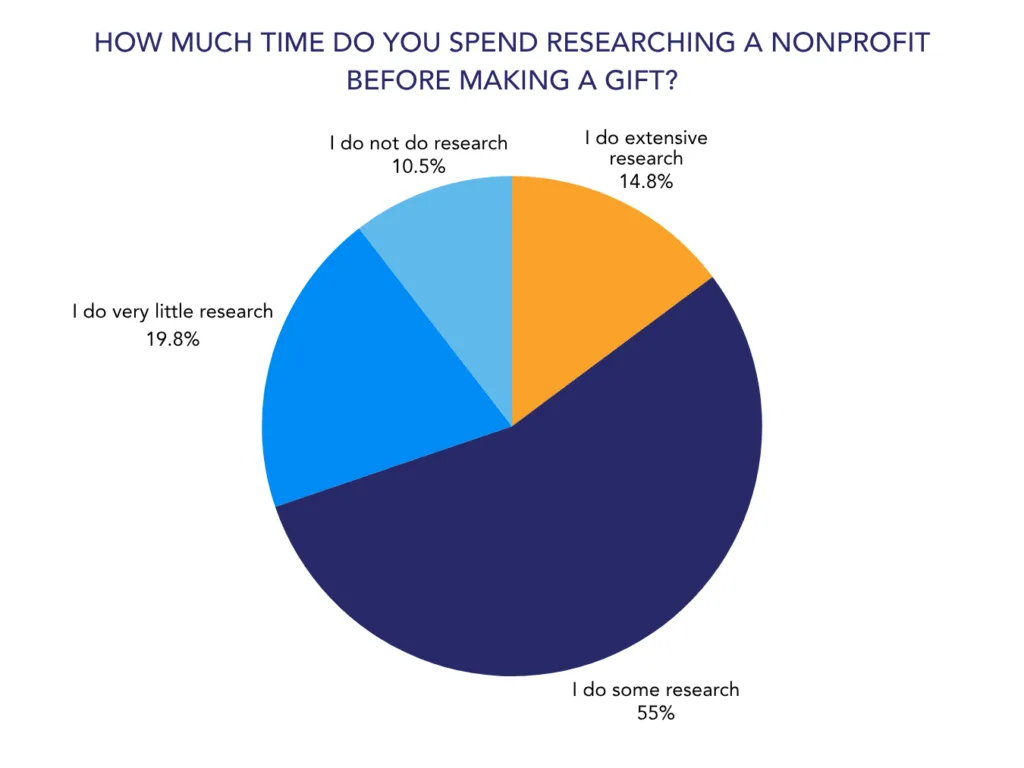
- 14.8% do extensive research
- 55.0% do some research
- 19.8% do very little research
- 10.5% do no research
Donor Acquisition Tip #3: prioritize trust and transparency
89.5% of donors do at least some research into a nonprofit before they give. That means that nearly nine out of ten people are checking you out before they commit to donating.
Most donors aren’t going to come across you on Facebook and immediately make a gift. They’re going to notice you doing good work, feel inclined to donate, and then do some research into your organization to decide if that’s the best choice for them.
Reaching new potential donors by making your work visible is the first step. The second step is making sure you give them enough information that they’re comfortable making a donation.

Take a Psychological Approach to Fundraising With These 5 Tips
Where Do Donors Look for Information About Nonprofits?
Where do donors look for information about a nonprofit before they decide to make a gift? Here’s what our donors told us.
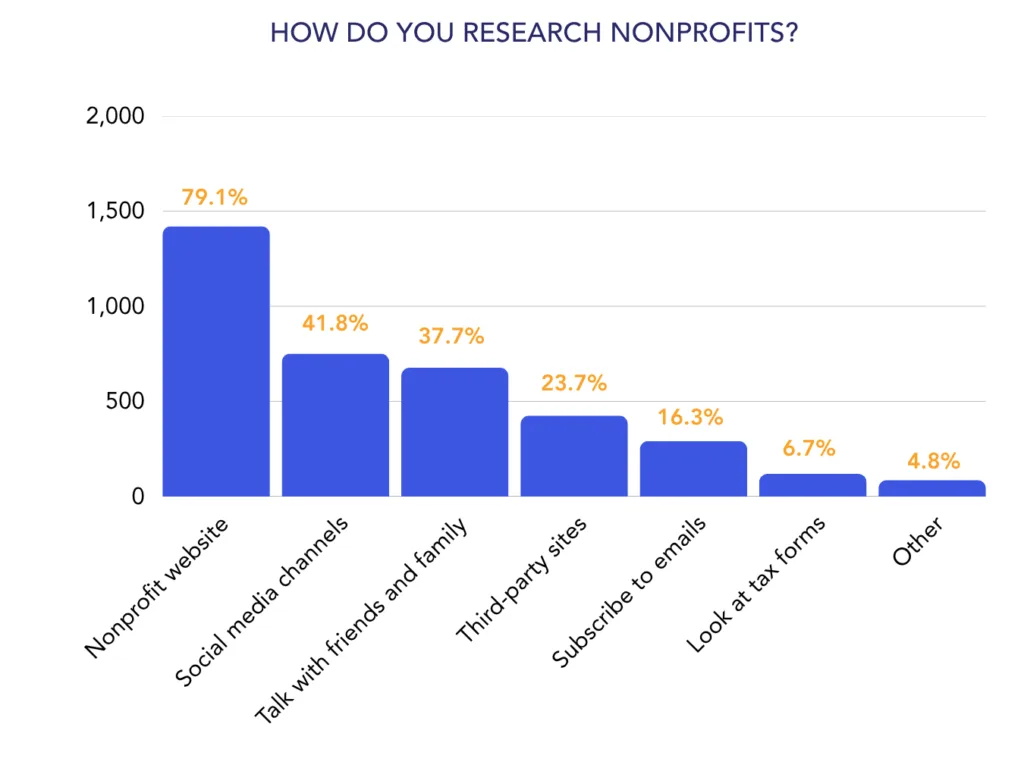
- 79.1% checked the nonprofit’s website
- 41.8% looked at social media channels
- 37.7% talked with friends and family
- 23.7% used third-party sites like GuideStar or Charity Navigator
- 16.3% subscribed to the nonprofit’s emails
- 6.7% looked at tax forms
- 4.8% cited other methods, including reviews or in-person visits
Donor Acquisition Tip #4: Focus on transparency
When you share your organization’s work and community impact, you signal to potential donors that their support will make a real difference in your community. When you focus on establishing transparency online, you’ll reinforce that promise.
There are lots of ways you can build trust with potential donors this way, like:
- Creating impact reports that share where donated dollars go
- Sharing success stories
- Making your 990s available
- Maintaining profiles on third-party sites (and linking to them on your site)
- Sending emails that include program information and other updates
- Sending regular newsletters
One of the first places people will go to find this information is your website. If your site is outdated, hard to navigate, or missing information about your impact, that potential donor may choose not to give at all.
Other channels are important, too, but that doesn’t mean you need to create brand-new content for each one. Much of the information you share on your site—like blog articles, impact reports, success stories, and even pictures of your staff at work—can go on your social media channels or newsletters.

10 Nonprofit Website Best Practices You Should Always Follow
What This Means for Your Donor Acquisition Strategy
When we look at these data points together, we see a story:
- Someone encounters a nonprofit whose work is important to them
- That encounter makes them want to donate to support that work
- They research the nonprofit to make sure their donation will be used well
This doesn’t mean that your donor acquisition strategy shouldn’t include formal appeals. Formal appeals work, and sending them is an important part of fundraising. But you can’t send letters or emails to someone who’s not in your database yet.
To reach new donors, you have to be visible enough—and in the right places—that they notice you and decide that you’re a good organization to support.
Here are two ways to make that happen:
Show up where people already are. Maintain a presence in your community, on social media, and anywhere else you think donors will find you.
Then, make your organization easy to trust. Share your work and your impact on your website, your social channels, and everywhere else people might encounter it. This matters for a few connected reasons:
- 89.5% of donors do at least some research before they give. Make sure what they find during that research is compelling.
- Trust is important. People want to know their gift will make a difference. Help them understand exactly what their gift will make possible.
- Focus on transparency. Keep your GuideStar and Charity Navigator profiles current, make your tax records easy to find, and share your impact reporting somewhere donors can actually see it.
Donor acquisition is one of the most important parts of your job, and watching your base of donors grow over time makes all that effort worth it. Keep these donor acquisition tips in mind as you build your community—you’ll be giving potential donors exactly what they want.
Get Started with a Nonprofit Marketing Checklist
Building a solid digital presence that’s as engaging as your in-person activities is a tall order. This checklist can get you started! It walks you through ten different tactics you can use in your donor acquisition strategy and includes pointers for each.
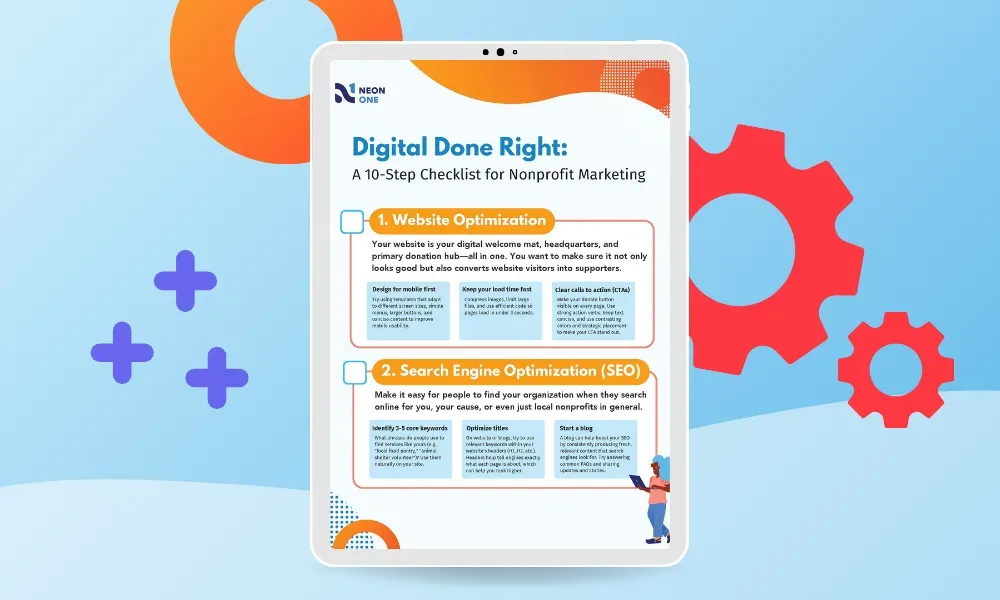
Digital Done Right: Your Nonprofit Marketing Checklist