

We always look forward to the reports from the Fundraising Effectiveness Project (FEP). If you’re not familiar with FEP, it’s a benchmarking initiative for the nonprofit sector—it analyzes fundraising data from providers like Neon One and turns that data into quarterly benchmark reports that paint a picture of how the sector is performing.
Think of them like report cards—they’re snapshots that tell us how the nonprofit sector is doing. And this quarter’s report has some really interesting findings.
Here’s a rundown of what happened.
Do You Know Your Donors?
They’re more generous than you might think … and we have proof. Download The Generosity Report today!
Donor Bases Shrank 3.6%
Nobody likes to see this, and it’s not a new trend. Individual giving has been on the decline since 2021. But there’s one potential silver lining: The decline has been slowing down over the last few years.
Notice that we used the word “potential” in that previous sentence. It could mean a couple of things!
Is it happening because the nonprofit sector is getting better at acquiring and retaining donors? Or is it happening simply because there’s a smaller group of donors to begin with?
We’re not positive right now, but future reports will shed light on this topic in the coming quarters.

What This Means for You
Is the number of supporters in your donor database shrinking a little every year? You’re not alone. But you’re also not powerless to stop it.
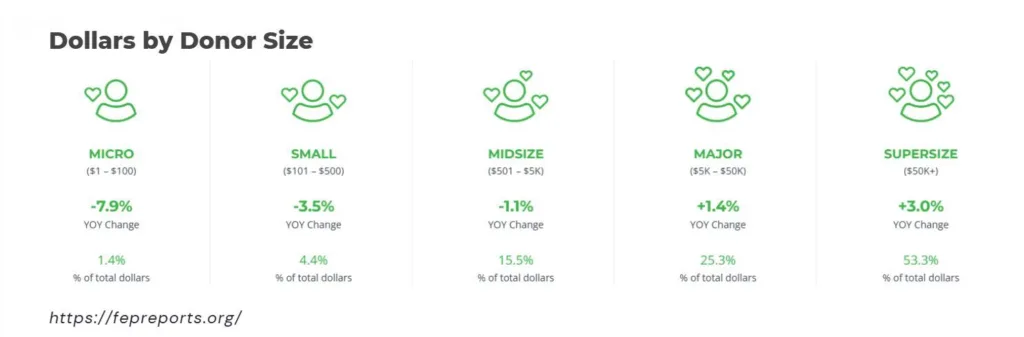
The biggest declines were among micro donors (people who give between $1 and $100 annually) and small donors (people who give between $101 and $500). There was a 1.5% decline in midsize donors, too—they’re the people who give between $501 and $5,000 in a year.
Look for ways to connect with everyday donors, and spend some time evaluating and updating your donor retention strategies.
Resist the urge to focus entirely on major and supersize donors (which we know can be tempting). Remember, most people give smaller gifts, and a broad base of smaller donors will help you mitigate the risk that comes with being reliant on major supporters.
If you don’t keep an eye on your donor retention rate, this finding is a strong signal that it’s time to start!

How (and Why) to Track Your Donor Retention Rate
Charitable Dollars Were Up 5% In 2025
That’s good growth—in fact, it’s the strongest revenue growth we’ve seen in years. The last quarter of 2025 was really exceptional.
However, most of that growth was because of major donors and supersize donors, and their increased giving may have been influenced by positive trends in the stock market during the last few months of the year.
What This Means for You
Obviously, we love seeing growth here. When more revenue flows into the nonprofit sector, there’s more room for organizations to serve their communities.
This growth is something to celebrate. But the fact that that growth came from such a small group of people (major and supersize givers make up only 3.4% of all donors, but gave 78.6% of all dollars!) has some drawbacks.
Nonprofits are relying on a small pool of donors for a significant amount of revenue, and that’s risky.
By all means, continue building relationships with major and supersize donors. They’re invaluable partners in your work! But make sure you’re also looking for ways to build relationships with other supporters, too.
If Q4 2025’s very strong fundraising really is due even partially to stock market performance, that could indicate that fluctuating market performance could have a significant and detrimental impact on nonprofits later on.
Building larger donor communities through solid donor stewardship tactics can help mitigate that risk.

Donor Stewardship in 2026: 9 Key Things You Need to Know
Donor Retention Is Still an Opportunity
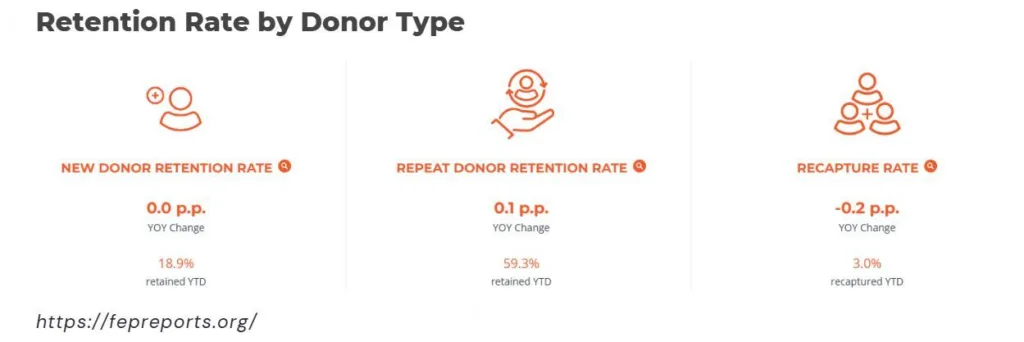
The good news is that donor retention overall lifted a little bit from 43.1% to 43.3%. When you look a little deeper, you’ll find that the improvement is largely due to retention rates among repeat donors going up a little bit.
Rates for first-time donors, though, either stayed flat (best-case scenario) or went down a little. Nonprofits are doing well retaining people who give a second gift, but they’re still struggling to keep brand-new supporters engaged.
What This Means for You
Do you have a donor retention strategy for first-time donors? If you don’t, now’s the time to create one.
Keeping new donors engaged, reinforcing the personal connection to your cause that inspired their first gift, and being thoughtful about asking for future support can feel intimidating. But it’s a worthy cause!
We know from previous research (namely, The Generosity Report) that people tend to give more generously when they’re involved with nonprofits for longer periods of time.
Any effort you put into converting a brand-new donor into a repeat supporter will help you build a base of dedicated, passionate supporters who support your work for long periods of time.
If this is an area you want to focus on, consider creating a new donor welcome email series. It’s a great first step!

How to Write an Email Welcome Series for New Donors (+Free Guide)
Dig Into the Q4 2025 Report!
These are just three top-level findings from the FEP report—the full publication has so many more insights! If you want to learn more about how the nonprofit sector is performing and what those trends mean for your own work, check out the report at fepreports.org.