

— KEY TAKEAWAYS
Start with six priority segments: major donors, loyal mid-level donors, recurring donors, first-time donors, lapsed donors, and engaged non-donors like volunteers and event attendees. They’re practical, scalable, and they’ll carry you through December and beyond. You don’t need all six, but you should use at least four.
- Last year, 37% of annual online giving landed in December. Send one generic ask, and you’re leaving money on the table and leaving your donors feeling like they’re just names on a spreadsheet.
- Matching message to segment is the whole game. Lapsed donors get “we miss you” and a reminder of past impact. Major givers get “your leadership drives big outcomes.” First-timers get “welcome” and an easy monthly path.
- Five steps: clean your donor data, create your segments, match message to segment, choose the right channels, then send and steward.
The end-of-year giving season has always been important, but things are starting to get a bit ridiculous. Case in point: Last year, a whopping 37% of annual online giving landed in December.
Then again, maybe this is a blessing in disguise. With so much giving taking place right before the year-end tax deadline, you can just wait till the last week of December, blast out one big email, sit back, and call it a day, right?
Wrong. Because if you’re only sending out one generic ask, you’re leaving money on the table —and, worse, you’re leaving your donors feeling like they’re just names on a spreadsheet. Instead, you should be sending targeted messages to your donors that actually speak to what they care about.
In other words, you should be using donor segmentation to make your year-end appeals more effective..
Segment smarter and you’ll increase revenue, improve your return on investment, and create a more respectful, personal donor experience. Let’s dig into the best way to segment donors for your year-end appeal—and exactly how to pull it off.

Want Some Help With Your Year-End Appeals?
These templates are just what you’re looking for! Use the prompts, best practices, and fundraising tips to write compelling appeals your donors will love.
What Is Donor Segmentation (and Why It Matters Right Now)
Donor segmentation means dividing your supporters into meaningful groups based on shared characteristics or behaviors. You’re not inventing new donors, you’re just seeing them more clearly.
Your donors are diverse: new donors, recurring donors, lapsed donors, one-time givers, major donors, donors who also volunteer, donors who have attended, you name it.
When you break your donor list down into segments, it gives you a level of clarity that lets you tailor your message, your ask, and even your channel to match who they are and how they give.
Segmentation is always important, but here’s why it’s especially important for year-end appeals:
- It personalizes your communications, helping people see themselves in your message.
- It increases conversion rates because both the appeal and the amount make sense.
- It focuses your limited time (so, so limited) on the segments most likely to respond.
If you’re using a one-size-fits-all approach to your end-of-year messaging, then you’re leaving money (and possibly other kinds of future support!) on the table. So get out your cutting board, grab your sharpest kitchen knife, and let’s start slicing.

The 6 Donor Segments to Prioritize (+ Tactics & Channels)
There are an infinite number of ways to segment your donor pool. If you try them all, you’ll burn out before GivingTuesday rolls around. Instead, you should start with these six priority segments. They’re practical, scalable, and they’ll carry you through December (and beyond).
1. Major Donors
Who they are: High-capacity, loyal givers with a strong relationship to your work.
How to ask: Lead with gratitude and vision. Name the specific initiative their leadership can unlock. Offer them options, like renewing their membership, increasing their gift, or matching someone else’s donation.
Channel: With these folks, high-touch beats high-volume. You’ll want to try tactics like a phone call from a peer or board member, or a personally tailored letter with a handwritten note.
Further Reading: Major Donor Cultivation Tips for Nonprofits
2. Loyal Mid-Level Donors
Who they are: Multi-year supporters who give meaningful gifts (but aren’t in your top tier—yet).
How to ask: Thank first, then show a clear impact. Use social proof (“last year, donors like you funded 75 warm meals for senior citizens”). Suggest a gentle upgrade tied to a concrete outcome.
Channel: Use a 1-2 combo of email + direct mail. Mail carries the story; email carries the link (and the reminder).
Further Reading: Mid-Level Donor Programs 101: Why the Middle Matters More Than Ever
3. Recurring Donors
Who they are: Your most reliable partners—monthly or quarterly givers who keep the lights on.
How to ask: Keep it light: spotlight cumulative impact (“Your gifts funded 12 counseling sessions this year”). Offer an optional one-time year-end boost or a small monthly increase (e.g., +$5).
Channel: A warm, grateful email plus a sincere thank-you call if you can swing it.
Further Reading: Recurring Donations 101: A Guide for Nonprofits
4. First-Time Donors
Who they are: New supporters (maybe even fresh from GivingTuesday).
How to ask: Welcome them. Show the “why” behind your work with one vivid story. Invite them to convert to a monthly donor with a lower, easy-yes amount.
Channel: A short “welcome” email series with simple storytelling and one clear CTA per message.
Further Reading: 8 Practical Steps for Retaining New Donors
5. Lapsed Donors
Who they are: These are donors who haven’t given in 12+ months.
How to ask: Lead with “we miss you” and a quick reminder of past impact (“here’s what your last gift made possible”). Remove friction: one-click giving, pre-filled amounts that match their history.
Channel: Shoot them an email paired with a postcard or letter—something tangible that earns a second look on the kitchen counter.
Further Reading: Lapsed Donor Reactivation: 8 Ways to Reconnect
6. Engaged Non-Donors (Volunteers, Event Attendees)
Who they are: They show up, share, and cheer you on, but they haven’t given yet.
How to ask: Keep the bar low for a first gift ($10–$25). Tie your ask to a larger sense of community (“join your volunteer teammates in making this possible”).
Channel: Send an email or SMS with a short, friendly prompt and a tiny suggested amount.
Further Reading: Engaged non-donors, like volunteers and event attendees, are willing to support you in numerous overlapping ways. Our 2025 Generosity Report explores how people give and how you can communicate with and steward those supporters more effectively!
Fuel Your Mission: Engage Everyday Donors
Learn actionable strategies to effectively connect with and cultivate the generosity of your everyday supporters—download The Generosity Report now!
How to Execute a Donor Segmentation Plan in 5 Steps
You don’t need an enterprise data team to put a donor segmentation plan into place. All it takes is a clear, streamlined process and a little consistency.
Step 1: Clean Your Donor Data
Fix the junk first. Update contact info, merge duplicates, and confirm primary email and mailing address. (If you’ve ever mailed two letters to the same person at the same address, you’ve felt this pain.)
Step 2: Create Your Segments
Start with the six segments we mentioned above. You can start adding in one or two “behavioral layers”—like event attendance or newsletter engagement—to hone your messaging even further, but resist the urge to over-engineer.
Step 3: Match Message to Segment
This is the whole game. Lapsed donors get “we miss you” and a reminder of past impact. Major givers get “your leadership drives big outcomes.” Recurring donors get “your steady support changed X this year.” First-timers get “welcome” and an easy monthly path. Put your donor at the center—again and again.
Step 4: Choose the Right Channels
High-touch for major donors (calls, one-to-ones, board outreach). Digital for small-dollar (email, SMS, social). And don’t sleep on mail: a well-timed letter or postcard anchors the story, while email drives the clicks. If a donor prefers mail, honor that preference—it’s not “old-school,” it’s respectful.
Step 5: Send & Steward
Hit send … and then say thanks like you mean it. Tailor acknowledgments to the segment, close the loop on impact, and give donors a next step (not always “give again”—sometimes “share” or “tour”). Stewardship isn’t dessert—it’s the main course that keeps folks coming back.
Get Your GivingTuesday Templates, Guides, and More!
Neon One’s GivingTuesday Resource Center has all the resources you need to craft an unforgettable campaign and kick off your year-end giving push.
With Neon CRM, Segmentation Is Simple & Smart
Creating a donor segment is one thing; keeping it updated is another. That’s why Neon CRM comes with tools that help you do both—quickly, easily, and (only) once.
In addition to built-in reports for common segments like LYBUNTs and SYBUNTs, Neon CRM lets you build your own custom segments (we call them “audiences”) using pretty much any data point that you’re tracking in the system.
Even better, these audiences are dynamic, which means you can set the basic criteria for the segment and then watch as it updates itself. Once you pair them with automated email series for critical tasks like nurturing new donors or reactivating lapsed ones, you’ve got a lot of your day-to-day segmentation busywork handled.
Finally, our email and form builders and donation forms let you craft beautiful, branded messages and fully tailored donation forms that will help your supporters stay connected to your work (and actually follow through when they feel inspired to make a gift).
If you’d like to see these tools in action, you can click the button below to take a simple, self-guided tour of our email builder.
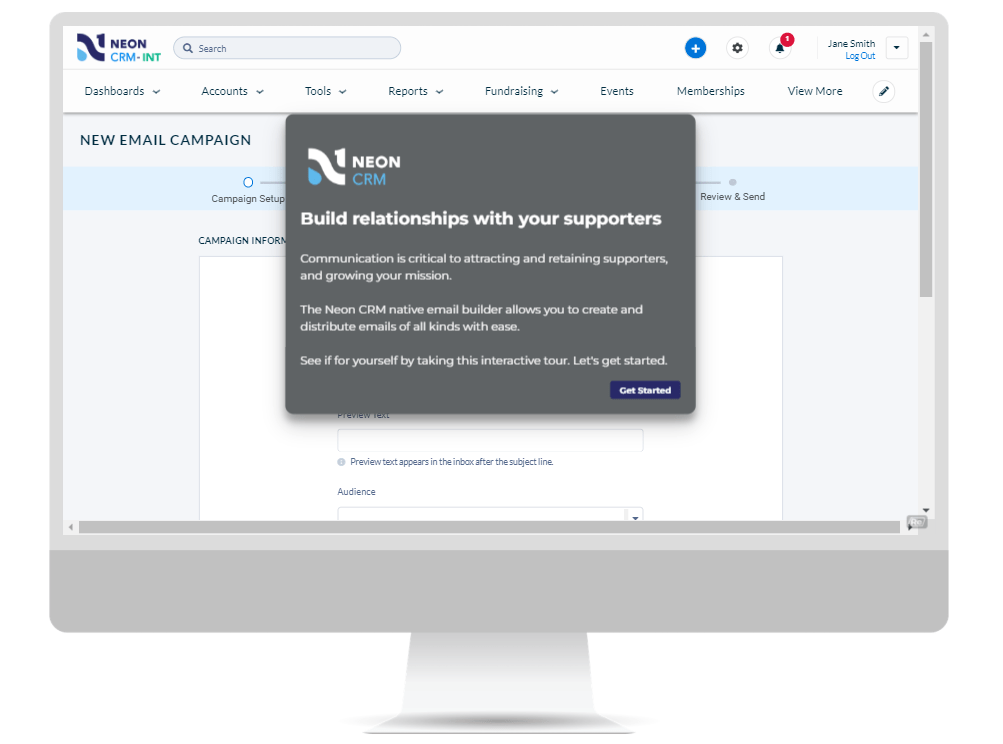
Send Emails That Don’t Get Ignored
Building a stable base of loyal, passionate supporters starts with great communication! With Neon CRM’s integrated email builder, creating compelling, impactful messages is as simple as drag, drop, and send.
Frequently Asked Questions About Year-End Segmentation
Start with these six basic donor segments: major donors, mid-level donors, recurring donors, lapsed donors, first-time donors, and engaged non-donors. They’re predictable, manageable, and highly effective.
You don’t need to use all six of the segments we mentioned in this article, but you should at least use four of them. That’s enough to make your messages feel personal without burying your team in production.
Yes—really, really worth it. Even basic segmentation (like current vs. lapsed) can drive double-digit lifts because your message finally matches the moment.
At first, no. To make the segments we listed above, you don’t need much more than donation totals, dates, and the ability to sort your lists. But, as you become more adept at segmentation, more powerful tools—like the ones found in Neon CRM—will become a must.
Use giving history to set sensible steps. For mid-level donors, make an ask that’s +10–25% over their last gift or their average gift. For recurring donors, suggest a small monthly bump or a one-time gift to “top off” their impact. For lapsed donors, match their last gift with a clear, tangible outcome and ask them to make the same gift again.
Write the thank-you and the PS first—they carry more weight than you think. Then write your subject line. Then the opening line. (Yes, we’re serious. Just trust us.)
The most common mistakes include over- and under-segmenting (choosing criteria that are too broad or too narrow), ignoring channel preferences like email vs direct mail, forgetting (or, worse, ignoring) lapsed donors, and, finally, doing all that segmentation work and sending basically the same message to all of them anyway.

Author Bio
Alex Huntsberger, Content Marketing Manager
Alex Huntsberger is Content Marketing Manager at Neon One, where he brings his expertise in nonprofit fundraising, events, and memberships to the Neon One blog. Alex has spent over a decade as a content writer, search marketer, and communications pro. He’s also an experienced theater critic and arts writer, having covered plays and musicals across Chicagoland since 2010 for the Chicago Sun-Times, Time Out Chicago, and Newcity Stage. Like every other liberal arts grad in the Chicago area, Alex once worked for Groupon. He currently lives in Mundelein, IL, with his wife and their two children.