
We hear fundraising buzzwords all the time: donor acquisition, donor retention, donor development strategies, lifetime value. But what do they all mean for your day-to-day work?
It’s easy to get caught up in the stress of finding new donors, especially given recent data that the numbers of nonprofit donors and donor retention rates are declining.
But here’s the deal: people are still generous!
Strong, sustainable fundraising (aka the real magic) happens when you stop seeing your donors as transactions and start seeing them as the dedicated and passionate people that they are.
Your donor development strategies should focus on that fact (more on that later). If you don’t start treating your donors as people in your community, not just data points in your database, you’re setting yourself up for failure. And, during a time when donor retention is more critical than ever, it’s really, really important.
But first, let’s start with the basics: What is donor development?
Donor Development 101
Donor development is the process of nurturing the relationship you have with your supporters over time, turning their initial interest into a long-term partnership. The donor journey is a cycle of engagement, action, and, most importantly, stewardship.
When you focus on developing your donor relationships, you’re not just chasing the next big gift; you’re building a resilient and loyal community that will, hopefully, stick with you through thick and thin.
The “donor cycle” can take many different forms depending on who you ask, but generally, the donor lifecycle has the following phases:
- Identification & Qualification: Begin by discovering high-potential donors and determining whether or not their interests, values, and connections make them a good candidate to donate to your work.
- Cultivation: Build relationships with your donors. You’re not making any donation requests just yet, but instead you’re getting to know them and helping them get to know you!
- Solicitation (aka making your ask): This stage is where you finally make your request for support. Whether it’s an invitation to donate, volunteer, attend an event, etc., this is the step when you make your ask. You’ve spent time getting to know your donor, so make sure you not only use that intel on what you ask for but also how you make the ask.
- Stewardship: Once someone makes a donation, it’s time to focus on donor retention and finding ways to keep them involved. Ideally, your donors won’t just be one-and-done. They’ll turn into loyal supporters of your work that you can count on for years to come (if you do it right!)

What Can Donor Development Data Tell Us?
To add more color to the donor development story, let’s take a second to dive into The Generosity Report: Data-Backed Insights for the Resilient Fundraiser. Our research provides important context to donor development work and also shows us something really important: loyalty matters more than the size of someone’s first gift.
The numbers don’t lie.
Long-term donors give more.
On our panel of almost 100,000 donors, donors who gave every year for five years were a small group—only 11.7% of the total donor pool—but they were responsible for a massive 45% of all revenue generated during that time. This is a huge deal. The data clearly shows that the longer someone stays engaged, the more they give.
Initial gifts are not a good predictor of future generosity.
Don’t be fooled by the first-time gift amount. Our research found that first-time donation amounts ranged from $163.07 to $196.58. However, there is no real tie between those amounts and the likelihood that someone stayed a supporter long term.
People generally don’t give large gifts right away and maintain that level of giving throughout the
lifetime of their engagement with a nonprofit. The longer someone stays involved with a nonprofit, the more likely they are to increase their annual giving.
So, whether someone gave you $5 or $200 on their first try, they have the potential to become a dedicated, high-impact supporter.
Generosity takes many forms.
Remember that people support you in all kinds of ways beyond simply giving you money. Our research highlighted that donors are often willing to get involved in multiple ways at the same time:
- 13.34% of peer-to-peer participants also served as volunteers
- 22.96% of event registrants also purchased memberships
- 39.61% of volunteers also registered for events
- 8.97% of pledgemakers also made recurring gifts.
And the list goes on. As we say in the report, “If you ever find yourself questioning whether or not you should ask different types of supporters to make donations or get involved in other ways, quiet that voice! Generosity comes in many forms. Give people the opportunity to show you how much they care about your cause.”
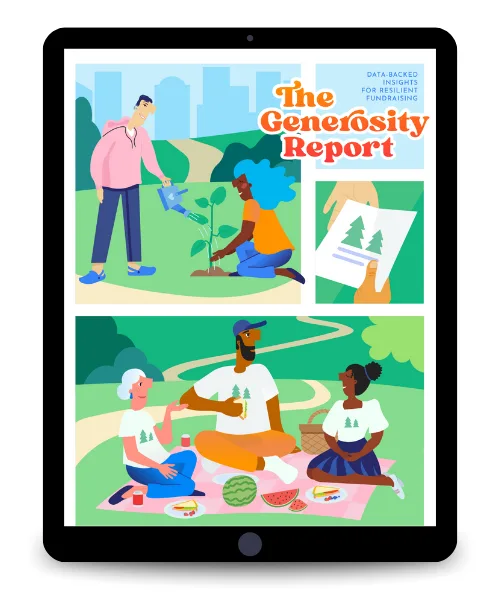
Fuel Your Mission: Engage Everyday Donors
Learn actionable strategies to effectively connect with and cultivate the generosity of your everyday supporters—download The Generosity Report now!
5 Top-Notch Donor Development Strategies
So, how do you translate these insights into a rock-solid plan? Here are some actionable strategies that can help you build a strong community of support.
Acknowledge All Forms of Generosity
People who give money to support your work aren’t the only ones who should be thanked. Generosity shows up in many different ways, and if a supporter volunteers, buys a membership, or raises money for you, recognize those efforts!
As we noted above, the longer a person stays involved in your nonprofit, the more likely they are to increase their donations. And when you celebrate every type of support, you make people feel truly valued and appreciated, which makes them more likely to stick around and keep supporting you!

Prioritize Retention
It’s a cliché, but it’s true: retaining a donor is more cost-effective than acquiring a new one. The latest data shows that donor retention is ever-so-slightly on the decline, so focusing on strategic retention can help keep you ahead of the curve.
We’ve said it once (maybe more) and we’ll say it again: the longer people stay engaged, the more they give. When you focus on keeping the people you have, their giving grows over time, creating a stable foundation for your work.

Build Affinity for Your Cause, Not Your Organization
People often give because they’re passionate about a cause, not just one organization. If you’re passionate about protecting the planet, you’ll likely donate to a conservation organization. Passionate about access to education? Donate to an educational nonprofit.
To be frank, people don’t necessarily care that you are the one doing the work; they care that the work is getting done. When you communicate, focus on sharing inspiring stories about the impact of your work. And share how a donor’s support is part of the impact that you’re making.
Sharing stories that help people emotionally connect to the impact deepens their connection to the cause itself, which in turn strengthens their loyalty to you.

Communicate Thoughtfully, Not Constantly
No one wants a zillion emails in their inbox, but they likely do want to stay up to date about what’s happening and receive important updates. The quality of your communication is far more important than the quantity. Be strategic about what you’re sending and when you’re sending it.
You’ll want to prioritize your communication so that your supporters aren’t drowning in a flurry of messages (and in turn having a hard time picking out what is actually important for them to read.) Send messages that educate and inspire your supporters, and always make it clear what their support makes possible.
Donor segmentation can also be a helpful tool in making sure that the right message is getting to the right people. A nonprofit CRM that allows in-platform email and text communication can also be a game-changer.
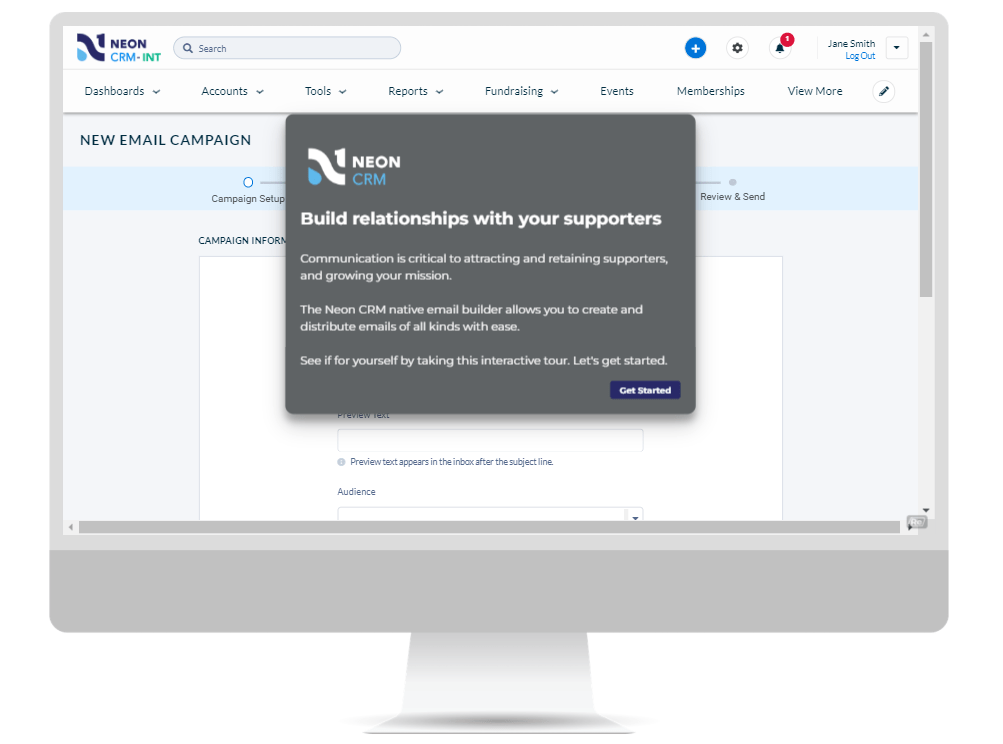
Send Emails That Don’t Get Ignored
Building a stable base of loyal, passionate supporters starts with great communication! With Neon CRM’s integrated email builder, creating compelling, impactful messages is as simple as drag, drop, and send.
Connect with People Face to Face
Let’s be real: building relationships with your supporters is much easier if you get a chance to meet face-to-face. Donors like the chance to connect with the people behind the work that they’re supporting; and, as you likely know, giving is deeply personal, so strong personal connections with donors can be key in fostering a strong base of supporters for your work.
Events, volunteer opportunities, and peer-to-peer campaigns aren’t just for fundraising; they are invaluable community-building opportunities. Whether they’re in-person or virtual, face-to-face connections can inspire people to give more generously over time.
Invite your supporters to connect with you in person—and don’t be afraid to ask your volunteers and event attendees to make a donation, too!

Tech Tools for Donor Development
Making personal connections—with donors, members, and your entire community—is essential to accomplishing your mission. But as a nonprofit grows, it can be harder to make and sustain those relationships. And you don’t have to do it alone.
The right technology will not only keep all of your donor data in one place, but it will be a true relationship management platform that helps you get a full picture of your generosity ecosystem and supports you in nurturing and growing your network of supporters!
Neon One is built with one mission in mind: empower small and midsize nonprofits like you to make and maintain the personal connections that drive real, sustainable growth.
Neon One Donor Development Tools
Here are some of the ways Neon One can support your donor development strategies:
- A 360-Degree View of Every Supporter: Our comprehensive CRM gives you a complete picture of every donor. You can see giving history, event participation, volunteer hours, and communications all in one place. You’ll see your donors as more than just a profile, you’ll see them as people, people, which will let you personalize your outreach and start building relationships that last.
- Smart Automation: Our smart workflows ensure supporters never feel like a face in the crowd. You can automate key communication touchpoints like thank-you emails, welcome series, and event reminders, so you always stay on top of timely and personal communication without a ton of manual work.
- Streamlined Donor-Facing Tools: People are more likely to get engaged when taking action is easy! Neon CRM allows you to create seamless and beautiful donation forms, event registration pages, and volunteer sign-ups that are mobile-friendly and easy to use. It’s all in one place and makes it easy for people who want to get involved to take action!
- Powerful Reporting and Analytics: Want to make sure you have all the data that you need to make smart decisions? Neon CRM comes with pre-built reports and customizable dashboards that track everything from donor retention to campaign performance. Your data can help you learn what’s working and what may need to change, so you can focus your efforts where they’ll have the biggest impact.
Want to see what Neon CRM might unlock for your donor development strategies?
See Neon One’s CRM in Action
Take this self-guided tour and see how top nonprofits build community, raise more, and save time with a single platform that manages it all!