
— KEY TAKEAWAYS
Recurring donors are your most valuable segment—not because they give more per gift, but because they keep giving, year after year. Automation is what keeps them from slipping away quietly.
- The average recurring donor stays engaged for 7.5 to 8 years and delivers a lifetime value of $7,288.26. Neon One, 2026 Recurring Donor Report
- The most common reason recurring donors lapse isn’t disengagement—it’s a failed payment that nobody caught in time.
- Fundraising tools with automated reminders for expiring card alerts and failed payment follow-ups can prevent the most common causes of lapse without adding staff workload.
- Neon CRM’s One-Click Workflows include pre-built automations for recurring donor retention, with no custom setup required.
Recurring donors are the most reliable revenue your nonprofit can build. And the data backs that up.
According to Neon One’s Recurring Donor Report, which analyzed three years of transaction data from 4,107 nonprofits, the average recurring donor stays engaged for 7.5 to 8 years and delivers a lifetime value of $7,288.26. That’s more than double the $3,606.90 average for one-time donors.
It might not surprise you to learn that the retention rates for recurring donors are also way higher than the rates for one-time givers. Recurring donors stick around at a rate of 79.11% year over year, while the retention rate for one-time donors is only 32.41%.
Still, that doesn’t mean that recurring donors are a “set it and forget it” type of supporter. In fact, that “set it and forget it” mindset is an overlooked reason recurring donors lapse in the first place! These donors didn’t lapse because they stopped caring about your mission; they lapsed because a credit card expired or a billing address changed, and no one on your staff caught it in time.
That’s why the right fundraising platforms—like, say, Neon One—come with automated reminders built in that help you bridge those gaps before they cost you a donor.
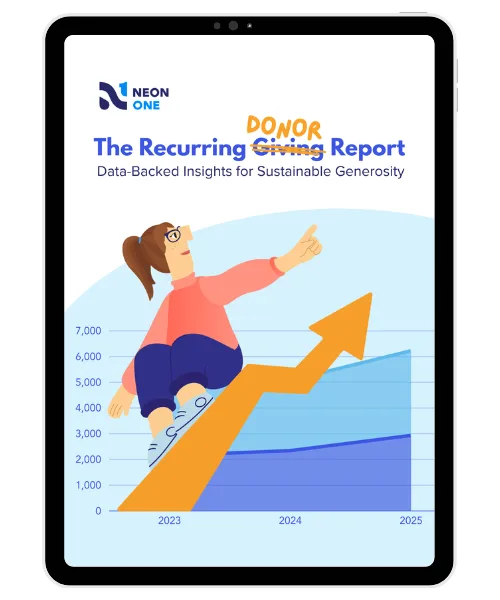
Get the 2026 Recurring Donor Report
Data-backed findings from over 4,000 nonprofits and 2,000 nonprofit donors show why recurring givers are the future of nonprofit fundraising.
Why Do Recurring Donors Stop Giving?
Before we get into the tools, it helps to understand what’s actually driving lapse. Because not all donor churn is the same—and the fix depends entirely on the cause.
According to the 2026 Recurring Donor Report, the top reason recurring donors stop giving is that they can no longer afford it—44.1% of lapsed recurring donors cite this. That’s genuinely outside your control.
The second most common reason? 27% stop because they no longer feel connected to the organization’s work or mission. That one is within your control, and it’s where donor stewardship, impact reporting, and personalized outreach come in.
But there’s a third category that often gets overlooked: Donors who never actually chose to stop. They just had a credit card expire, a billing address change, or a payment fail—and no one caught it in time. These donors didn’t disengage; they got lost in the administrative gap.
That’s the gap we’re here to help you close. It won’t fix the majority of your recurring donor churn—the answer is never that simple, unfortunately—but it will help you make a meaningful improvement in your retention rate. Now let’s get onto the good stuff.
BY THE NUMBERS
Why are recurring donors more valuable than one-time donors?
79.11%
Recurring donor retention rate (2023–2025)
7.5–8 yrs
Average recurring donor engagement span
$7,288
Average lifetime value vs. $3,607 for non-recurring donors
Source: Neon One Recurring Donor Report, 2026. Recurring donor retention held steady while non-recurring retention fell to 32.41%. Recurring donors are also 6× more likely to leave a bequest.
Automated reminder #1: Expiring credit card notifications
This is where most recurring giving programs quietly leak donors. It’s also the single highest-impact automation you can set up.
When a recurring gift fails—because a card expired, a billing address changed, or a number was reissued after a fraud alert—it almost never means the donor wants to stop giving. It means something administrative slipped through the cracks. But if your system doesn’t catch it fast and notify the donor, that simple hiccup can turn into a lapsed relationship.
The automation that prevents this works on two levels.
First, your fundraising software needs to give your staff visibility without requiring a manual audit. In Neon CRM, the Recurring Donation Schedules page under Fundraising gives you a filterable, exportable view of every active recurring schedule—with credit card expiration dates, payment status, and next scheduled gift date for each donor. You can see who’s at risk before a payment fails, not after.
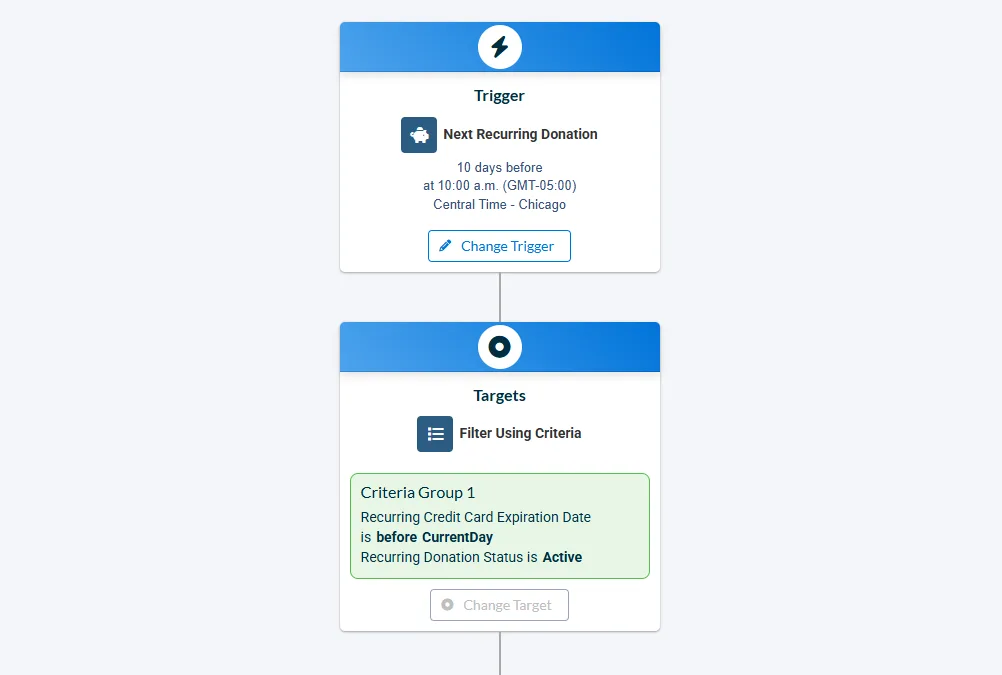
Second, your platform needs to notify donors automatically. Neon CRM’s One-Click Workflows include a pre-built Recurring Donation — Credit Card Expiration Reminder that automatically emails a donor 10 days before their next scheduled gift if their card on file is expired. It even includes a direct link to update their payment information in the Constituent Login Portal. No one on your team has to lift a finger.
That combination—proactive staff visibility plus automated donor outreach—keeps a routine billing issue from becoming a permanent lapse.
Automated reminder #2: Failed payment follow-up
Even with expiration reminders in place, some payments will still fail. When they do, speed matters.
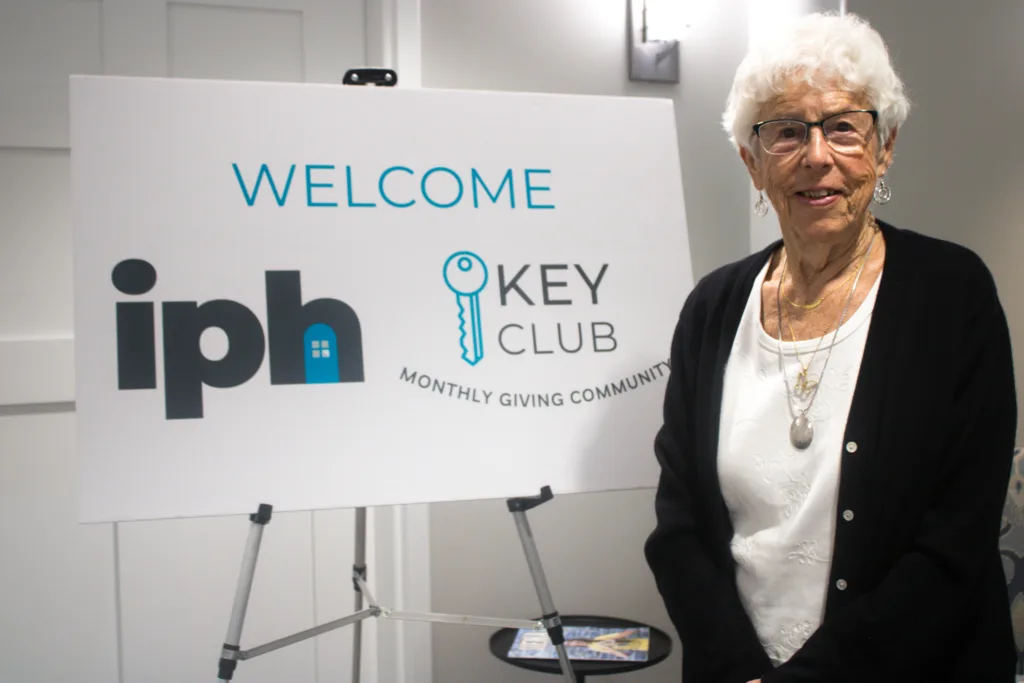
This matters more than it might seem. IPH, an Albany, N.Y.-based human services organization, uses Neon CRM to manage their “Key Club” monthly giving program. Since launching their automated recurring program, their recurring giving revenue has grown more than 150%, and recurring gifts now represent 20% of their entire Annual Fund.
Their Development Operations Manager, Skylin Baestlein, put it plainly:
“Neon CRM has helped to simplify, automate, and make things easier. When somebody’s payment fails, they get an email and click the link, and easily set up their next payment—and usually increase their giving a little bit.”
That last part is worth pausing on. A well-timed automated reminder doesn’t just recover a lapsing donor. It can actually prompt an upgrade.
3 More Ways Automation Can Support Retention
Beyond these simple automated reminders for expired credit cards and lapsed payments, there are other ways that automation can support retention for your recurring donors—and for your one-time donors, too.
Here are a few retention-focused automations that Neon One has built into our CRM
Recurring Donation Pause Notifications
Neon CRM’s Recurring Donation Schedule Disabled—Follow-Up workflow fires automatically when a recurring schedule goes inactive. It alerts a staff member and creates an activity on the constituent’s account so nothing falls through the cracks. Your team knows immediately who needs outreach—and they have all the context they need to make that outreach personal.
Donor Self-Service Portal
When a recurring donor’s billing information changes, they shouldn’t have to call your office to update it. That friction is a retention risk. Neon CRM’s Constituent Login Portal lets donors log in on their own time to update their payment information, modify their giving schedule, and adjust their next payment date, without involving anyone on your staff.
New Donor Welcomes Series
The best time to convert a one-time donor into a recurring donor is right after their first gift—when your mission is top of mind, and their motivation is high. Neon CRM’s New Donor Welcome Series sends a thank-you email seven days after a first gift, followed by an impact story 30 days later. That’s two touchpoints achieved with zero manual effort.
For a more direct upgrade path, the Advanced New Donor Welcome Series is a multi-email sequence that triggers the day after a first donation and makes the case for becoming a monthly giver. Learn more about building these sequences in Neon CRM’s Workflow Automation Recipe Book.

Automation Can Build Stronger Relationships
Retaining recurring donors isn’t a communications problem you can solve with better messaging alone. It requires infrastructure—automated reminders, proactive monitoring, donor self-service, purpose-built reporting—that keeps gifts going even when things go sideways.
The small nonprofits growing their recurring programs aren’t necessarily better-resourced than their peers. They’ve just built better systems—ones that use automation to build stronger relationships with their supporters by taking care of the simple stuff and enabling personalized, person-to-person outreach for the, well, not-so-easy stuff.
Here’s the cool part: Neon One brings all of this together in an integrated fundraising platform built specifically for small to mid-size nonprofits. Recurring donation scheduling, automatic payment processing, self-service portal, one-click workflows, dedicated recurring reports—working together so your program can grow without growing your administrative burden.
And if you want to go deeper on building a donor stewardship strategy that keeps supporters engaged long-term, we’ve got you covered there, too. Download The Recurring Donor Report: Data-Backed Insights for Sustainable Generosity to see the full data behind these numbers—and learn what the fastest-growing recurring programs have in common.

Author Bio
Alex Huntsberger, Content Marketing Manager
Alex Huntsberger is Content Marketing Manager at Neon One, where he brings his expertise in nonprofit fundraising, events, and memberships to the Neon One blog. Alex has spent over a decade as a content writer, search marketer, and communications pro. He’s also an experienced theater critic and arts writer, having covered plays and musicals across Chicagoland since 2010 for the Chicago Sun-Times, Time Out Chicago, and Newcity Stage. Like every other liberal arts grad in the Chicago area, Alex once worked for Groupon. He currently lives in Mundelein, IL, with his wife and their two children.