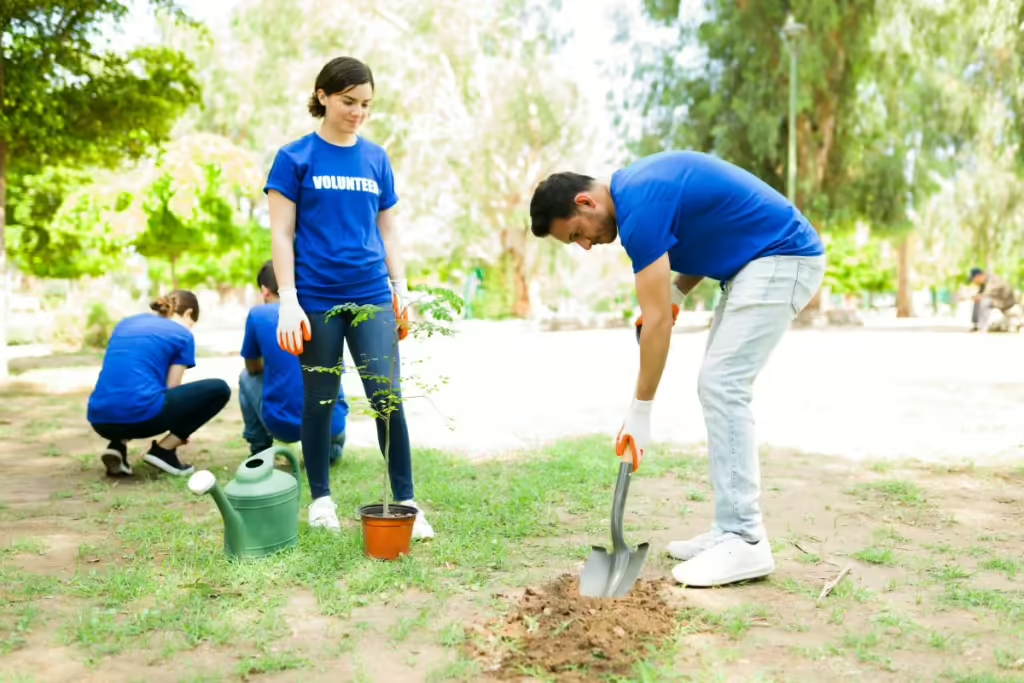

Volunteer recruitment is important for most nonprofits, but it’s easy for other activities like fundraising, event planning, board member engagement, and programming to eat up all your time and energy.
Having a reliable volunteer recruitment plan ready to go is a valuable strategy, as it allows you to grow your network of support while you also juggle your never-ending to-do list.
In this comprehensive guide, we’ll:
- Cover the basics of creating your volunteer recruitment plan
- Touch on effective recruitment strategies and ideas
- Look into how software can help you recruit volunteers more effectively
Let’s get into it!
Go Beyond Donation: The Value of Volunteers
Learn how to build a thriving volunteer program that strengthens your community and amplifies your mission’s reach – download the Generosity Report now!
First Things First: Create a Volunteer Recruitment Plan
Before you bring in new volunteers, you need to have a recruitment plan.
Your plan should take into account your organization’s priorities, goals, how you will onboard and manage your new volunteers, and how people will benefit from giving their time to support your mission.
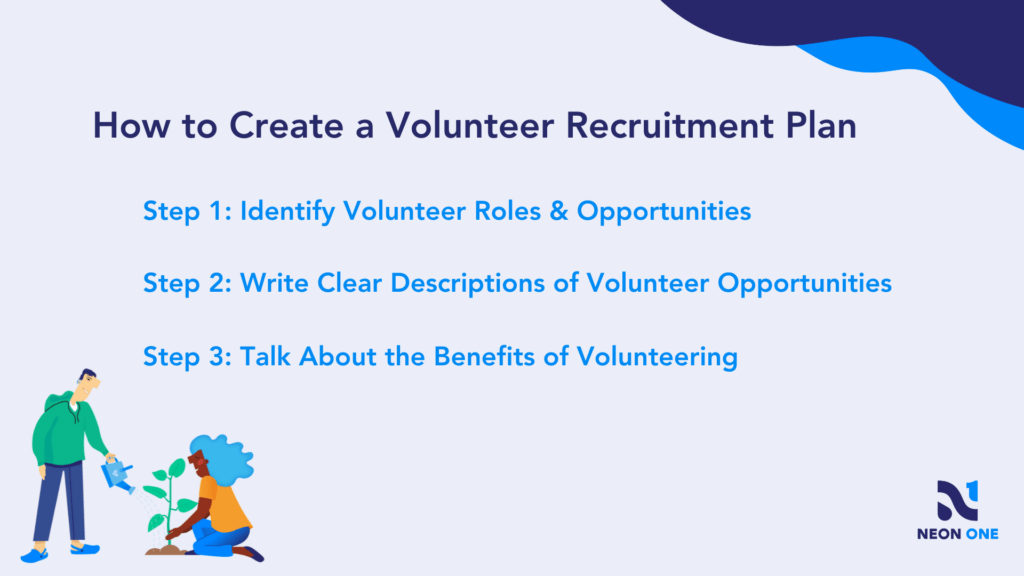
That’s a lot! But to keep things simple, we recommend you use the following three steps to create your volunteer recruitment plan.
Step 1: Identify Volunteer Goals & Roles
First, your team needs to discuss the goals of your volunteer program and decide what types of tasks your volunteers will be working on.
These two elements will inform the rest of your recruitment plan, so talk to each department, take stock of needs and goals, and then prioritize.
Start by asking the following questions with each department:
- What initiatives have you always wanted to start but never had the time for?
- Who else would you hire if you had the budget?
- What goals is your team struggling to meet?
Next, determine the qualifications and commitment for each volunteer opportunity so you can set realistic expectations with your future volunteers!
Qualifications may include skills, certifications, or experience levels. For example, if you need someone to manage your Google Ads Grant, you’ll want someone with a marketing background and an understanding of Google Ads for Nonprofits.
Commitment can include things like how many hours a week or month you need someone to volunteer, information about any onboarding or meetings they’d need to attend, and any other information that will help candidates decide if it’s a good fit for them.
Alternatively, if one of your goals is simply to drive deeper engagement with supporters, you may want to create volunteer opportunities that are based on your typical supporters’ interests.
For example, if you’re a cat shelter, you can assume donors and volunteers are interested in animal welfare. Brainstorm some ways they can support your organization where they can see an immediate impact such as volunteering to play with cats at your shelter, running supply drives, or engaging in a peer-to-peer fundraiser to raise money for your animals.
Don’t forget volunteers can support you virtually, too!
Step 2: Write Clear Descriptions of Volunteer Opportunities
Treat this like a job posting: Applicants should know exactly what they’re signing up for, what they’ll be doing, and what you expect of them.
Once your description is written, make sure your interviewing and onboarding processes are as straightforward as possible. Keep in mind that the steps required for each volunteer opportunity may be different.
If your volunteer will work closely with children, for example, you’ll need reference requests and background checks, but that may not be necessary for other roles.
Depending on the position and the level of involvement, you may even be able to skip the interview process entirely, so use your best judgment. A part-time volunteer office administrator may need an interview, but an event volunteer for a 5k probably doesn’t.
Think through which screening processes are truly necessary, especially if your volunteers are assisting your nonprofit virtually.
Shortening these processes can reduce the number of delays that could prevent interested applicants from participating with your nonprofit and increase your volunteer base.
Step 3: Talk About the Benefits of Volunteering
In your volunteer description, focus on what the volunteer will get out of the relationship and include a few lines about how volunteers will make an impact. Helping people connect to the why and helping volunteers to build a personal connection to your mission and community will ultimately make them feel more inspired in their work!
Recruiting volunteers and asking for donations are very similar: Focusing on making a person feel good about their engagement is the most effective tactic.
The benefits you reference in a volunteer opportunity should be reflected in your volunteer program. If you tell volunteers they get benefits like special access to events, volunteer appreciation gatherings, or other perks, make sure you follow through on those promises.
It can be easy for volunteers’ benefits to be pushed down your priority list, especially when you’re busy. But this should never be the case—if volunteers feel unappreciated or don’t experience the benefits they were promised, they will leave.
Your volunteers may not donate their money, but they do give their time and talents to help your organization. Their time has a significant value as well so you should make sure you’re stewarding and celebrating these unique “donors” as well.
Looking for volunteer appreciation ideas? Here are some ways to celebrate your volunteers.

Next, Implement These 3 Top Volunteer Recruitment Strategies
Now that you’ve identified your volunteer needs, you’re ready to recruit! Here are some suggestions that you can use to recruit new volunteers this year.
Look At Your Existing Supporters
Sometimes, the best candidates for volunteers are already in your donor database.
If your nonprofit hasn’t explicitly asked for volunteers or publicly offered a volunteer program before, your existing supporters may not know you need their help.
They’ve already proven that they’re passionate about your cause, and they may be excited to learn about new ways to support you.
Start by posting your volunteer opportunities where you know your supporters spend their time. Share them on social media, include them in your donor newsletter, and share them individually with other relevant members in your database.
This will help you reach existing supporters (and their networks) with your volunteer opportunities.
Watch this video to learn how Alison Gerber, Volunteer and Development Manager at Open Books, successfully recruited volunteers from their donor base.
Recruit Volunteers from Your Community
After you’ve reached out to your existing supporters, it’s time to start sharing with your broader community.
The benefits of volunteering with a local nonprofit are similar to those of donating to a local nonprofit: Volunteers get to see firsthand the impact their support makes in their own backyard.
Not sure where to start? Try researching other organizations with similar missions and goals. Look at what they do to recruit volunteers in their own communities. You can get ideas that you can then use to find active volunteers nearby who are not yet involved with your organization.
To reach new volunteers, you should also consider where like-minded people in your community spend their time. Consider your donor personas and anticipate where you might be able to connect with potential supporters:
- Does your mission support children? Get connected with local family groups or share volunteer opportunities at family-oriented stores and facilities.
- Is your organization focused on environmental preservation? Host a volunteer drive at local plant nurseries or set up a booth at farmer’s markets.
- Are you an arts-based organization? Build relationships with performance venues, local musicians, or retailers that serve your target audience.
Don’t forget about the public sector! High school and college students often need volunteer hours to graduate, so connecting with them can be a win-win for both the students and your org!
In terms of what platforms you use to engage volunteers, email remains the top performer with in-person events and websites playing a significant role. Social media can be a powerful tool, with Instagram, LinkedIn, and Facebook seeing the most engagement.
Reward Volunteers for Their Support
Incentives are a quick and easy way to attract more volunteers.
When deciding what benefits your volunteers will gain from giving their time to your organization, it might be worth offering unique perks and exclusive experiences.
Beyond giving back, socializing and skill-building are also key motivators for volunteers. Providing social gatherings or educational workshops that are exclusive to volunteers may inspire people to get involved.
Other ideas for volunteer incentives can include:
- Exclusive branded merchandise
- Discounted rates for events or programs
- Volunteer appreciation events
- Special experiences or outings for volunteers
There are endless opportunities to incentivize volunteers—what will you do?
Try These 11 Awesome Volunteer Recruitment Ideas
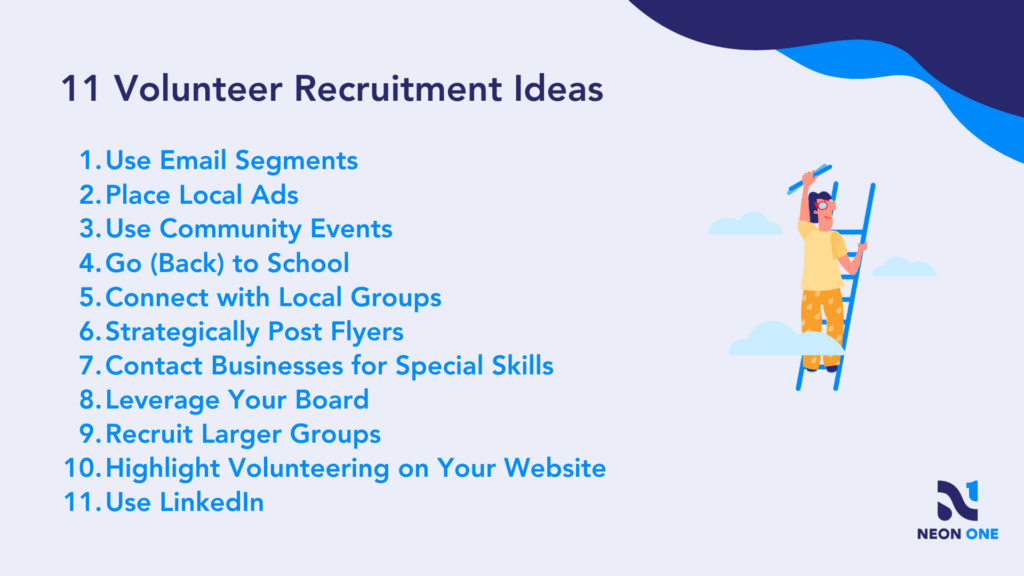
1. Use Email Segments
Recruiting volunteers from your existing supporter base can be a game-changer for your nonprofit.
To do this effectively, start by segmenting your email list based on different levels of engagement, such as frequent donors, occasional volunteers, and event attendees.
Craft personalized appeals tailored to each group, highlighting how their unique involvement can make an impact.
By making your appeals as specific and relevant as possible, you’ll be able to convert more supporters into active volunteers.
2. Place Local Ads
Advertising in local media is a classic but effective strategy for volunteer recruitment.
When placing an ad in your city’s newspaper or on local radio stations, craft a compelling message that speaks directly to potential volunteers. Include a captivating headline that draws attention, such as “Make a Difference in Your Community—Volunteer Today!”
Be sure to highlight specific opportunities and benefits, like skill development, networking, or the chance to make new friends. The key is to make it easy for people to see your message and take the next step.
3. Use Community Events
Leveraging community events is a fantastic way to engage with potential volunteers face-to-face.
Set up an inviting table at popular spots like farmer’s markets, street fairs, or local festivals.
Your table should be more than just a place to hand out flyers—make it interactive. Offer a simple, hands-on activity related to your cause, or set up a quick survey with a small incentive, like a free tote bag or a discount at a local business.
This not only draws people in but also starts a conversation about volunteering. Make sure to collect contact information digitally or through QR codes to seamlessly follow up with interested individuals.
4. Go (Back) to School
Engaging with local schools is a powerful way to recruit volunteers, especially students who need service hours.
Reach out to school administrators and teachers to discuss how your organization can offer valuable, hands-on learning experiences.
Consider creating a structured volunteer program that aligns with the students’ curriculum or extracurricular interests. For instance, if you’re an environmental nonprofit, you could organize a cleanup event that also educates students on sustainability.
Providing certificates or letters of recognition can also incentivize students to get involved, knowing that their efforts will be formally acknowledged.
5. Connect with Local Groups
Building relationships with local affinity groups can be an ongoing source of dedicated volunteers. Whether it’s a local book club, a yoga group, or a professional network, each has members who might be eager to volunteer.
Attend their meetings or events, introduce your organization, and explain how volunteering with your nonprofit aligns with their group’s values or interests.
Offer to host a special volunteer event tailored just for their members, providing an exclusive experience that builds a deeper connection between their group and your cause.

6. Strategically Post Flyers
Posting flyers may seem old-fashioned, but it can be highly effective when done strategically.
Identify the hotspots where your target volunteers spend time—think coffee shops, community centers, libraries, gyms, and popular local businesses.
Your flyers should be visually appealing with a clear call to action. Include a QR code or short URL that leads directly to a volunteer sign-up page, making it easy for interested individuals to learn more and commit on the spot.
Don’t forget to follow up with the business owners or managers for their feedback; they might even become advocates for your cause.
7. Contact Businesses for Special Skills
When your volunteer needs require specific expertise, such as accounting, graphic design, or event planning, reaching out to local businesses can be a goldmine.
Start by identifying companies whose employees might have the skills you need. Craft a professional and persuasive appeal that outlines the benefits of volunteering, both for the individual and their employer.
Emphasize how volunteering can enhance employees’ skills, offer a break from routine work, and fulfill corporate social responsibility goals.
Be clear about the time commitment and any expectations, and ensure you provide a fulfilling volunteer experience that makes professionals want to return.
8. Leverage Your Board
Your board members are some of your most connected advocates. Don’t hesitate to ask them to tap into their personal and professional networks for volunteer recruitment.
Schedule a brainstorming session with your board where they can list potential contacts and discuss how to approach them.
Provide them with the tools they need, such as talking points, email templates, or even a small packet of information they can share. Make it easy for them to make the ask, and follow up to see how you can support their efforts.
Recognize and celebrate the volunteers they bring in, reinforcing the value of their connections.
9. Recruit Larger Groups
When you encourage people to volunteer in groups, you’re not just gaining more hands on deck—you’re creating a sense of camaraderie and shared purpose.
Approach local organizations like church groups, sports teams, or corporate departments that may be interested in a group volunteer opportunity. Highlight how group volunteering can strengthen team bonds, offer a break from routine, and provide a meaningful way to give back.
Tailor your pitch to the group’s interests and needs. For instance, a corporate team might appreciate a day of volunteering as part of a team-building exercise, with recognition provided by your nonprofit.
10. Highlight Volunteering on Your Website
Your website is often the first place potential volunteers will go to learn more about your organization. Make sure volunteer opportunities are easy to find and clearly explained.
Dedicate a page specifically to volunteering. You can feature stories and testimonials from current volunteers to inspire others. Include a list of upcoming events or projects that need volunteers, along with an easy sign-up process.
Consider adding a FAQ section that addresses common concerns, like time commitments or skills required. The goal is to make your website a welcoming and informative gateway for anyone considering volunteering.
11. Use LinkedIn
LinkedIn isn’t just for job hunting—it’s a powerful platform for volunteer recruitment, especially for roles that require specific skills or professional expertise.
Post your volunteer opportunities just as you would a job listing, detailing the responsibilities, time commitment, and the impact the role will have.
Join and engage in relevant LinkedIn groups where potential volunteers might be active, such as those focused on community service, professional development, or your nonprofit’s area of work.
Encourage your current volunteers and staff to share the listings within their networks to maximize reach. Highlight the benefits of volunteering in terms of career development and networking opportunities.

Want more great content like this?
Join our monthly newsletter community to get insights right in your inbox.
Finally, Plan Your Volunteer Retention Strategy
Recruiting new supporters is only the first step in building a thriving pool of committed volunteers. You need a plan to keep them engaged, too!
Regularly thanking volunteers, showing them your appreciation, and regularly reporting their impact are all important elements to include in your retention strategy.
Retaining your volunteers will help you achieve a few different goals. You’ll start to build a base of loyal supporters. This base will limit the demands you have to place on existing volunteers. Plus, it will reduce the need to constantly acquire new ones.
You’ll also have to spend less time onboarding the people who sign up to help you, since experienced volunteers don’t need as much training as new ones do.
It may also help you with your fundraising goals. According to research from Donors: Understanding the Future of Individual Giving, 53% of people donate to a nonprofit before they enlist as a volunteer, and that deepened level of support can mean better retention rates and a higher donor lifetime value. Another 39% of people indicated that they tend to volunteer with a nonprofit before deciding to give financially.
Looking for volunteer retention ideas? Check out this article for 10 tips to retain your volunteers.

How Software Can Support Your Volunteer Recruitment Efforts
Effective volunteer recruitment doesn’t happen by accident—it’s a blend of strategy, timing, and the right tools. So it’s no accident that finding the right volunteer tool for your organization, whether it’s a dedicated volunteer management system or a comprehensive donor management platform like Neon CRM, can really set your nonprofit apart.
Volunteer management software is designed to streamline every aspect of recruitment, from creating volunteer-specific forms to scheduling shifts and tracking hours. These systems allow you to manage large volumes of volunteer data efficiently, ensuring that no potential volunteer falls through the cracks.
By automating routine nonprofit tasks, such as sending follow-up emails or reminders about upcoming opportunities, these platforms free up your team to focus on more personalized engagement.
Comprehensive CRMs take this a step further by integrating volunteer management with other aspects of your nonprofit’s operations. With a system like Neon CRM, you can link volunteer activity with donor engagement, providing a fuller picture of each supporter’s involvement.
This holistic approach allows for more targeted and effective recruitment efforts, as you can segment your outreach based on a volunteer’s history and interests, ultimately building a stronger, more committed volunteer base.
See Neon CRM in Action
If you’d like to learn more about how Neon CRM can help your nonprofit manage your volunteers (alongside managing your fundraising, donor management, donation forms, email and text communications membership, events, grants, and [somehow] even more), you should join one of our group demos!
These regularly scheduled 30-minute sessions come with zero pressure to buy and give you a broad overview of everything that Neon CRM can do—as well as what it can do for your nonprofit. Just click below to find a session that works for you and save your spot!
Volunteer Recruitment Is an Important Priority for Any Nonprofit
Whether you need a skilled volunteer with many years of experience or a pair of hands to help at an event, a solid volunteer recruitment strategy will help you find the right person.
But, as you begin building your base of volunteers, make sure you’re taking steps to keep them engaged with your nonprofit long term.
The longer someone’s involved with your work, the more likely they are to continue to support you—and the more opportunities you have to deepen that relationship by inviting them to donate or to support you in other ways.
If you’re interested in learning more about volunteers, who they are, what inspires them, and how to inspire them to stay engaged with your nonprofit, check out our complete guide to volunteer management.