
Will Rogers once said, “You never get a second chance to make a first impression.” And, given that 94% of consumers and donors cite website design as their first impression of a brand, the case for why nonprofits should invest in their website is pretty undeniable. Without a strong online presence, your nonprofit won’t be making much of an impression at all.
Creating (or revamping) your website might seem like just another task on your already overflowing to-do list, not to mention the space that a robust site will take up in your budget (let alone the time and money you’ll spend actually building it)..
But for new and established nonprofits alike, a standout website is a strategic, indispensable investment in your future.
Why Nonprofits Should Invest in Their Website
In this digital-first age, your website is more than just an online address; it’s a way to build trust and community confidence, a platform to maximize donor and constituent engagement, a foundation for growth, and an opportunity to make your organization stand out.
If your website isn’t checking the boxes below, then Houston, we have a problem (but luckily also solutions!).
Let’s dive in:
1. Your Website Should Build Trust and Community Confidence
Think of your website as a digital handshake.
We’ve all landed on a website that looks a little…. off. Or you’ve found an organization that only has a social media account but no official website. It feels sketchy! Is the information reliable? Is this organization or business actually legit?
Investing in your nonprofit website is your chance to not only prove that you’re real, but that you’re trustworthy. A strong website also builds confidence in your donors. And more confident donors are ones who are way more likely to increase their giving—score!
Here are three things you should include on your website to help build trust and confidence:
Consistent Branding
People research before they donate! A well-designed site with consistent branding (logos, colors, messaging) showcases your legitimacy and inspires confidence. In fact, branded charity websites experience 12% more donations than non-branded sites.
Educational Info About Your Mission and Work
Your website is not just a chance to educate people about what you do, but, more importantly, why you do it. People connect with authenticity, so sharing the following pieces of info can help make your work feel more tangible:
- Your mission statement
- Your history
- Your values
- Your programs and initiatives
- Your team and board
And make sure to show, not just tell. Powerful images and videos help make your mission resonate with people. You’re not just informing people about your mission—you’re inspiring them to join.
Impact Stories
Whenever possible, don’t communicate impact with statistics. Instead, talk about the impact your work has had on one person. Supporters will be able to emotionally connect with that story much more easily. It’s a psychological phenomenon known as the “identifiable victim effect.”
But while stories are powerful for inspiring action, data can help to verify your credibility. That’s useful for potential grant funders, corporate sponsors, and even prospective board members.
Now, we’re not saying to post dense reports with lots of jargon, but your website is your chance to openly display impact data, testimonials, and financial numbers (annual reports, statements, etc.).
Think “X dollars invested directly into programs,” “X lives impacted,” or some simple infographics. This type of impact data demonstrates where donations go and shows that you can be trusted to put donor dollars to good use.

2. Your Website Should Maximize Supporter Engagement
A well-designed website is more than text on a page it’s a dynamic tool that actively cultivates deeper relationships with all your supporters, especially donors and volunteers.
When you invest in your nonprofit’s website, you’re investing in your organization’s ultimate superpower: the ability to seamlessly attract generosity, whether that’s in the form of vital funds or boots on the ground.
Check the following boxes and make sure your website can easily convert visitors to supporters:
Seamless, Easy Donation Forms
Strategically placed calls to action and intuitive navigation ensure that when people feel inspired to give, the process is easy! An outstanding website will create seamless, secure, and mobile-friendly donation experiences that help donors fully follow through on that initial impulse to give.
A clunky, unbranded donation experience can scare donors away (or at least frustrate them so badly that they just give up). You want your donation form to be simple, credible, and affirming of their decision to give. We’d also suggest using a multi-step form, as it creates a smoother user experience and can optimize conversion.
For more on this, here are some more quick tips on how to set up a donation form.
Volunteer Stewardship
When someone wants to volunteer with your nonprofit, the process they follow to sign up on your website should be effortless. This includes easy-to-find sign-up forms, clear descriptions of roles, and stories that showcase volunteer impact.
A website can also serve as a hub for ongoing volunteer engagement, potentially offering them personalized portals or updates to feel valued and connected to the mission. Building and retaining a dedicated base of volunteers is a key reason why nonprofits should invest in their website. They’re simply invaluable!
Other Engagement Opportunities
Beyond donations and volunteering, your website can also allow you to share news and updates, celebrate successes, and even host other types of forms like newsletter sign-ups, event registration, membership registration, and more!
3. Your Website Should Make Your Organization Stand Out
With over 1.1 billion websites in the world (and the average internet user visiting 130 of them every day), you should invest in your nonprofit website to ensure that when someone searches for a cause like yours, they find you.
Search Engine Optimization (SEO)
Ranking highly in Google search is a great way to help drive traffic to your site. And content strategy and technical optimization both play a key role in your ability to stand out to search engines.
From a content perspective, updating your site regularly and adding new content through a blog are two easy ways to improve your search engine rankings. Conducting keyword research can also help your efforts.
Technically, the structure of your website, pages, and your code can also be maximized to help you stick out. These ten tips will help you technically optimize your website for SEO.
Once People Find You, Engage Them
Nonprofits average a bounce rate 60-70% (a good bounce rate is 40% or below), so focusing on website improvements that engage visitors and encourage them to stick around is important.
People Centered Design
Humans respond to humans! When designing your website, make sure to include high-quality images (compressed to help them load faster, of course) that showcase your work, staff, and community. Visuals are processed faster than words and can help tell the story of who you are while also driving engagement.
Website Personalization
Go beyond the basics! Personalization—using data to tailor content based on time of day, past site visits, location, and more—creates unique and memorable experiences for users. Not only does this mean that every time a person visits your site, they have a new experience, but you can also change messaging, content, and design to encourage people to take a desired action.
Check out these three tips for nonprofit website personalization for some ideas!
Update Your Site Regularly
As we mentioned above, updating your site and sharing blog content regularly helps with SEO, but it also helps keep your site fresh and engaging for visitors. If people are visiting your site regularly, getting to experience new images, impact stories, or updates creates a reason to stick around (and hopefully find their way to taking a desired action like donating!)
4. Your Website is a Foundation for Growth
A great website isn’t just for today; it’s built to grow with you, ensuring longevity and adaptability. Starting with a cheap, generic platform can mean constant repairs and coding headaches down the road, which will cost more in the long run. Plus, a lot of your basic e-commerce-focused platforms aren’t built to meet nonprofit needs.
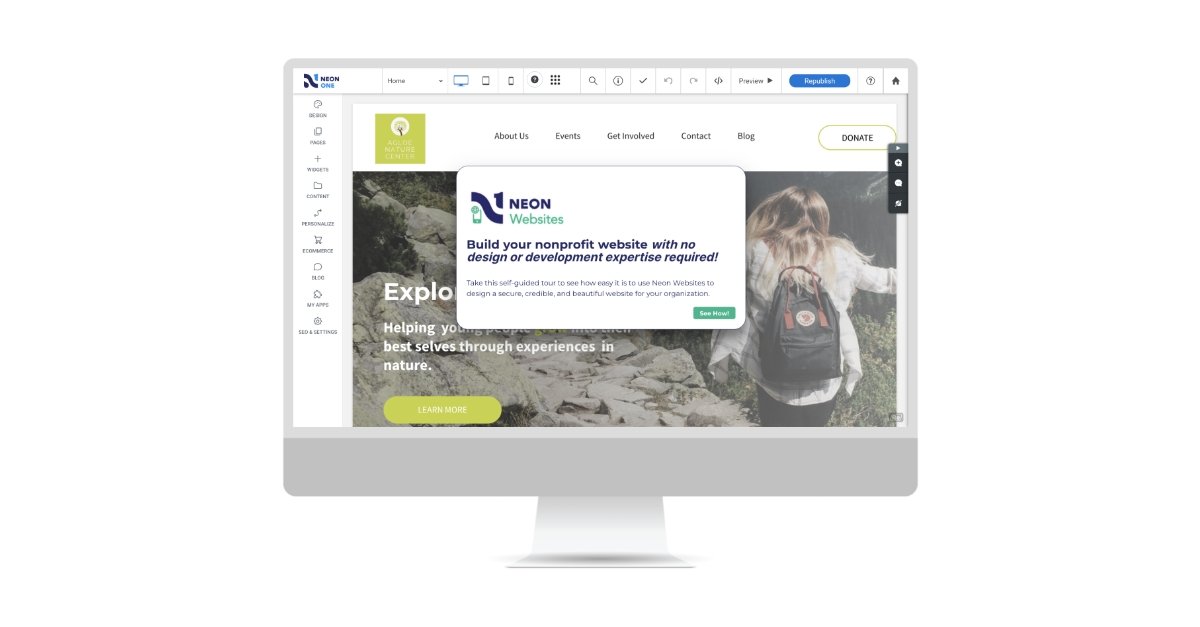
Though it might start simple, if you invest in your nonprofit website now, you’ll be in a position to grow with a website that can grow with you. Neon Websites is a great platform designed to specifically handle the needs (and challenges) of nonprofits. To see what it looks like in action, click below for a self-guided tour.
Build a Website That Works as Hard as You Do
With Neon Websites, you can use our drag-and-drop editor, stylish nonprofit templates, and seamless integrations to create a website that inspires your supporters. Learn more on this self-guided tour!
Do Brand-New Nonprofits Need a Website? Yes!
If you’re just getting started, we’ve got you. In addition to The Ultimate Guide to Nonprofit Websites, we’re also excited to share Neon Launch!
Neon Launch, a new offering from Neon One, is designed to help new and early-stage nonprofits get online quickly. It includes everything they need to launch their website, raise money, and start building relationships from day one—all without any tech expertise.

Ready to Launch Your Mission Online?
Neon Launch gives you a professional website, donation tools, and integrated payment processing—everything you need to start strong and grow support.
Need Help Building Your Nonprofit’s Website? Get This Guide
By now, you can probably answer the question, “Why should a nonprofit invest in its website?” Because it will yield returns in growth, trust, engagement, and discoverability.
Building a full-fledged website can feel like a big commitment or undertaking, but it’s one of the best ways to secure your organization’s future in the digital age.
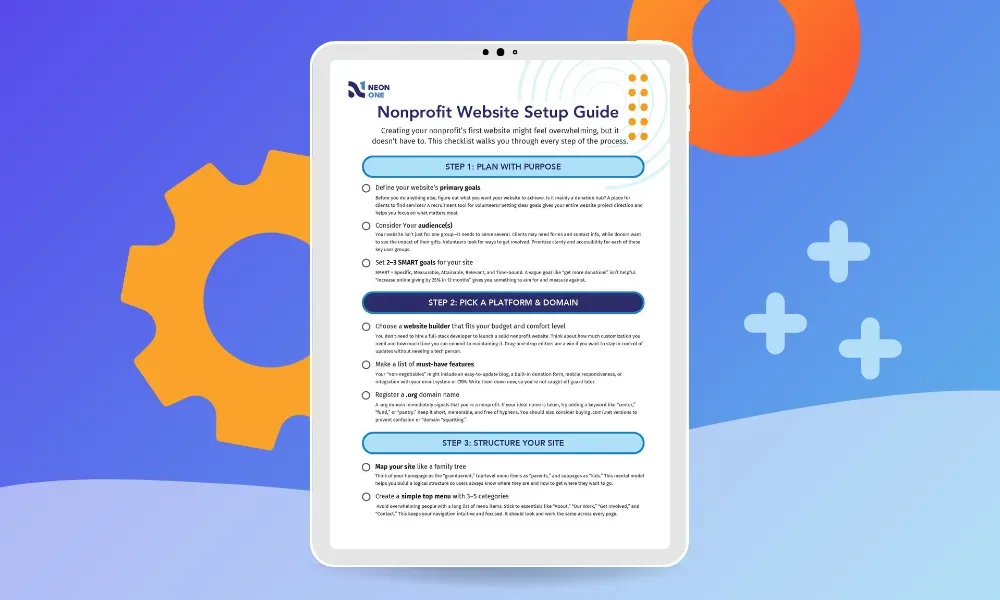
So what’s next? Whether you’re starting from scratch or ready for a reboot, we’re here to help! Our new Nonprofit Website Setup Guide is a handy, nine-step checklist that will help build a website that not only works, but wows.