

“Sustainability” in the nonprofit world can too easily become just another buzzword. But it shouldn’t be. Real sustainability makes it possible to serve your community next year, and the year after that, and far into the future. That’s important!
A sustainable nonprofit has a lot (a whole lot) of factors to consider—a strong mission, dedicated board, passionate staff, you name it. With all of those factors, one key factor ties it all together: strong nonprofit management.
When processes and management break down, everything else is at risk. Luckily, you can mitigate that risk through deliberate planning and decisive (but flexible) execution.
We’re going to break down 12 essential nonprofit management strategies for long-term success across three key areas: supporter management, financial management, and data management. Think of this as your nonprofit management playbook to not just ensure success this quarter, but for the next 20, 40, or 100 quarters, too.
Four Strategies for Supporter Management
If you’re in the nonprofit world, you know that fundraising is about way more than just getting donors (and other supporters, too!); it’s about keeping them. Strong supporter management means intentional, clear processes that build lasting relationships.
1. Prioritize Relationship Building Over Transactional Giving
Use your donor database (like Neon One’s CRM) to track interactions, not just gifts. Your records should provide you with a full picture of your relationship with a supporter: Did they volunteer? Attend an event? Open an email? Make a donation?
Focusing on generosity in all forms shifts your focus from “how much money did they give?” to “how can we deepen their connection to the mission?” And as our research in The Generosity Report found, deeper connections mean a greater chance that your supporters stick around and grow their support over time.
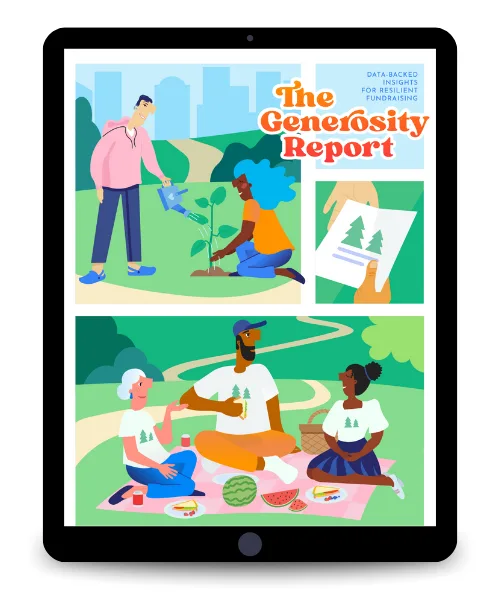
Do You Know Your Donors?
They’re more generous than you might think … and we have proof. Download The Generosity Report today!
2. Create a Donor Communications Calendar
Create a plan for all of your touchpoints with supporters for the year. Include any communication channels that you’ll use, like emails, mailers, thank-you calls, impact reports, or social media. A fully laid-out plan ensures that no one is forgotten and prevents the panic of scrambling to write a last-minute appeal or invite.
Creating a cadence and consistency of communication also helps to build trust. It gives you a chance to not only communicate when you have asks to make but also to communicate about the direct impact that your supporters make possible with their generosity.

3. Invest in Mid- and Long-Term Engagement
Consider setting up a simple recurring giving program to stabilize your cash flow. When you create opportunities for people to give monthly or annually, you know exactly what support you can count on in the future. For your most engaged supporters, you might also start thinking about a legacy or planned giving program.
These types of programs build a reliable base of support that protects you from economic shifts and short-term fundraising fatigue.
4. Be Transparent About Your Impact
People donate because they care about the work that you’re doing. So make sure that their impact is being communicated clearly!
Don’t just say, “We served 100 people.” Say, “Your donation bought the ingredients to cook a Thanksgiving meal, which allowed 100 kids at the local youth shelter to have a warm, home-cooked meal for the holiday.”
Donors don’t just give to a cause; they invest in an outcome. Detailed, transparent information (and even better, data-driven stories) about their donation’s impact fuels long-term commitment.
Four Strategies for Financial Management
Financial health is more than just having money in the bank. It’s about knowing exactly what that money is for and what you’ll do if your expected revenue drops.
5. Develop a Diversified Funding Strategy
To overuse an already overused idiom: Don’t put your eggs in one basket. We all know that revenue streams are subject to change, so it’s very important that you never rely on a single source of income (like one major grant or one annual gala). Actively pursue a mix of fundraising streams like individual giving, grants, sponsorships, and events. Consider it an insurance policy. If one stream dries up, your work doesn’t have to stop, too.
6. Maintain a Healthy Operating Reserve
Set a clear goal to save 3-12 months’ worth of operating expenses in an accessible reserve fund to cover your bases in case of unexpected shortfalls. Think of it like a rainy-day fund for emergencies, like a facility repair or an unexpected grant loss. Reserves provide stability and prevent a reactive, scarcity-based mindset when a crisis hits.
You’ll also want to create some guidelines around how you’ll fund this reserve (like budget surplus), usage triggers, and a plan to rebuild your reserve. This way, all the major operational aspects of your reserve fund will be documented.
7. Create Scenario-Based Budgeting
Don’t just make one budget. Create scenarios like the “best case,” a “most likely,” and a “worst-case.” You never know how the year is going to go or what is going to come up. Managers who plan for tough times are never surprised by them. It allows you to make strategic adjustments now instead of panicking later.
As the saying goes, “When you fail to prepare, you prepare to fail,” so make sure you’re ready for anything that comes your way.
8. Ensure Strong Internal Processes
Make sure that your team is set up with checks and balances. Separate financial duties—the person who approves the check should not be the person who signs the check. This is an essential safeguard against fraud or simple human error.
Setting processes in place and assigning key financial roles to various members of your team (or board) paves the way for strong financial management that builds trust with your board and your donors.
Four Strategies for Data Management
You can’t manage what you don’t measure. And you can’t measure if your data is a mess. Long-term success requires turning raw information into actionable insights, so you want to make sure your data management is in tip-top shape.
9. Institute a Single Source of Truth
Designate one, and only one, core platform (like Neon One, for example) as the definitive record for all supporter, fundraising, and program data. When your data is spread across multiple spreadsheets or platforms, you risk missing important information, wasting time, and just suffering from a general confusion about who is doing what and how you’re tracking it.
One platform with a 360° view of your supporters and your organization ensures that everyone—from the Executive Director to the newest intern—is working from the same, accurate information.
10. Focus on Mission-Critical Key Performance Indicators (KPIs)
Though you’ll want to measure a lot, it’s important that you focus on tracking the data that is most important to your work.
Identify a core set of metrics that truly tell you if you’re achieving your mission and if you’re financially healthy. Choosing key KPIs directs your staff’s energy and attention to the activities that actually drive long-term success.

11. Leverage Data for Segmentation and Personalization
Your data is useful for so many reasons, but a key one is that it allows you to segment your audience and personalize your outreach.
Use your data to group supporters based on their interests, giving history, or engagement level. Then, personalize communications so they feel seen. (Example: Donors who only give to the youth arts program should only receive stories about that program).
Generic appeals feel cold, and the more you can personalize a message, the more people will feel connected (and invested) in your mission!

12. Establish Clear Data Entry Standards and Conduct Regular Audits
Clear data entry standards are essential because they ensure your donor reports are trustworthy and your communications are accurate and professional. Inconsistent data leads to embarrassing mistakes, wasted time, and unreliable fundraising analysis. By setting standards for titles, names, addresses, and gift types, you keep your database clean.
From there, you can schedule specific times (quarterly or semi-annually) to actively review your database. Look for duplicate records, incorrect contact information, and missing fields. Delete or merge obsolete data to keep your database up to date.
Consider a Nonprofit Relationship Management Platform
Long-term success takes hard work. But that hard work can be made easier when you have clear systems in place. The 12 strategies above are a start, but having the right platform to back up your management efforts can be the ultimate game-changer.
Neon One is a nonprofit relationship management platform built to fuel your impact and success. It’s designed to give you a true 360-degree view of your supporters and your organization. It connects your fundraising, your financial data, your communications, and your relationships all in one place.
Our platform can help you see the whole picture, and you can use those insights to focus on the management, plans, and strategies that fuel your organization forward.
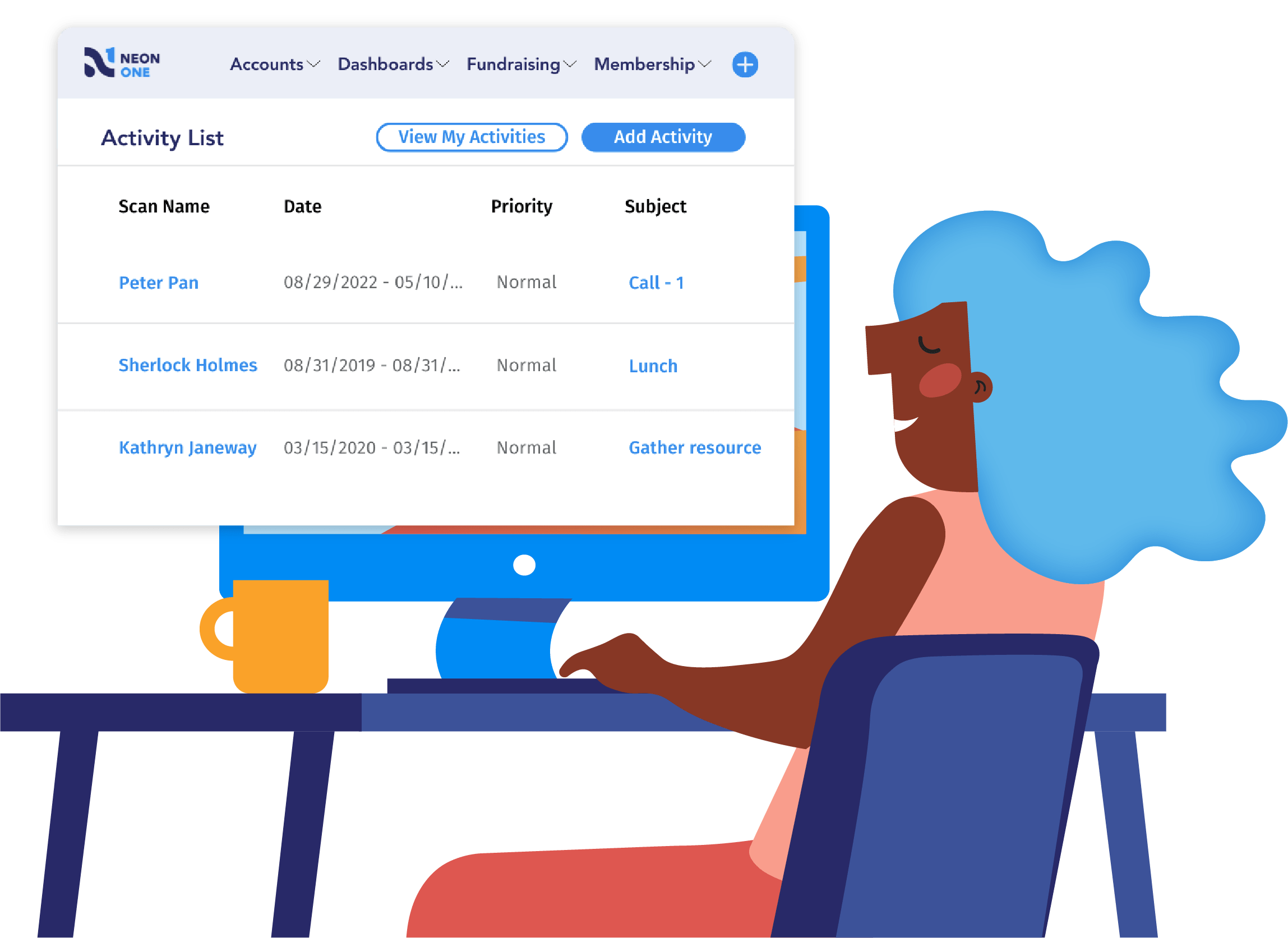
See Neon CRM in Action
Take this self-guided tour and see how top nonprofits build community, raise more, and save time with a single platform that manages it all!