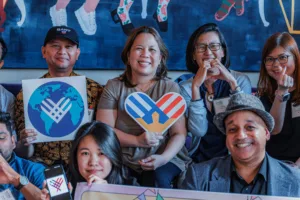

Last week, I had the honor of presenting at the Bridge Conference alongside Ben Williams, Executive Director of the Connect Center in Cohoes, NY. Ben’s one of those people who lives generosity. He leads with empathy, builds systems that work for real people, and isn’t afraid to get into the messy middle where most of us spend our time.
Together, we shared the stage at BridgeTech to talk about something that doesn’t get enough airtime: what generosity looks like when you’re not chasing major gifts.
Here’s what we shared—and what we learned.
Do You Know Your Donors?
They’re more generous than you might think … and we have proof. Download The Generosity Report today!
The Q1 2025 FEP Report Confirms It: We’re Losing Donors, But Not Generosity
The latest Fundraising Effectiveness Project (FEP) data, which I help steward through my role as Chair, tells a clear story. Total dollars raised are up slightly, but the total number of donors is still down, particularly among new and recaptured supporters.
That means fewer people are giving more. And while the overall numbers might look fine on a balance sheet today, relying on larger gifts from fewer people is putting the long-term health of the sector on a dangerous trajectory
What Ben and I emphasized is that 96.9% of all donors give less than $5,000 a year. These are everyday donors. The people who register for your walkathon, give $20 during a campaign, or chip in monthly because they believe in your mission.
They’re not vanishing. But they are being ignored by many fundraising strategies.
Monthly Giving Is More Than Revenue—It’s a Trust Signal
One of the most actionable insights we covered is around recurring gifts. According to research from GivingTuesday, only 6% of donors currently give on a recurring basis. But those who do? They stick around. We’re talking 90% retention after one year compared to just 20% for one-time donors.
That’s not just a donation. That’s a commitment.
So we encouraged attendees to look at their donor journey and ask:
- Are you offering an easy way to give monthly?
- Are you making the donor feel seen, thanked, and trusted?
- Are you telling a story that feels worth sticking with?
If you’re looking for sustainable revenue and stronger relationships, recurring giving is where to start.
Get the 2024 Recurring Giving Report
We analyzed five years of giving data from over 100,00 nonprofit donors and found that recurring givers are some of the most valuable and committed supporters an organization can have.
Donors Don’t Just Give. They Belong (If You Let Them)
One thing we dug into with the audience is all the ways that people show up for their favorite nonprofits that aren’t being tracked as “giving.”
We pulled from a massive Neon One study of 99,522 everyday donors. We looked at people who gave for multiple years, signed up for memberships, volunteered, set up pledges, or attended events.
Here’s what we found:
- Volunteers gave more over time, especially after year three.
- Members were steady, but might need better storytelling to feel truly engaged.
- Event attendees were highly correlated with long-term giving, but those donations didn’t always start right away.
So the question isn’t just “How do I raise more money?” It’s “How do I make it easy for people to keep showing up?”
Emotions and Identity Drive Generosity
We also shared insight from an AI-assisted analysis of 13,000 donor notes written during recurring gift setup. These weren’t generic notes of support but were deeply personal reflections.
The two most common types of sentiment?
- Emotional expression: Love, gratitude, inspiration, remembrance.
- Identity affirmation: I’m a caregiver. I’m a local. I’m someone who believes in justice.
This is a reminder that fundraising is, at its core, identity work. You’re not just asking someone for a donation. You’re inviting them into a story where they get to be the kind of person they believe themselves to be.
Ben modeled this beautifully during the live coaching session we facilitated together. He showed how his organization uses onboarding, storytelling, and flexible payment methods to meet people where they are.

Practical Takeaways for Fundraisers
Here’s what you can do this week:
- Offer a recurring gift option and tell a story that makes it meaningful.
- Rethink your membership language to move from “transactional” to “belonging.”
- Look at your volunteer retention strategy—is there one?
- Ask your donors why they give. Don’t guess. Invite their voice in.
This work doesn’t need to be fancy. But it does need to be human. If we want to rebuild trust in the nonprofit sector, it starts with showing everyday donors that they matter.
Because they do. Every dollar. Every note. Every volunteer hour. It all adds up.
Want to dig deeper? Check out the full Q1 2025 Fundraising Effectiveness Project report and more insights from The Generosity Report.