
How has recurring giving grown and changed? When are people most likely to make a monthly gift? How long do recurring donors tend to stay engaged with their favorite nonprofits?
These answers come from Neon One’s original research—not third-party surveys or synthesized industry reports, but direct analysis of transaction data from 4,107 nonprofits and 2,006 donor survey responses.
You won’t find these numbers anywhere else. Read on to learn more!
Looking for Better, Safer Ways to Use AI?
The AI Xchange, by Neon One, is a resource hub that helps you use AI efficiently and safely—so you save time without risking donor trust.
Findings from Neon One’s Recurring Donor Report (2026)
These findings come from the Recurring Donor Report: Data-Backed Insights for Sustainable Generosity, Neon One’s upcoming research (dropping April 28!), drawing on transaction data from 4,107 nonprofits and survey responses from 2,006 recent donors, covering giving behavior from 2023 through 2025.
This report is a sequel, of sorts, to The Recurring Giving Report: Data-Backed Insights for Sustainable Generosity (notice the difference in emphasis: donors versus giving) that we originally published in 2024 and examined recurring gifts made by more than 100,000 donors to over 2,000 nonprofits between 2018 and 2022.
There were a couple of awesome stats from that report that we didn’t follow up on in The Recurring Donor Report, so we kept the original findings around. Specifically, statistics #6 and #7 are pulled from The Recurring Giving Report.
Why Do These Recurring Giving Statistics Matter?
Before we dive in, let’s touch on the broader context that makes these statistics especially meaningful.
Between 2023 and 2025, the average nonprofit saw its overall base of active supporters shrink from 748 to 707—a 5.48% decline. One-time donor retention fell from 35.75% to 32.41% during the same period. Both of these statistics point to something we all already know: the nonprofit sector is navigating a real decline in traditional individual giving.
But here’s the part that not nearly as many people know: Recurring donors are bucking that trend entirely. Their numbers are growing. Their retention rates are holding steady between 78% and 80%. And they’re staying engaged for nearly eight years on average. That’s why these statistics matter right now.
Okay, enough preamble. Let’s get into it!
Recurring Donor Statistics at a Glance (2026)
| Statistic | Finding | Source |
|---|---|---|
| Recurring donor base growth | From 2023 to 2025, the average nonprofit grew its recurring donor base by 31.58% — even as overall supporter databases shrank by 5.48% during the same period. | Neon One, 2026 Recurring Donor Report |
| Average annual gift | The average recurring donor gives approximately $938 per year. | Neon One, 2026 Recurring Donor Report |
| Recurring donor retention rate | Recurring donors are retained at a rate of 78%–80% — compared to just 32.41% for one-time donors. | Neon One, 2026 Recurring Donor Report |
| Average donor lifetime | The average recurring donor stays engaged with a nonprofit for 7.77 years, versus just 1.7 years for non-recurring donors. | Neon One, 2026 Recurring Donor Report |
| Lifetime donor value | In 2025, the average recurring donor lifetime value was $7,288.26 — compared to $3,606.90 for non-recurring donors. | Neon One, 2026 Recurring Donor Report |
| Best months to launch recurring appeals | October, November, and December are the top three months for new recurring gift initiations. January and February are the slowest. | Neon One, 2026 Recurring Donor Report |
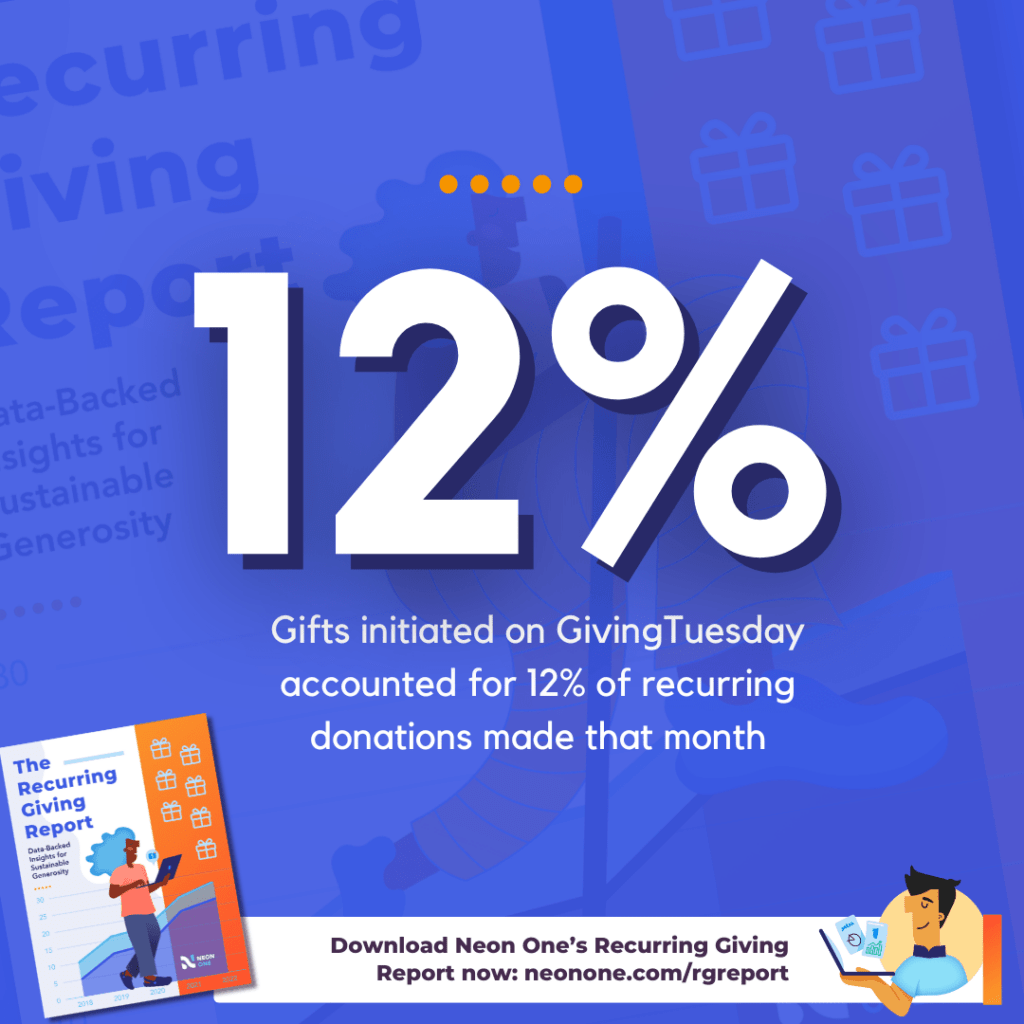
| GivingTuesday recurring gifts | Gifts initiated on GivingTuesday account for approximately 12% of all recurring donations made in the month in which it falls. | Neon One, 2024 Recurring Giving Report |
| Primary payment method | 91% of recurring donors give via credit or debit card. 8.24% use ACH or eCheck. | Neon One, 2024 Recurring Giving Report |
| Donor behavior without appeals | 58.6% of recurring donors made their gift without ever being asked to give by the nonprofit their gift supports. | Neon One, 2026 Recurring Donor Report |
1. More People Are Becoming Recurring Donors
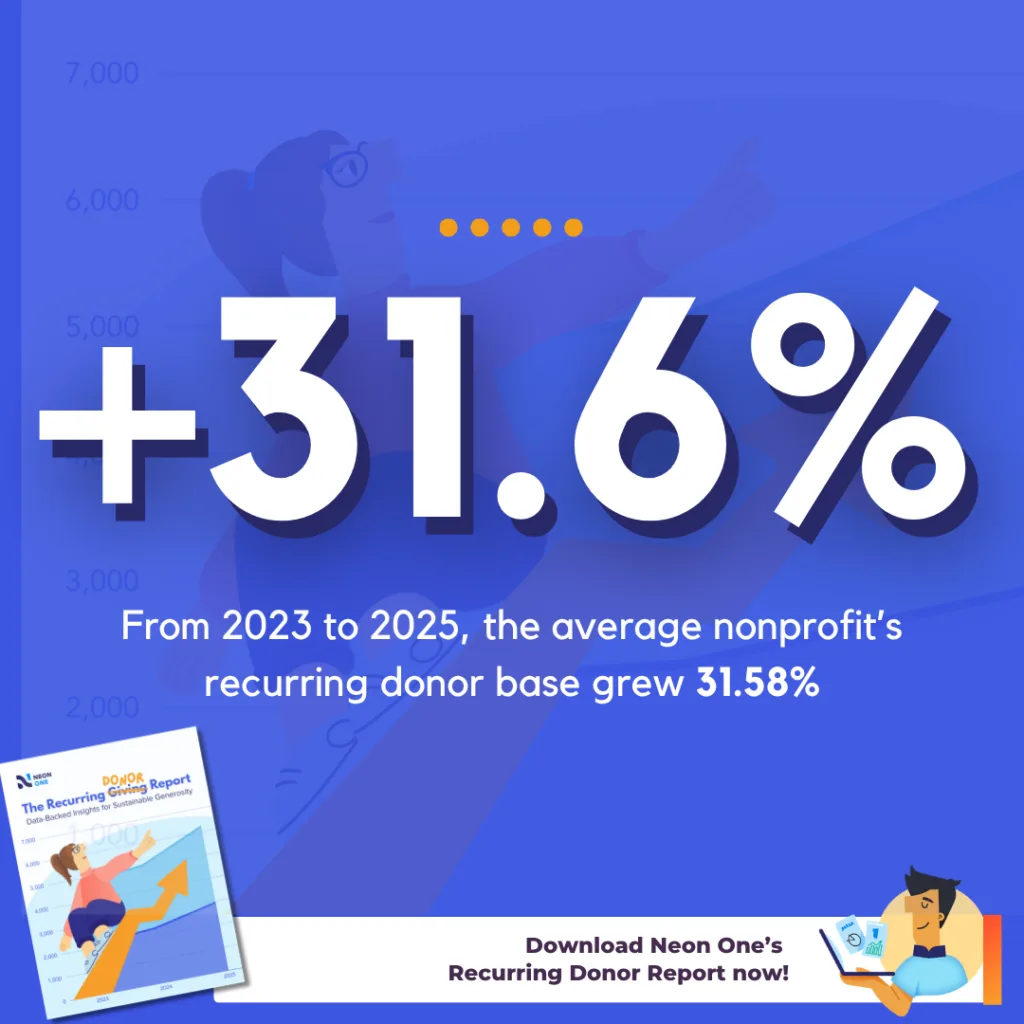
From 2023 to 2025, the average nonprofit grew its recurring donor base by 31.58%.
If you don’t have a large recurring donor base, that percentage might seem a little intimidating. Here’s some important context: In 2023, the average nonprofit had around 19 recurring donors. By 2025, that number had grown to around 25. Much less intimidating, right?
Cool—Now What?
Now’s a great time to start actively building your recurring donor base. People are proving they’re willing to support their favorite organizations this way! If you haven’t planned an appeal for recurring gifts or launched an official recurring donor program, there’s no time like the present to get started.
2. Recurring Donors Are Generous
How valuable are recurring donors? So valuable that it’s hard to put just a single number on it. They support their favorite causes in a ton of ways—more on that in a minute—that go well beyond their regularly scheduled gifts.
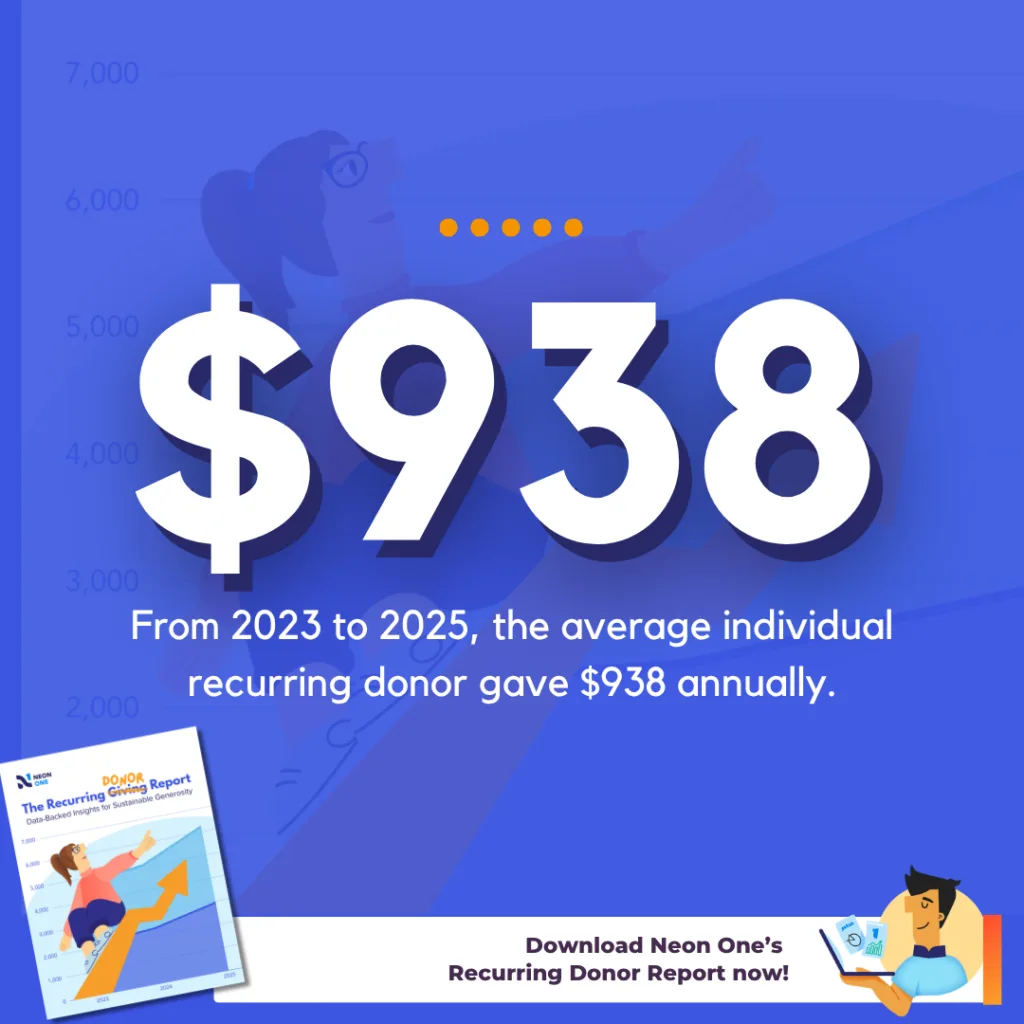
But if you put everything else aside and simply focus on how much these donors give each year, we’d still find that those contributions were really significant!
Cool—Now What?
Let’s address the elephant in the room: People who make large gifts often get the lion’s share of our attention. And, let’s be clear, that is very understandable and often very necessary. But, while recurring donors may not give nearly $1,000 all in one transaction, their smaller contributions add up quickly.
Get some processes in place that celebrate your recurring donors’ generosity and set the stage for future interactions. Try building a welcome email series, sending great thank-you notes, and maybe even calling new recurring donors just to say “thanks.”

3. Recurring Donors Stay Engaged …
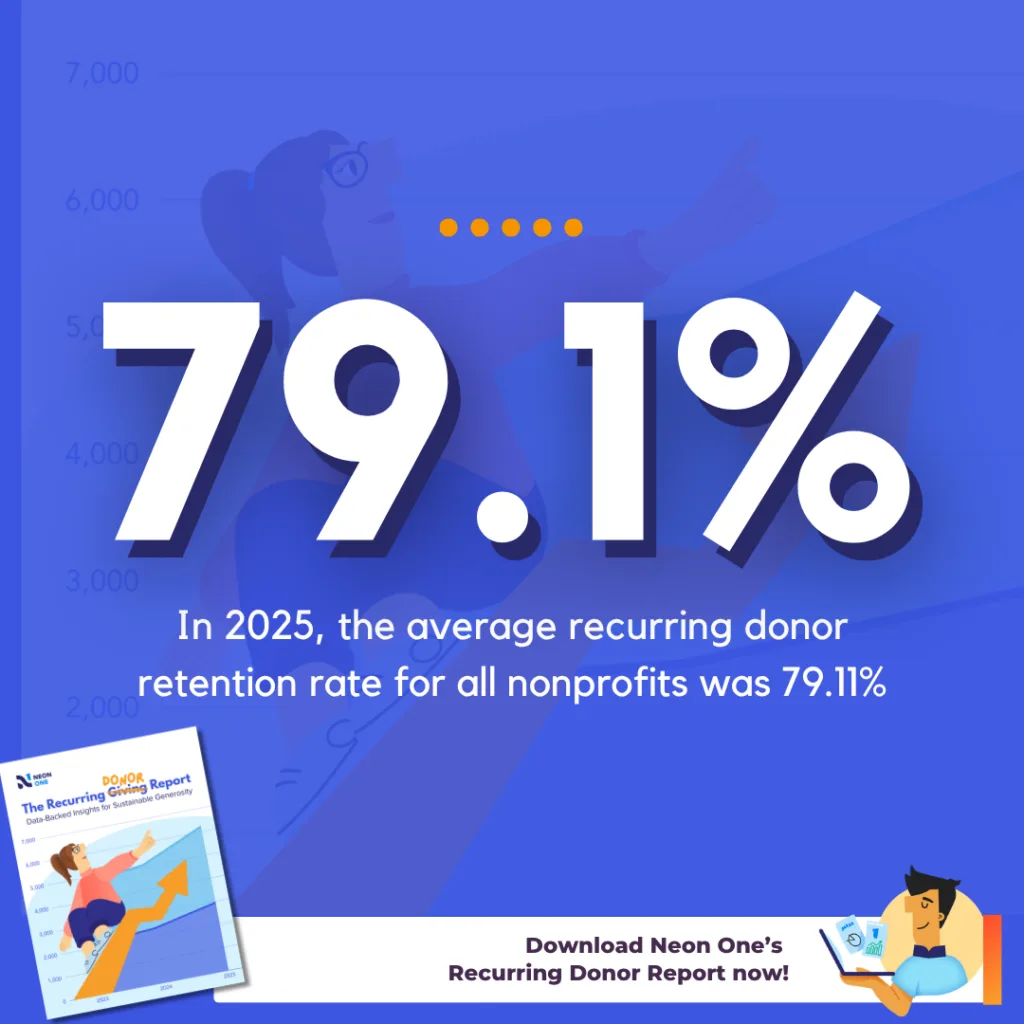
You’ve probably heard that recurring donors are easier to retain than people who make one-off donations. This study confirms that!
According to the 2026 Recurring Donor Report, recurring donor retention rates held steady between 78% and 80%. Compare that to the 32.41% retention rate for non-recurring donors in 2025—this is a loyal group of supporters!
Cool—Now What?
Yes, recurring donors are easier to retain than people who don’t make recurring gifts. But don’t take their loyalty for granted! As you work on growing your monthly giving program, make sure you have a retention strategy in place. You’ll want to intentionally focus on keeping them up to date on how their support is making a difference.
4. … And They Stay Engaged a Long Time
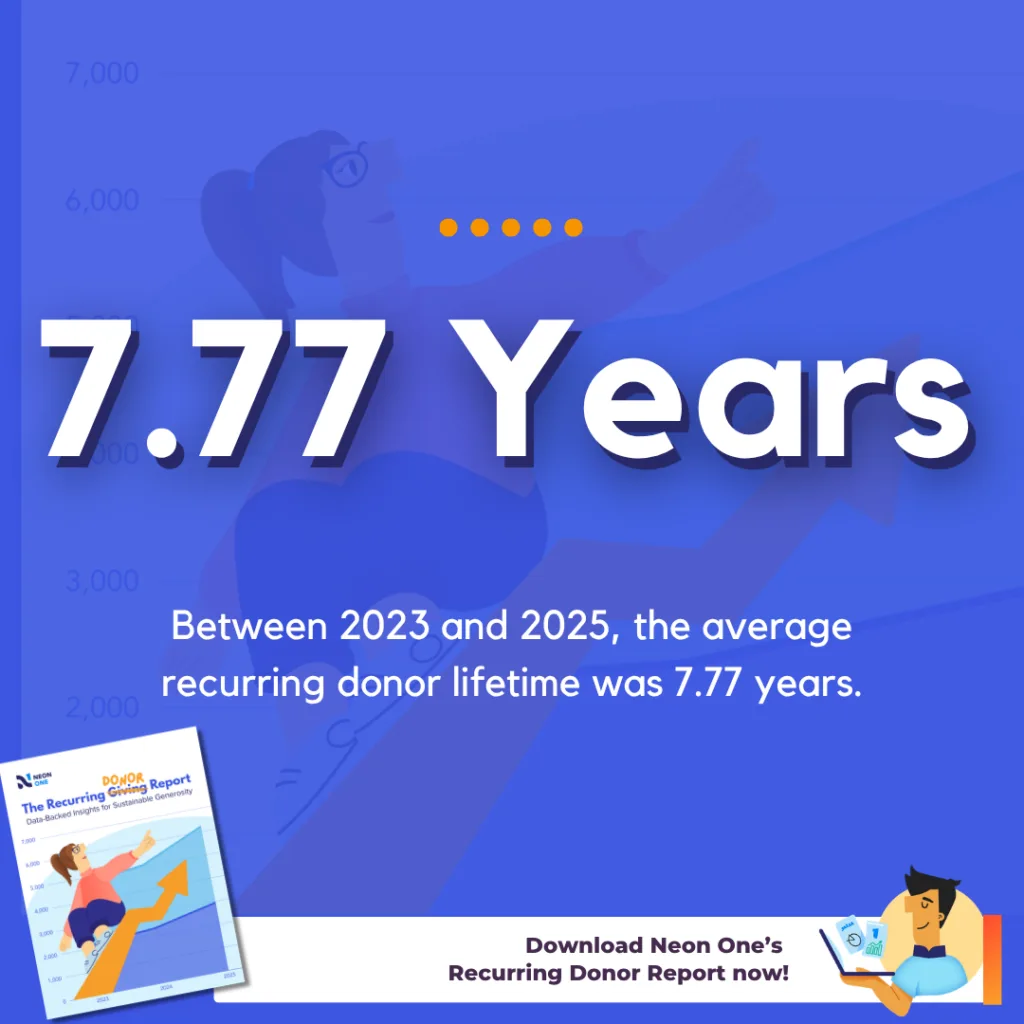
Recurring donors aren’t just easier to retain than non-recurring donors. They also stay engaged for much (much!) longer periods of time.
Cool—Now What?
We said it a minute ago, and we’ll say it again: Having a retention strategy in place for your recurring donors is an important part of building a strong recurring program. These are some of your most engaged and invested supporters. Take the time to build relationships with them.

Do You Know Your Donors?
They’re more generous than you might think … and we have proof. Download The Generosity Report today!
5. Most Recurring Donations Begin During Giving Season
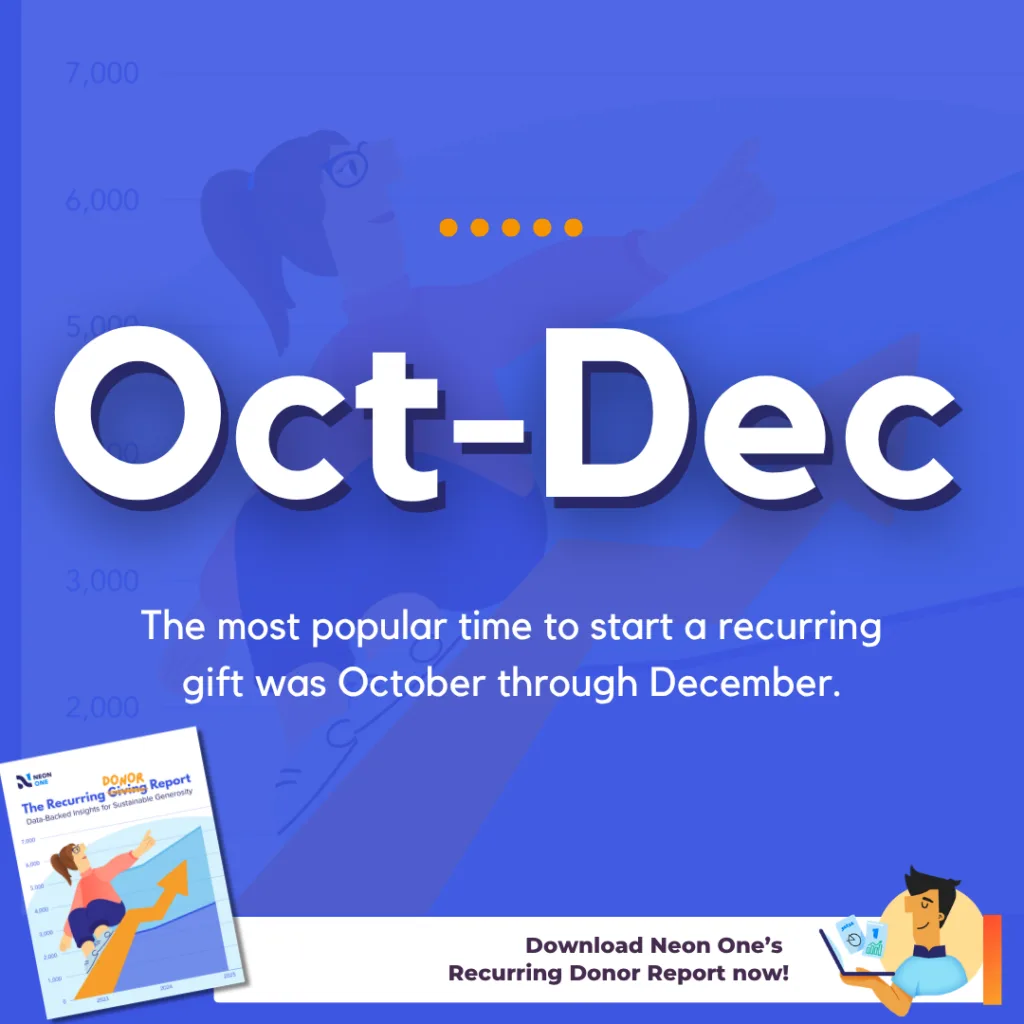
Here’s an interesting one. When we analyzed recurring donations initiated between 2023 and 2025, October, November, and December were the top three months for new recurring gifts. January and February were the slowest—most likely a natural slowdown following the burst of year-end activity.
Cool—Now What?
First, the surface-level takeaway: If you’re thinking about sending your first appeal for recurring gifts, try sending it as a part of your year-end campaign!
But if you dig a little bit deeper, you soon run into this question: Is the year-end giving season really the time when people most like to set up recurring gifts, or is that simply the time when nonprofits are most likely to ask them?
We think it’s the latter.
According to our donor survey, most recurring donors don’t have a strong preference for giving at a particular time of year. That means the spike in October, November, and December is almost certainly driven by organizational behavior, not donor preference.
So what’s the real takeaway? Ask regularly, and ask intentionally. Make sure recurring giving is part of your year-end campaign—it’s your highest-visibility period. And don’t wait until November to start the conversation.
6. Recurring Donors Love GivingTuesday
Every year, GivingTuesday takes place on the Tuesday immediately following (American) Thanksgiving. Based on how early Thanksgiving falls in the month, GivingTuesday occurs either in late November or early December.
Regardless of the date, it’s a popular day to make recurring donations. In 2024’s The Recurring Giving Report, we found that new gifts initiated on GivingTuesday made up around 12% of all gifts initiated in the month in which it falls—no matter if it falls in November or December.
Cool—Now What?
This year, try asking for recurring gifts as part of your GivingTuesday fundraising campaign. If you decide not to ask specifically for that type of gift, make sure the option is at least included on your donation page.
Get the 2024 Recurring Giving Report
We analyzed five years of giving data from over 100,00 nonprofit donors and found that recurring givers are some of the most valuable and committed supporters an organization can have.
7. Most Recurring Gifts Are Made With Cards
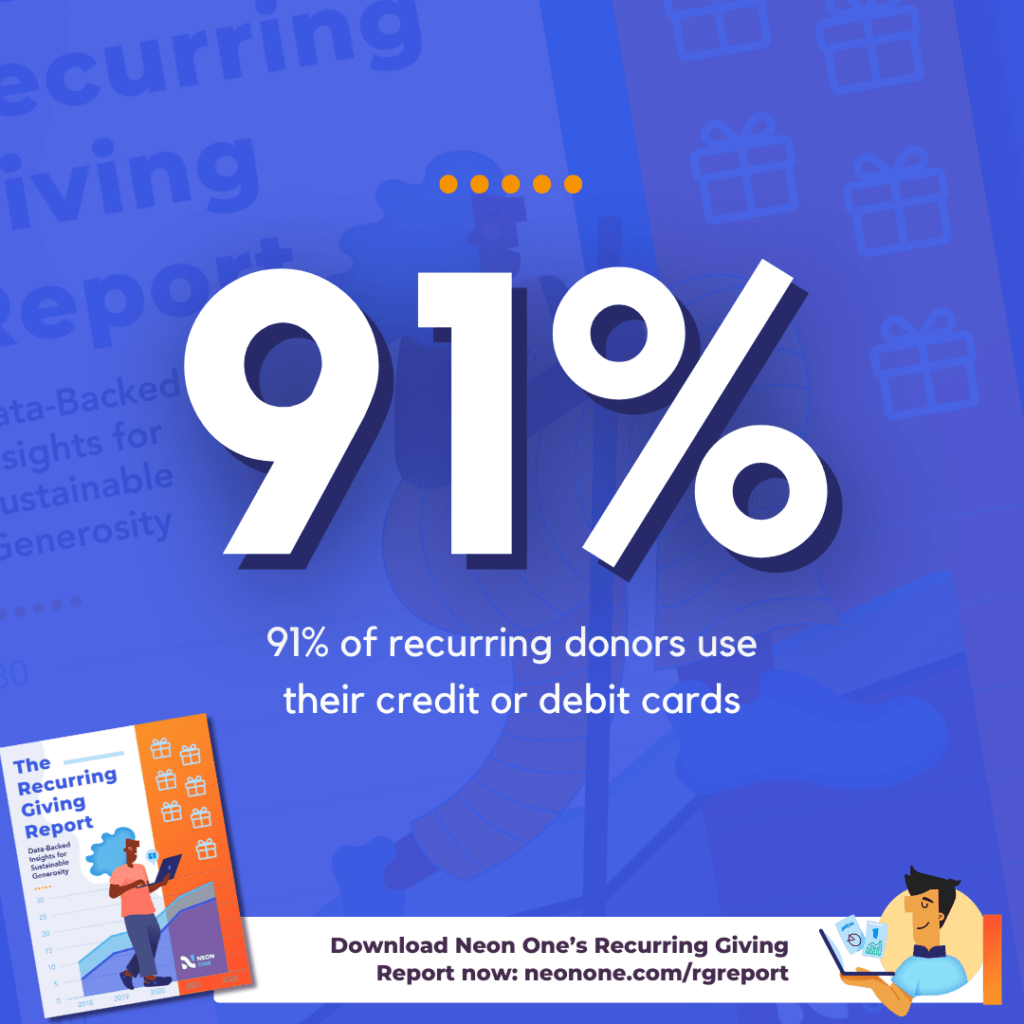
If you’re thinking to yourself, “Wow, no kidding. Credit or debit cards are the primary payment methods for ALL online transactions,” we hear you.
This is significant, yes—hopefully it encourages you to make sure your payment processor is set up to accept the most popular cards—but what’s also significant is to understand how the other 9% of recurring donors make their gifts (according to The Recurring Giving Report).
8.24% of them are made with ACH (that stands for “automated clearing house”) or eCheck. The remaining ~0.73% of transactions are made with alternative payment methods like PayPal.
Cool—Now What?
Take a look at your payment processor and make sure you’re able to accept recurring gifts made with credit or debit cards. And, if you can (and if your donors have a history of using them), consider adding the option to make that kind of gift via ACH/eCheck.
8. A Majority of Recurring Donors Give Without Being Asked
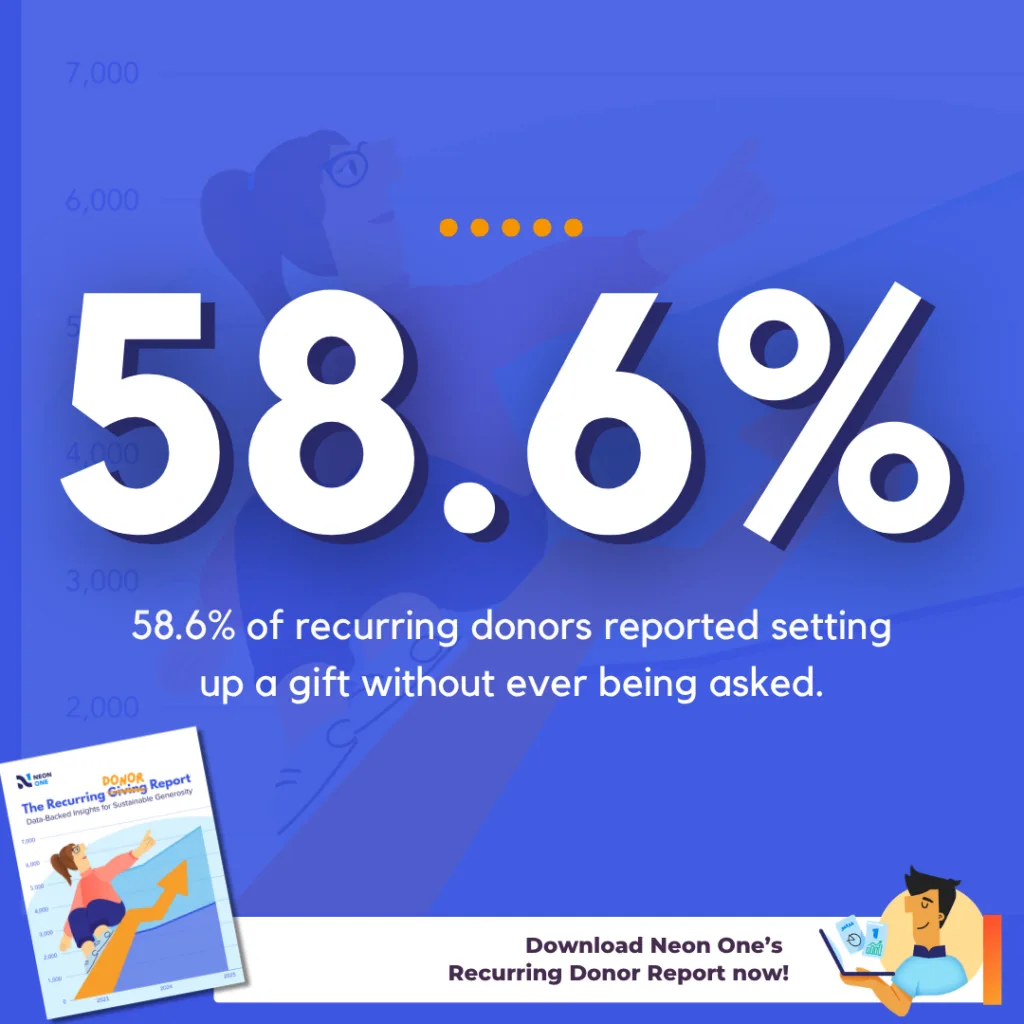
Here’s a startling fact: 58.6% of recurring donors made their gift without ever being asked to give by the nonprofit their gift supports.
Isn’t that wild? In fact, it may be the most striking finding from Neon One’s 2026 donor survey.
More than half of the people who set up recurring gifts did so without a direct appeal from the nonprofit. They gave because they felt connected to the mission and wanted to support it on their own terms.
Even wilder: Only 25% made their recurring gift specifically because the nonprofit asked. The rest were prompted by workplace giving programs (9.6%), recommendations from friends or family (6.8%), or their own initiative.
Cool—Now What?
First off: If you are worried that making appeals to join your recurring giving program is going to come off as too pushy or in your face, don’t be!
When well over half of recurring donors are setting up these gifts sans appeal, it follows that there’s probably a lot more untapped recurring giving potential out there!
Second: Given these findings, it’s clear that your recurring giving program needs to be visible everywhere—not just in your formal appeal emails.
Donors are finding you through social media, in your community, and via search. Make sure they can a) find out about your program, and b) set up a recurring gift wherever they find you.
Get More Recurring Giving Statistics and Insights
This is just a small sample of the statistics and insights included in the Recurring Donor Report.
If you want to learn more—including detailed benchmarks for small, midsize, and large nonprofits; insights from 2,006 donor survey responses; and strategies for acquiring and retaining recurring donors, download the full report!