

What do the numbers say about modern fundraising? A lot. This roundup of 28 essential nonprofit fundraising statistics, many of which draw from Neon One’s own proprietary research, reveals how donors give, what drives retention, and which channels deliver results. From digital giving trends to donor demographics, these insights help you spot opportunities, identify risks, and fine-tune your strategy for 2026 and beyond—all backed by fresh, data-driven benchmarks.
You’ve probably heard the saying, “Numbers aren’t everything.” And while it’s true that data doesn’t always tell the whole story, for fundraisers, numbers can reveal powerful insights into donor behavior, engagement trends, and fundraising best practices.
Fundraising metrics are the key to unlocking more effective, generosity-driven strategies that help nonprofits thrive.
Looking for Better, Safer Ways to Use AI?
The AI Xchange, by Neon One, is a resource hub that helps you use AI efficiently and safely—so you save time without risking donor trust.
Why Do Fundraising Statistics Matter?
Staying up-to-date on nonprofit fundraising statistics isn’t just helpful—it’s essential. Leveraging donor reporting and analytics for key data points, like donor retention rates, email performance benchmarks, and campaign trends helps fundraisers understand the landscape they’re operating in so they can make informed decisions that drive results.
Fundraising statistics can also inform your own success metrics—the measurable numbers you attach to critical goals like donor retention, recurring giving, and campaign conversion rates. Grounding your fundraising strategy in real-world data helps you set realistic objectives, optimize your approach, and, ultimately, raise more money for your mission.
In this article, we’ll dive into 25 key fundraising statistics that every nonprofit should know. Many of these insights are drawn from Neon One’s original research, including:
- The Recurring Donor Report (2026), a follow-up to 2024’s Recurring Giving Report that homes in on the people making these gifts. It analyzes transaction data from 4,107 nonprofits between 2023 and 2025, as well as responses to a February 2026 donor survey from 718 recurring givers.
- The Generosity Report (2025), our newest and most comprehensive study to date, analyzes five years of data from almost 100,000 donors supporting more than 2,000 nonprofits. This report explores how everyday generosity fuels long-term nonprofit success—and why loyalty, engagement, and community matter more than ever.
- The Recurring Giving Report (2024), a deep dive into the strategies that drive sustainable revenue through recurring giving programs, with breakdowns by nonprofit size and sector.
- The Nonprofit Email Report (2023), which analyzes millions of nonprofit emails to uncover trends in open rates, click-through rates, deliverability, and engagement to create practical benchmarks to help nonprofits craft smarter, more effective emails.
All four of those reports—and the statistics we’ll explore below—offer actionable insights that can help you build stronger donor relationships, craft more effective campaigns, and create a fundraising program designed for lasting impact.
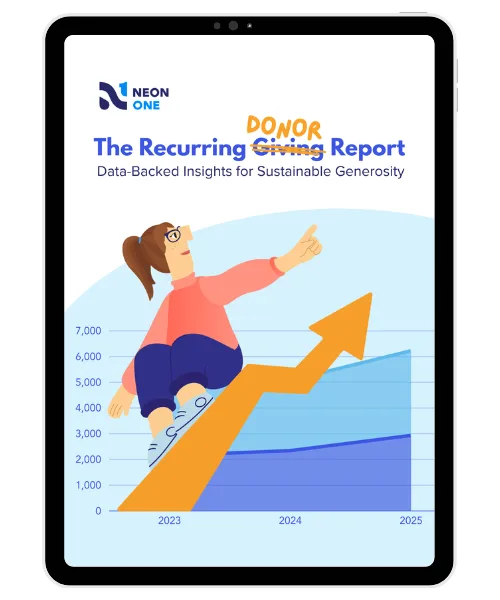
Get the 2026 Recurring Donor Report
Data-backed findings from over 4,000 nonprofits and 2,000 nonprofit donors show why recurring givers are the future of nonprofit fundraising.
Everyday Donor Behavior
Most donors aren’t writing massive checks—and that’s perfectly normal. In this section, we’ll look at how everyday generosity powers nonprofit success and why building a broad, loyal donor base matters more than chasing big gifts.
1. 96.9% of Donors Give Less Than $5,000 a Year
While large donations often grab headlines, the reality is that the overwhelming majority of donors are everyday givers. Neon One’s Generosity Report found that 96.9% of donors contribute less than $5,000 annually. That means your nonprofit’s sustainability depends not just on a few major gifts, but on nurturing broad-based community support. When designing your fundraising strategy, don’t overlook these everyday donors. Stewardship efforts that build loyalty across your entire base can have an enormous impact over time.
2. The Average One-Year Donor Gives $187
Every gift matters. Neon One’s research showed that the average one-year donor gave $187—a number that grows with every year that these donors stay involved (and giving) to their favorite nonprofits. While that first gift may not seem huge, its real value lies in the opportunity it represents. Engaging these donors early and building meaningful relationships can transform a $187 gift into years of generous support.
3. Five-Year Donors Give 1,519% More Than One-Year Donors
Retention drives results. As the Generosity Report found, donors who continued supporting an organization for five years gave an astonishing 1,519% more cumulatively than donors who only gave one year. This powerful data point makes it clear that keeping donors engaged year after year should be a top fundraising priority. Thoughtful stewardship, personalized communication, and long-term engagement strategies are essential for maximizing your fundraising potential.
4. Longevity, Not Gift Size, Is the Best Indicator of Donor Value
It’s tempting to assume that the size of a donor’s first gift predicts their future value—but the data tells a different story. Neon One found no significant correlation between first gift size and long-term donor loyalty. The real driver of long-term value? Engagement over time—especially when factoring in actions like event attendance, volunteering, and P2P participation.. Building strong relationships and creating meaningful donor experiences will deliver much greater returns than focusing on initial donation amounts alone.
Do You Know Your Donors?
They’re more generous than you might think … and we have proof. Download The Generosity Report today!
Why Long-Term Relationships Matter
One-time gifts are great, but long-term relationships are transformational. These statistics reveal just how powerful loyalty and retention are for nonprofits that invest in meaningful, ongoing engagement.
5. 11.7% of Donors Gave 45% of All Donations
Small numbers can have a big impact. According to Neon One’s research, just 11.7% of small-to-mid-level donors were responsible for 45% of total revenue within the studied cohort. This underscores the importance of identifying and cultivating loyal donors, even if their individual gifts aren’t massive. Stewardship, consistent engagement, and strong communication with these supporters can fuel a nonprofit’s long-term growth and resilience.
6. Pledgemakers Are Some of Your Most Generous Supporters
Pledgemakers—donors who commit to giving a set amount over time—show extraordinary generosity. Neon One’s Generosity Report found that pledgemakers consistently gave far above benchmark levels, averaging anywhere from 140% to 230% above benchmarks in a given year. And their giving often accelerated as their relationship with the organization deepened. Building a strategy to cultivate and steward pledgemakers can create a stable foundation of mid-level or even major gifts over time, offering both predictable revenue and strong donor loyalty.
7. The Longer Someone Gives, the More They Give Per Year
Time is a powerful fundraising ally. Neon One’s analysis found that donors who stayed connected to an organization for multiple years didn’t just keep giving—they increased their annual gift amounts year after year. By year five, donors were giving, on average, 224% more per year than they gave in year one. On average, a donor’s annual contribution grew steadily the longer they were active, proving that sustained relationships often lead to growing generosity. Prioritizing donor retention is one of the smartest investments your nonprofit can make.
8. Recurring Donor Bases Grew 40% in Three Years at Midsize Nonprofits
Recurring giving is on the rise. After the original Recurring Giving Report found that the average nonprofit’s recurring donor base grew 127% between 2018 and 2022, the trend continued in Neon One’s 2026 Recurring Donor Report: Recurring donor bases for all nonprofits grew another 31.58% between 2023 and 2025, with midsize nonprofits leading the sector at 40% growth. And the revenue impact is even more dramatic: sector-wide recurring revenue grew 36.25% in those same three years, while midsize organizations saw a 48.93% increase. Nonprofits that can tap into the full potential of recurring donors will have a head start in building a resilient financial foundation for their future.
9. Recurring Donors Are Retained at More Than Double the Rate of One-Time Donors
Donor retention is one of the most critical—and most difficult—challenges in fundraising. But Neon One’s 2026 Recurring Donor Report reveals a sharp divide between recurring and non-recurring donors. While retention rates for one-time donors fell from 35.75% in 2023 to 32.41% in 2025, retention rates for recurring donors held steady between 78% and 80% across the same period. That means nonprofits retained their sustaining donors at more than double the rate of their one-time supporters—year after year. This data makes the case plainly: building a recurring giving program isn’t just a revenue strategy. It’s a retention strategy.
10. The Average Recurring Donor Stays Engaged for 7.77 Years
Loyalty and longevity are the hallmarks of a recurring donor. According to the Recurring Donor Report, the average recurring donor stays engaged with a nonprofit for 7.77 years—compared to just 1.7 years for non-recurring supporters. That’s more than four times the donor lifetime. That longevity is the engine behind recurring donors’ dramatically higher lifetime value. When you build a recurring giving program, you’re a whole lot more than simply securing next month’s revenue; you’re building a relationship that, on average, will last nearly a decade.
11. 50% of Recurring Donors Also Give Additional Gifts
Recurring donors are already some of your most valuable supporters, but they might be willing to do even more. The Recurring Giving Report found that about 50% of recurring donors made additional one-time gifts beyond their regular contributions. According to the 2026 Recurring Donor Report, the average recurring donor has a lifetime value of $7,288.26—more than double the $3,606.90 lifetime value of non-recurring donors. This means that cultivating recurring donors isn’t just about steady monthly revenue—it’s also about building deeper loyalty and expanding giving potential over time. When planning your stewardship and campaign strategies, don’t forget to include special appeals and invitations for your recurring donors. They’re ready to step up when asked.
12. The Average Recurring Donor Is Worth Twice as Much as a One-Time Donor
Not all donors are created equal—at least not in terms of long-term financial impact. The Recurring Donor Report found that the average lifetime value of a recurring donor is $7,288.26, compared to $3,606.90 for a non-recurring donor. That’s a difference of more than 100%. Recurring donors’ dramatically longer engagement windows (7.77 years vs. 1.7 years) are the primary driver of that gap. The implication for your fundraising strategy is clear: every supporter you convert from a one-time giver to a sustaining donor roughly doubles their expected lifetime contribution to your mission.
Your action guide to build relationships that drive growth.
In this playbook, we’ll dive into insights that can help and simple steps you can take to start putting relationships first in your day-to-day work.
Beyond Donations: Other Forms of Generosity
Giving isn’t just about money. Volunteers, peer-to-peer fundraisers, and event participants also demonstrate powerful generosity—and understanding these behaviors can help you tap into your community’s full potential.
10. Supporters Who Volunteer, Attend Events, and Fundraise Give More
Financial generosity isn’t the only way people support nonprofits—and engaging in multiple activities correlates with deeper financial giving. Everyday donors studied in the Generosity Report who registered for events, volunteered, or participated in peer-to-peer campaigns consistently gave more than benchmark averages. This demonstrates the value of offering multiple avenues for involvement. Encouraging supporters to connect with your mission beyond donations can lead to greater loyalty and larger gifts over time.
11. Most Donors Support One Nonprofit, but 30% Support Multiple
Donors are generous—and their generosity often extends to multiple organizations. The Generosity Report found that about 70% of everyday donors supported just one organization, while 30% gave to multiple nonprofits. Rather than viewing other nonprofits as competitors, think of shared donors as proof of your supporters’ deep commitment to making a difference. Focus on deepening your relationship with each donor to secure a meaningful, lasting connection.
12. Climate Change Giving Spiked After the 2024 Election
Public support for climate causes surged in late 2024. According to data from CharityNavigator, donations to climate charities spiked immediately following the presidential election, driven largely by younger donors and cause-based giving trends. Additionally, Giving Green saw a 67% increase in search traffic to its site and sustained above-average donor interest in the weeks after the election. This momentum shows that major political moments can galvanize climate philanthropy—and nonprofits working on environmental issues should be ready to harness that surge with timely, cause-driven campaigns.
Email and Campaign Performance
Strong communication and well-timed campaigns can make all the difference. These statistics highlight how nonprofits can use email, events, and targeted outreach to build deeper connections and boost fundraising results.
13. Engagement Matters—But Quality Beats Quantity
Sending more emails doesn’t automatically translate to more giving. Neon One’s Generosity Report found that higher engagement rates (like open and click-through rates) correlated with stronger donor relationships—but that sending more messages to a donor did not result in higher giving totals. Instead of bombarding your supporters, focus on sending emails, letters, and updates that educate, inspire, and reinforce the impact of their gifts. Authentic, donor-centered communication is a critical part of any successful fundraising strategy.
14. More Than 8 Out of 10 People Will Open a Welcome Email
First impressions matter—and we have the stats to prove it. In fact, Data from GetResponse shows that welcome emails have an open rate of over 80%. This makes welcome emails the perfect opportunity to build immediate engagement with new subscribers or donors. Use your welcome series to thank supporters, introduce your mission, and invite deeper involvement right from the start.
15. The Average Bounce Rate for Nonprofit Emails Is 1.72%
Maintaining a clean email list is crucial for strong engagement. According to Neon One’s Nonprofit Email Report, the average bounce rate for nonprofit emails is just 1.72%. A low bounce rate not only helps improve email deliverability but also signals a healthy list of active supporters. Regular list cleaning and verification are simple steps that can keep your communications effective and your engagement metrics strong.
16. The Average Nonprofit Email Open Rate Is 29.58%
Nonprofits are doing a great job of grabbing attention in crowded inboxes. The Nonprofit Email Report found that the average open rate for nonprofit emails is 29.58%, significantly higher than the overall industry benchmark of around 21%. Strong subject lines, thoughtful segmentation, and relevant messaging all contribute to these strong results. To boost your own open rates, focus on delivering value in every message you send.
17. Segmentation and Personalization Resulted in a 760% Revenue Increase
Sending the same message to your entire list? You could be leaving major revenue on the table. According to CampaignMonitor, targeted email segmentation and personalization can increase nonprofit revenue by up to 760%. Tailoring content to supporter interests, history, and behavior creates a more meaningful experience—and donors are much more likely to respond when they feel seen and valued.
Get the Nonprofit Email Report
We evaluated 37,472 email campaigns sent by Neon One clients and identified key email benchmarks, along with data-backed insights your team can actually use.
Seasonal Giving and Generational Trends
Timing matters—and so does knowing your audience. This section looks at how giving behaviors shift around key moments like GivingTuesday and year-end, plus how different generations are shaping the future of philanthropy.
18. 38.1 Million Adults Participated in GivingTuesday 2025
GivingTuesday continues to grow as a major force in charitable giving. In 2025, 38.1 million adults participated, according to GivingTuesday’s official data. This movement shows no signs of slowing down, offering nonprofits a valuable opportunity to rally support, boost visibility, and connect with new donors. Preparing thoughtful campaigns and calls to action around GivingTuesday can give your fundraising efforts a serious lift.
19. GivingTuesday Donations Topped $4.0 Billion in 2025
Along with record participation, GivingTuesday donations reached $4.0 billion in 2025—a new high. The incredible generosity displayed during this global day of giving shows that people are eager to support causes they care about when they’re inspired to act. Creating urgent, mission-driven appeals that tap into this momentum can help your organization make the most of this important day.
20. December Drives 17–31% of Online Revenue for Nonprofits
Year-end giving is still one of the most important fundraising seasons for nonprofits. Research shows that December accounts for 17% to 31% of annual online revenue. This concentration of giving activity means that smart year-end planning—like optimized donation pages, compelling appeals, and strong stewardship strategies—can have an outsized impact on your annual fundraising results.
21. Millennials Increased Giving by 40% Between 2016 and 2022
Millennials aren’t just getting older—they’re becoming a growing philanthropic force. Between 2016 and 2022, millennial giving increased by 40%, according to Giving USA. Engaging millennial donors means focusing on transparency, mission impact, and digital-first experiences. Cultivating this generation now can create a strong donor pipeline for decades to come.
22. 30% of Gen Z Donates Regularly
Gen Z is stepping up as the next wave of donors. A 2021 Barna research study on millennials and Gen Z showed that Gen Z does donate—with their time (by volunteering) and consistent, albeit smaller, donations. The study found that 30% of Gen Z include donations in their budgets, and at least 50% of people aged 18 to 25 regularly donate to charitable organizations. Although many Gen Z donors are still early in their giving journeys, they prioritize causes aligned with their values and respond well to peer influence and authentic storytelling. Investing in relationships with Gen Z today can position your organization for long-term support tomorrow.
Get Your GivingTuesday Templates, Guides, and More!
Neon One’s GivingTuesday Resource Center has all the resources you need to craft an unforgettable campaign and kick off your year-end giving push.
Impact Messaging and Storytelling
Data without action doesn’t drive change. In our final section, we’ll explore how nonprofits can use these insights to build stronger donor relationships, raise more money, and create lasting impact.
23. 75% of Donors Use Video to Understand a Donation’s Impact
Video isn’t just a marketing trend—it’s a critical fundraising tool. Research shows that 75% of donors use video to better understand the impact of their giving. Visual storytelling helps donors feel emotionally connected to your mission by showing, not just telling, the results of their support. Nonprofits that invest in creating short, compelling videos—whether highlighting success stories, offering behind-the-scenes glimpses, or sharing direct testimonials from beneficiaries—can build deeper trust and inspire greater generosity.
24. 97% of Donors Cite Impact as a Major Motivator
Understanding impact isn’t a nice-to-have—it’s the number one reason people give. According to CCS Fundraising, 97% of donors say knowing the impact of their contributions is a major factor in their decision to support a nonprofit. That means storytelling isn’t optional—it’s essential. Clear, transparent communication about how donations create real-world change can deepen donor trust, increase retention, and encourage larger future gifts. From thank-you emails to annual reports, every touchpoint is an opportunity to show donors the difference they’re making.
25. Environmental Nonprofits Receive Only 2% of Charitable Donations
If you work in environmental advocacy, here’s a crucial data point: Only about 2% of all charitable giving in the U.S. goes to environmental organizations, according to Giving USA. This number underscores both a challenge and an opportunity. On one hand, the sector faces fierce competition for funding. On the other hand, there’s enormous potential to grow awareness and support. Storytelling that highlights impact, urgency, and community can help environmental nonprofits capture a larger share of donor attention and dollars.
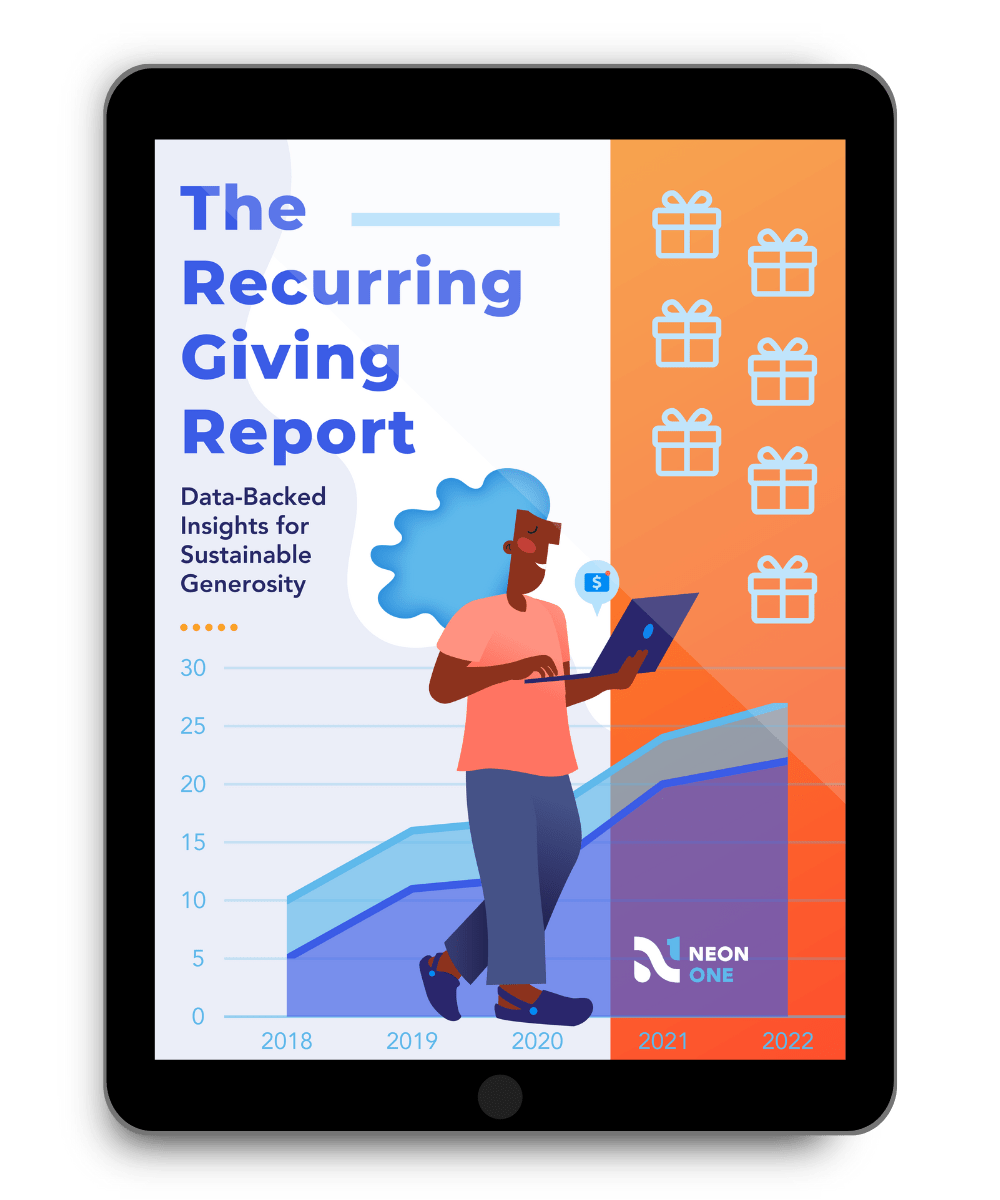
Get the 2024 Recurring Giving Report
We analyzed five years of giving data from over 100,00 nonprofit donors and found that recurring givers are some of the most valuable and committed supporters an organization can have.
Go Beyond the Data: Download the 2026 Recurring Donor Report
Fundraising success isn’t just about chasing the biggest gifts or the flashiest campaigns. It’s about building lasting relationships, cultivating trust, and showing donors the real impact of their generosity over time.
The data we’ve explored—from recurring giving trends to year-end fundraising spikes—makes one thing clear: Loyalty, engagement, and meaningful communication matter more than ever.
Small, consistent acts of generosity add up to powerful community support. Investing in strong stewardship, offering personalized experiences, and celebrating your donors’ impact are strategies that will set your nonprofit up for sustainable growth in the years ahead.
If you want to dive even deeper into today’s recurring giving trends and donor motivations, download the full 2026 Recurring Donor Report! It’s packed with research-backed insights and practical tips you can use to strengthen your recurring giving strategy right now.