

What trends are shaping year-end fundraising in 2026? These 12 statistics reveal how donor behavior, timing, and technology impact December giving—the biggest fundraising month of the year. Learn when gifts peak, which channels perform best, and what motivates last-minute generosity, so you can craft smarter campaigns that finish your year strong.
Picture it: A cold wind cuts through the air, rattling through the brilliantly changing leaves and carrying with it the faintest cinnamon whiff of pumpkin spice latte. As a nonprofit fundraiser, you know that means only one thing: The giving season is almost here!
Sure, it’s only February, but that jolt you just felt run down your spine is because you understand, all too well, what a huge deal the end-of-year giving season is for the nonprofit sector. It drives billions of dollars in the span of a month, with a vast amount of that giving coming in the final few days of December alone.
For fundraisers across the nation, working for orgs big and small, the month of December often means long nights, rattled nerves, and way, way, way too much quality time with your donor management software. But it doesn’t have to be that way!
Here are 12 year-end giving statistics that not only confirm how important the final month of the year can be—but they also come paired with advice to help your nonprofit leverage these trends to make your end-of-year campaign a success.

Want Some Help With Your Year-End Appeals?
These templates are just what you’re looking for! Use the prompts, best practices, and fundraising tips to write compelling appeals your donors will love.
1. 40% of Annual Online Revenue is Raised in December
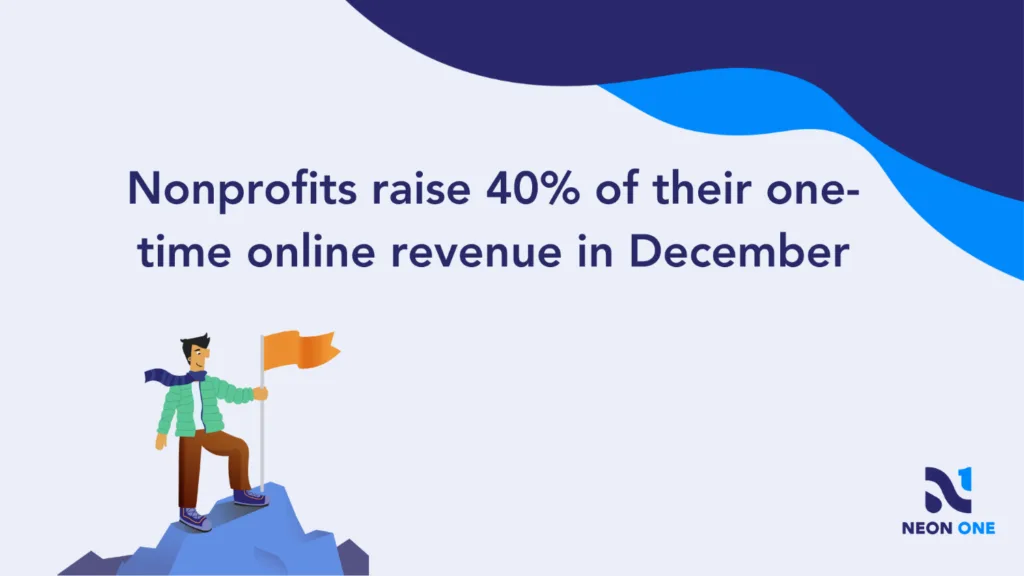
According to the 2025 M+R Benchmarks Report, December giving accounts for roughly two-fifths (40%) of annual online one-time revenue for the average nonprofit.
That’s actually an increase from the previously circulated figures on end-of-year giving—which generally pinned December giving as representing a third of annual revenue.
That’s why it’s critical that your nonprofit find success with its end-of-year campaign. Slash 40% out of any organization’s budget, and the results will be dire!
If you need some help planning your campaign, be sure to download our handy guide, Neon One’s Ultimate Year-End Giving Timeline.
The Ultimate Year-End Giving Timeline
In this timeline and checklist, will teach you how to use your campaign to make meaningful connection points between your year-end campaign, GivingTuesday, and your year-round fundraising strategy.
2. Different Sectors Raise Between 23% and 52% of Online Revenue in December
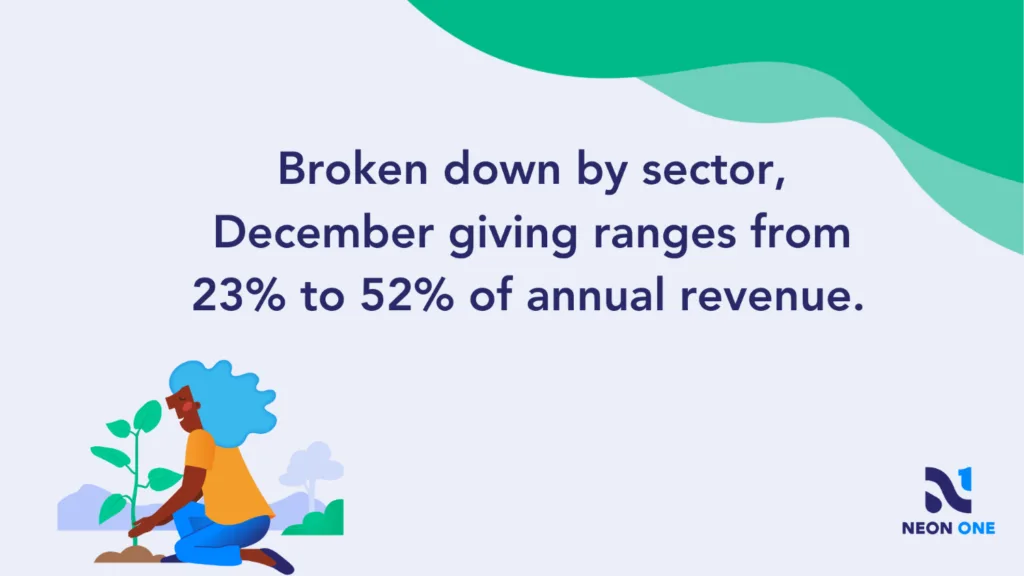
The 2025 M+R Benchmarks Study found that nonprofits raise between 23% and 52% of annual online revenue in December, depending on their cause.
In 2024, nonprofits in the “Rights” sector raised the largest percentage of their online revenue during this period (52%) while “Cultural” nonprofits raised the smallest (23%).
With such a huge volume of online donations coming through during these two months, your nonprofit should make sure it has a branded, fully optimized donation form.
A form that carries your organization’s branding will garner trust in your donors, and forms that incorporate other key best practices will increase conversion rates.
Want to learn more about donation form best practices (and how they are seamlessly incorporated into Neon CRM’s easy-to-use donation form builder)? Then check out the article below!

3. GivingTuesday is a Great Time to Kick Off Your Year-End Campaign
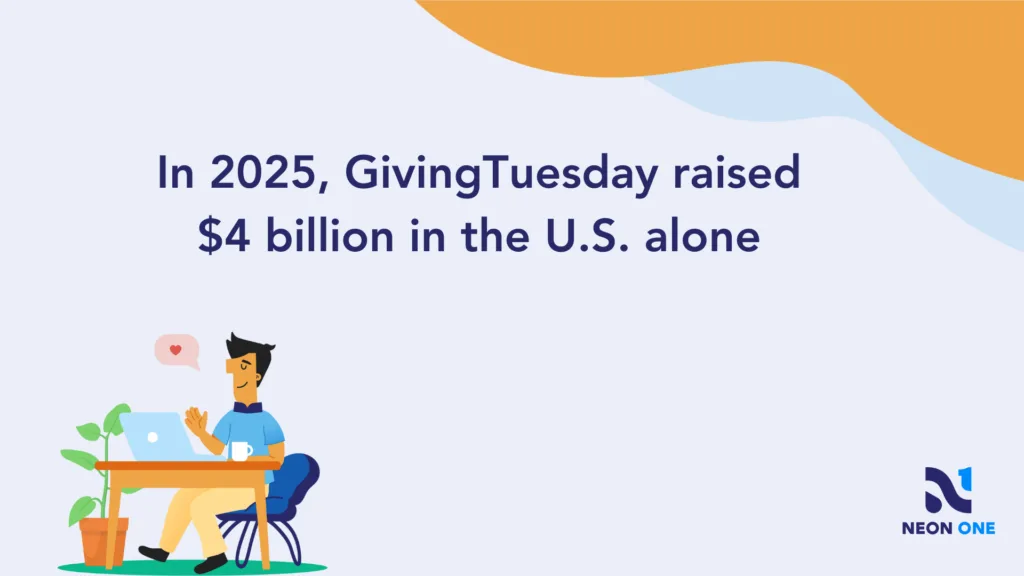
If you’re looking for a good time to kick off your year-end campaign, why not pick GivingTuesday? This global day of generosity began in 2012 and has only grown bigger and bigger with each passing year.
In 2024, organizations participating in GivingTuesday raised over $3.6 billion in the United States alone!
GivingTuesday always falls on the Tuesday following Thanksgiving. In 2025, that date is December 2.
Use this day—and its sizeable presence on social media via the #GivingTuesday hashtag—to start your year-end campaign off on the right foot and get your donors excited about giving.
For more tools and tips to help you craft your GivingTuesday campaign, check out our GivingTuesday Resource Center and download our GivingTuesday toolkit!
Kickstart your year-end fundraising with a global day of generosity
This toolkit has everything you need to mount a fantastic GivingTuesday fundraiser and supercharge your end-of-year giving.
4. The Most Important Days for Giving Are December 29, 30 and 31
Talk about last minute! The last three days of the calendar year—December 29, 30, and 31—are so important that many nonprofits bring in more revenue than even GivingTuesday!
According to the 2025 M+R Benchmarks, giving on December 31 alone accounted for 5% of 2024 revenue.
As those last-minute donations are coming in, you should be getting ready to follow up with your donors. Don’t be afraid to send out appeals and reminders in those last few days of December, up to and including New Year’s Eve!
Just remember to segment your email lists so that donors who have already given don’t receive those reminders as well.
Here’s another tip: Make sure that these reminder emails don’t include the word “reminder” in the subject line! We found that that’s one of the words in a subject line that absolutely kills open rates.
For donors who have already given, a great thank-you letter is a nice way to follow up that also serves as the first step toward effective donor retention.
Need help getting started with a thank-you letter? Check out the article below, which covers the ins and outs of composing a great donor thank-you and provides some handy templates to help you get started!

5. Giving Was Up on December 31, 2024
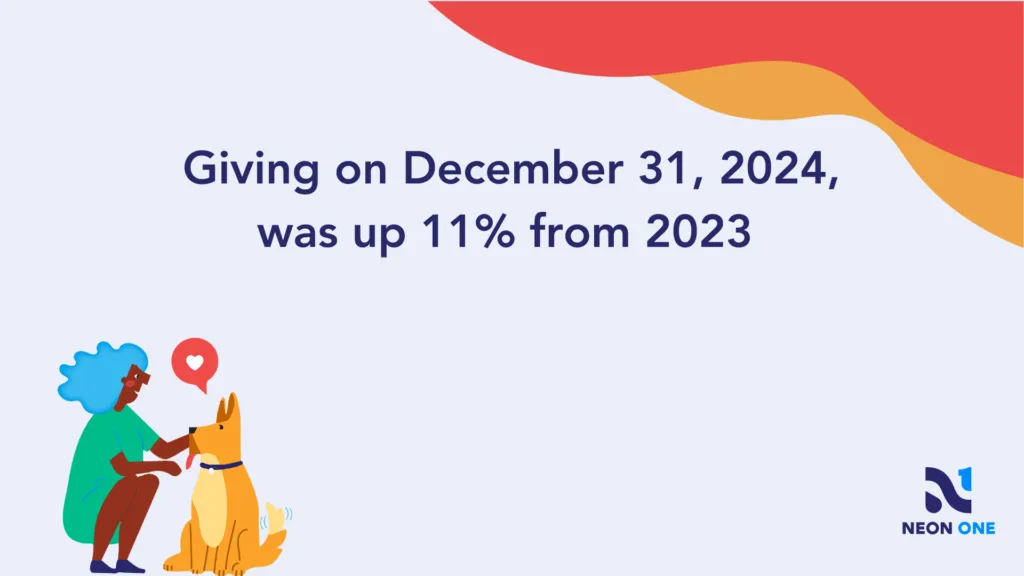
According to M+R Benchmarks’ 2025 report, revenue raised on December 31, 2024 was up 11% in the U.S. from 2023.
That’s not just a healthy increase, it’s actually the first year-over-year increase in December 31 giving we’ve seen in three years. The previous two years, 2023 and 2022, saw drops from the year prior.
Now, what that does mean is that, overall, giving on December 31 hasn’t exaclty been growing over time, a trend that’s in line with an overall decline in giving to nonprofits.
It’s a state of play that some have taken to calling a “generosity crisis.” For our thoughts on that whole situation, we highly recommend you check out this article we wrote on how to rebuild donor trust.
If you’re looking for advice that’s slightly more practical in the short-term, we can tell you that these declines in giving mean that your organizations can’t be too loosey-goosey with your end-of-year giving strategy.
If you need help composing your end-of-year appeals, download our Year-End Fundraising Letter Templates and use them to help craft your message.
6. December 30 Might Be the Best Day to Send Your Appeals
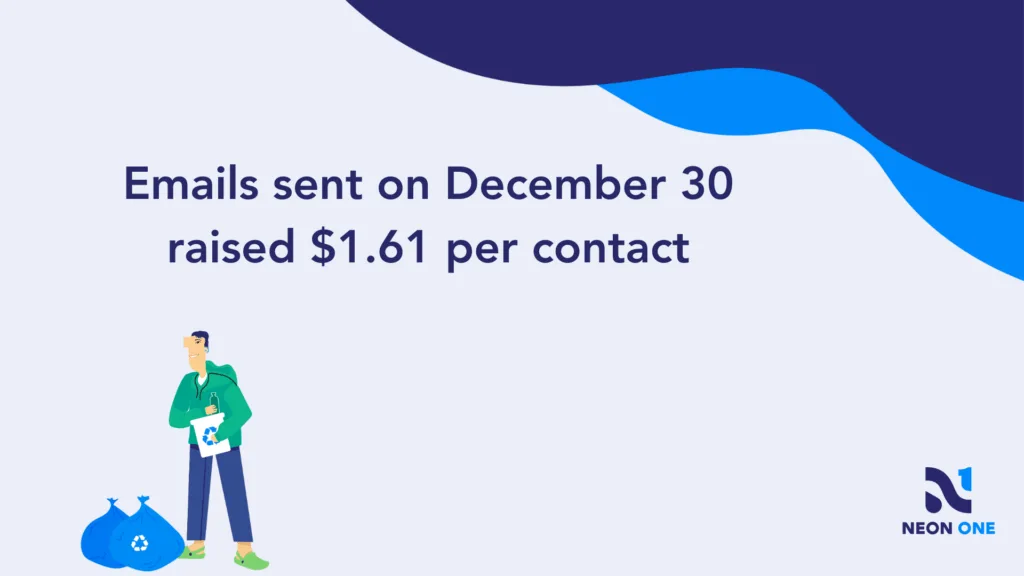
If you’re looking to maximize your year-end-giving emails this year, try focusing on December 30.
According to the year-end addendum we released to 2023’s Nonprofit Email Report: Data-Backed Insights for Better Engagement, emails sent on December 30 had better open and clickthrough rates than those sent on December 29 and 31.
Even better, those emails raised more dollars per contact!: $1.61 for December 30 emails versus $.59 on the 29th and $.93 on the 30th.
That’s a really big difference! So why not give it a shot?
If you’d like some more data on year-end emails, you can download that email report addendum below:
7. Most End-of-Year Donors Will Cover Their Processing Fees
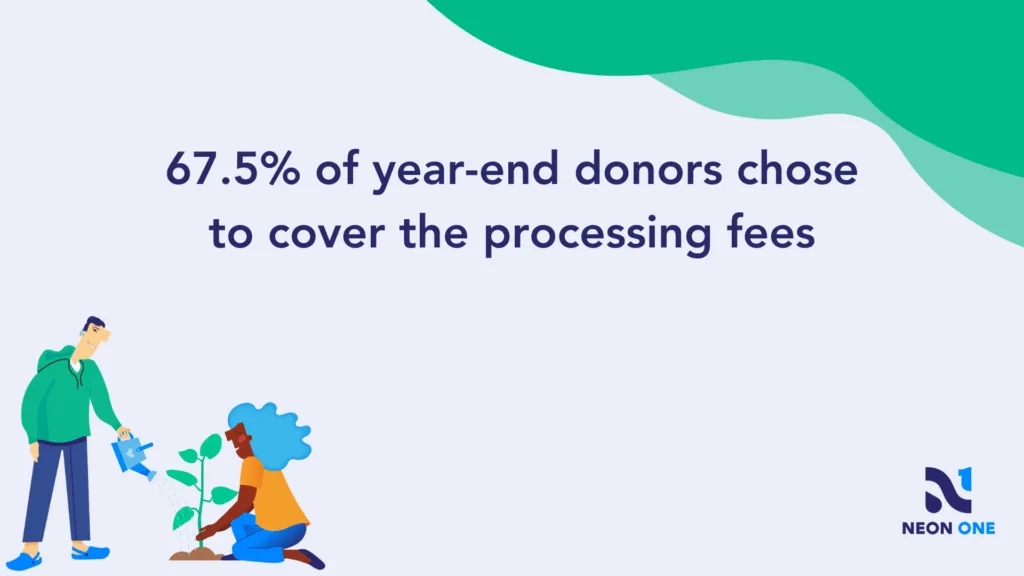
According to the year-end addendum we recently released to our 2025 study, The Generosity Report: Data-Backed Insights for Resilient Fundraising, a whopping 67.54% of year-end donors covered the processing fees for their donation if the option was made available to them.
Want to know more? Download the full addendum today!
8. Year-End Recurring Gifts Are on the Rise, Too!
In our year-end and GivingTuesday addendum to the Recurring Giving Report, we found that recurring gifts made in the last three days of December, specifically, increased by 21.34% in 2023.
Even more impressive was the rate of donors who set up a recurring donation even though they were first-time donors to that organization. They increased by 34.48%!
So if you’ve been looking to promote your organization’s monthly giving program as a part of your year-end campaign, we highly recommend giving it a shot! The data supports you.

Nonprofit knowledge delivered right to your inbox
Our monthly newsletter has all the latest strategies, hacks, and industry trends you need to raise more and grow your supporter base!
9. 50% of U.S. Households Give Annually
Sometimes, it can be helpful to remember just how many people out there are donating to worthy causes every year.
According to CCS Fundraising’s Philanthropic Landscape Report, 50% of U.S. households give annually—and a whopping 81% of affluent households give.
As your team is dreaming up new ways to find prospective donors, whether they be smaller donors or individuals with the potential to make a major gift, don’t be afraid to get creative.
With so many donors out there who are ready and willing to support a great cause like yours, the sky’s the limit.

10. The Average Gift Size Increased in 2024
In 2023, the average one-time gift recorded in the M+R Benchmarks report declined to 116% from $121 the year before.
But in 2024, giving bounced back! The average one-time gift shot back up $126.
When it comes to your nonprofit, knowing your average gift size is important because it will help you set your suggested donation amounts. You shouldn’t set suggested amounts that start way higher than your average gift size!
If you have a comprehensive nonprofit CRM, finding your average donation amounts should be easy. Learn more about which nonprofit CRM best fits your organization by taking this quiz!

Which nonprofit CRM matches your needs? Get a data-backed answer
Take this short quiz to get a customized list of CRM vendors that best fit your nonprofit based on budget, size, and functionality needs.
11. Don’t Forget to Ask Your Nonprofit’s Volunteers
Although we tend to think of volunteers and donors as two separate things, volunteers really are donating their time (and skills) to your cause and are very likely to make a monetary donation as well.
Make volunteer retention a priority at your organization, and you’ll be building the foundations for some of your most engaged donors in the future.

12. Tell Donors How Their Gift Will Make an Impact
This part is crucial. According to CCS Fundraising, a whopping 97% of donors cited the real or perceived impact of their gift as a major motivating factor behind their decision to give. For comparison, only 56% cited income tax deductions as a major motivator.
When making your appeal, be sure to lay out the specific impact that a donor’s gift will make.
Furthermore, try to focus on individual stories. While it might seem smart to wow them with big, flashy stats that capture your organization’s overall impact, people are actually much more likely to give if they know how their gift will help one single person than how it will contribute to helping a thousand people.

It’s the Most Wonderful (and Stressful) Time of the Year
The holiday season is stressful for everyone. But if you’re a nonprofit fundraiser juggling the holiday season and giving season, then November and December are most definitely the most stressful, most chaotic … and most totally rewarding time of the year.
Save yourself from that holiday stress by getting a jump (okay, it’s more than a “jump,” it’s more like a transatlantic flight) on year-end planning right now. The article below will give you 11 awesome year-end giving campaign ideas that your organization can use to stand out from the crowd.